
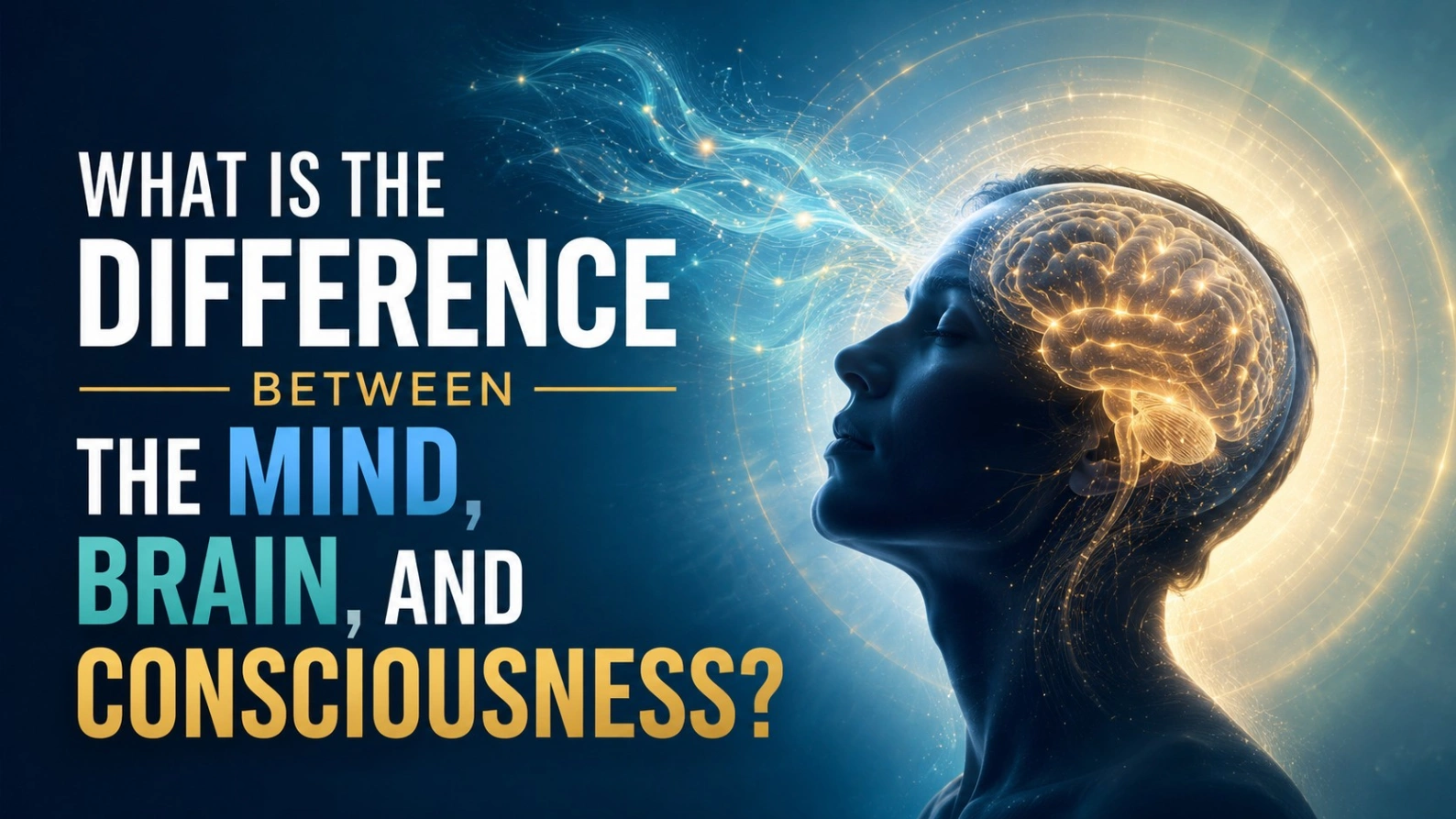
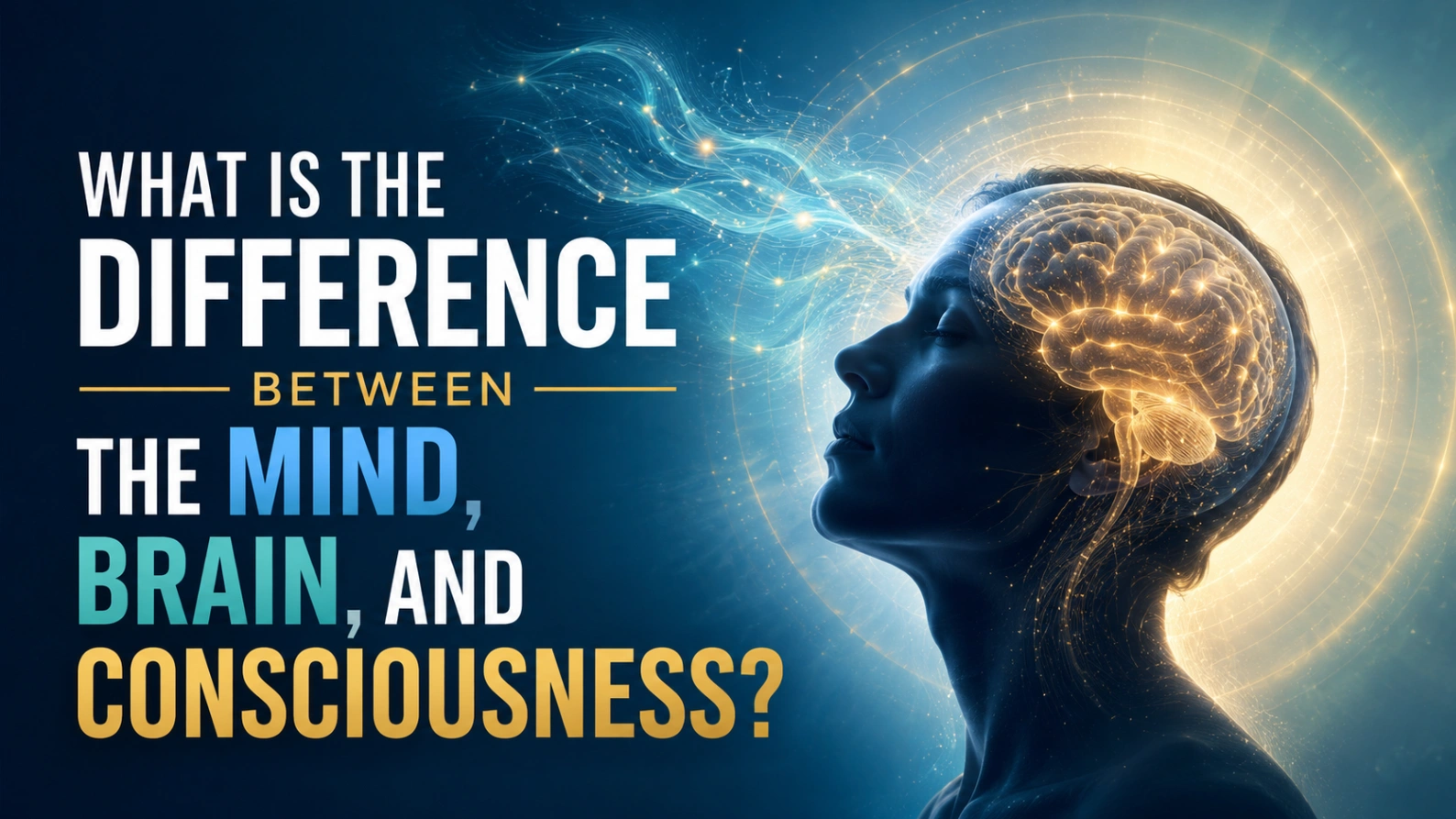
The difference between mind, brain, and consciousness is easier to understand when we stop treating these words as synonyms. The brain is a physical organ. The mind is the flow of thoughts, emotions, memories, interpretations, and intentions connected with your experience. Consciousness is the fact that you are aware of an experience at all: the felt sense of seeing, thinking, feeling, or noticing yourself.
They are closely connected, but they are not interchangeable. Knowing the difference can clarify overthinking, emotions, self-awareness, meditation, and personal growth.
Mind vs Brain vs Consciousness: A Simple View
Think of the brain as the biological system. It is the physical structure made of cells, networks, and chemical and electrical signals.
Think of the mind as what happens at the psychological level. It includes thinking, remembering, imagining, focusing, judging, worrying, choosing, and making meaning.
Think of consciousness as present awareness. It is the “I know that I am experiencing this” quality of life. A simple analogy is this: the brain is the instrument, the mind is the music, and consciousness is the lived awareness of hearing it. It is not a perfect comparison, but it shows why mind vs brain is not a contest between separate things. They describe different levels of the same human reality.
Design Your Destiny
Your mind may be filled with thoughts, but awareness gives you the freedom to choose which thoughts you follow. Design Your Destiny is an invitation to understand your inner patterns, move beyond automatic reactions, and create a life guided by clarity, purpose, and conscious action.
Start Your JourneyWhat Is the Brain?
The brain is a physical organ within the central nervous system. It processes information, coordinates movement, regulates vital functions, and supports thought, memory, emotion, sensation, and behaviour. Neurons communicate through electrical and chemical signals, forming circuits that process information.
Because it is physical, the brain can be studied through anatomy, imaging, electrical recordings, injury research, and medical observation. Sleep, illness, injury, medications, stress, and sensory input can affect brain function. This shows that lived experience is deeply connected to brain activity.
What Is the Mind?
The mind is not a separate organ located in one part of the head. It is a useful term for the mental processes through which you perceive the world and respond to it. Your mind includes thoughts, beliefs, images, attention, memories, emotions, motives, imagination, language, and the inner stories you tell yourself.
For example, two people may receive the same delayed message from a friend. One may interpret it as rejection; another may assume the friend is busy. The event is the same, but the mental meaning differs.
The mind also includes processes that are not fully conscious. You may reach for your phone automatically, react defensively before knowing why, or feel uneasy before you can name the reason. Psychology recognises that some perception and mental activity can occur outside explicit awareness.
What Is Consciousness?
Consciousness is commonly described as awareness of internal or external experience. It includes being aware of sensations, thoughts, emotions, surroundings, and at times yourself as the person having those experiences. In everyday life, it is the difference between being present in a moment and moving through it on autopilot.
Consciousness is more than wakefulness. You may be awake but not consciously notice every sound in a room. You may be absorbed in work and only later realise you were anxious. This is why consciousness and attention are related but not identical. Attention selects or prioritises information; consciousness refers to the experience that is present for you.
It can also include self-consciousness: the capacity to reflect on yourself and ask, “Why am I reacting this way?”
Difference Between Mind and Consciousness
The difference between mind and consciousness is subtle but useful. The mind is broader. It includes conscious thoughts, habits, memories, emotional responses, imagination, and processes happening outside awareness.
Consciousness is the aware aspect of that activity. When you notice, “I am feeling irritated,” you are bringing a mental state into consciousness. The irritation may have begun before you noticed it. This is why awareness can create a small but meaningful space between an impulse and a response.
In simple terms, the mind carries mental content. Consciousness is the awareness through which some of that content becomes known.

The Mind-Brain Connection: How Do They Work Together?
The relationship between mind and brain is a central question in psychology, neuroscience, and philosophy. Thoughts, memory, feelings, perception, and decisions depend on complex patterns of neural activity. Neuroscience studies the brain mechanisms associated with conscious experience, often called the neural correlates of consciousness.
Yet a brain description and an experience description are not the same kind of explanation. A scan may show activity linked with pain, but it does not capture what pain feels like from the inside. This first-person quality of experience is why consciousness remains difficult to explain fully. The field has competing theories, not one universally accepted account.
So, does the brain create consciousness? Science strongly supports that conscious experience depends on brain activity. But the exact explanation of how coordinated neural processes become a vivid inner world remains an open question.
A Daily-Life Example
Imagine you are about to enter an important meeting. Your brain is processing faces, sounds, posture, memories, language, and bodily signals. It is also helping regulate your heart rate and coordinate your speech and movement.
Your mind may be thinking, “What if I make a mistake?” It may bring up old memories, assumptions about what people think, and hopes for a good outcome.
Your consciousness notices the tightness in your chest and the thought, “I am nervous.” Awareness may not remove anxiety, but it gives you a chance to choose your next action rather than simply react.
Conscious Mind, Subconscious Mind, and Unconscious Mind
The terms conscious mind, subconscious mind, and unconscious mind are popular, but they can be confusing. The conscious mind usually refers to what you are currently aware of: the thought you are having, the feeling you can name, or the decision you are making.
“Subconscious mind” is common self-help language for habits, beliefs, memories, and emotional patterns outside immediate awareness. In scientific psychology, “unconscious” is generally more precise for processes that occur outside explicit awareness. These are not separate rooms in the brain. They describe different degrees of awareness and processing.
Not every thought deserves blind trust. Some patterns are learned or automatic. Becoming conscious of them makes it possible to question and update them.
Consciousness vs Awareness: Are They the Same?
In everyday speech, consciousness and awareness are often used interchangeably. In more careful discussions, awareness can mean noticing a particular thought, feeling, sensation, or event, while consciousness means the wider condition of having subjective experience.
You can become aware of your breathing within the broader field of consciousness. This distinction is helpful in mindfulness, where the aim is to observe thoughts with clarity.
Can Science Explain Consciousness?
Science can study awareness during sleep, anaesthesia, brain injury, seizures, attention, perception, and neurological conditions. It compares reports of experience with patterns of brain activity.
What science cannot yet offer is a final, universally agreed explanation of why physical brain activity is accompanied by subjective experience. Why does a neural pattern associated with seeing red come with the felt quality of red? This challenge is often called the hard problem of consciousness.
The most helpful approach is intellectual humility: value scientific evidence for what it shows, remain open about what it does not yet explain, and avoid presenting speculation as fact.
Mind, Brain, and Consciousness in Science and Spirituality
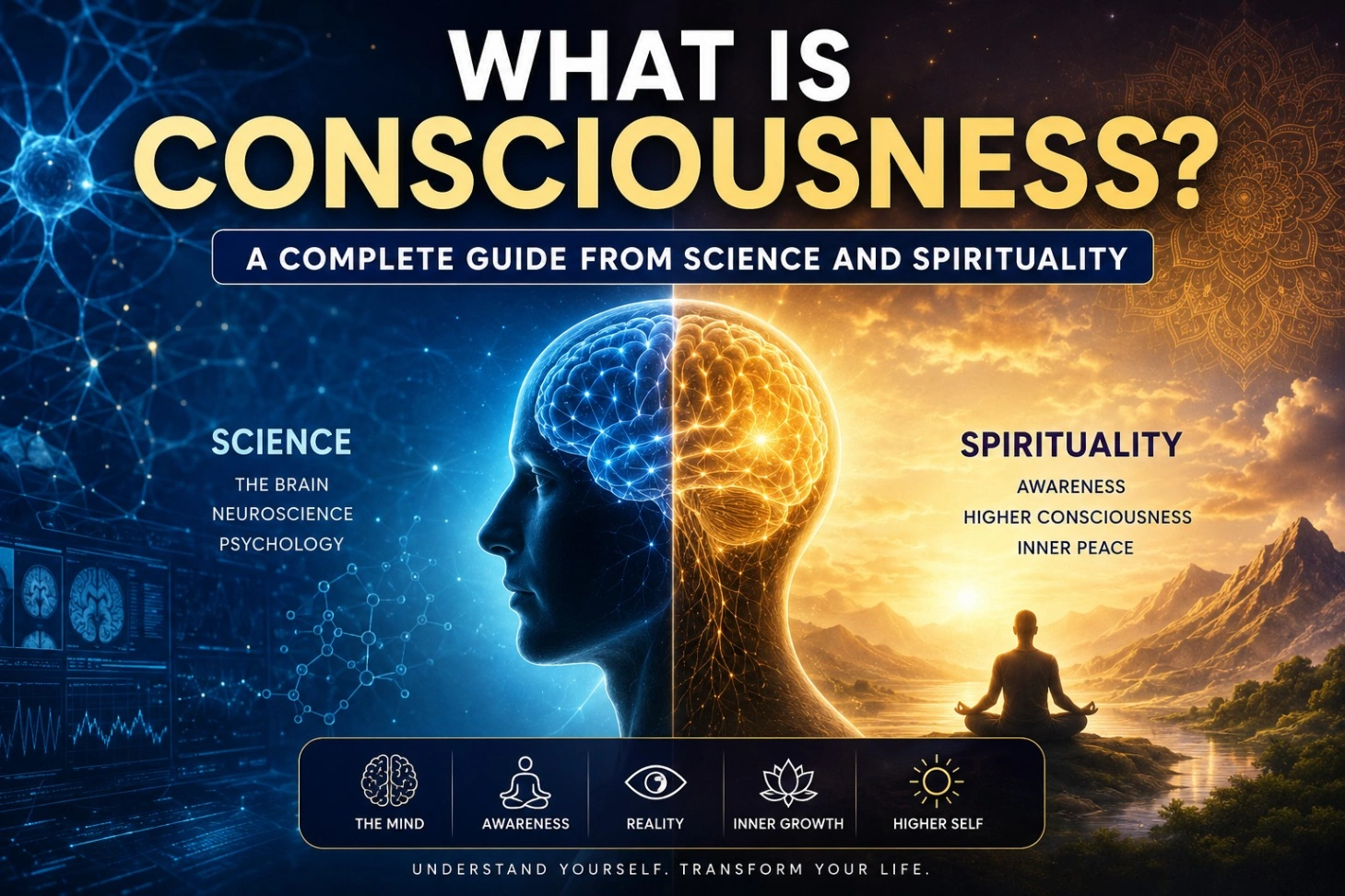
Science and spirituality often ask different questions. Science asks how the brain works, how mental processes can be measured, and what evidence supports a claim. Spiritual traditions may ask who is aware, how suffering can be understood, and how a person can live with peace, compassion, and purpose.
Many traditions describe consciousness as a witnessing awareness behind changing thoughts and emotions. This can encourage self-observation, but it is not a scientific conclusion that consciousness exists independently of the brain. Keeping the distinction clear respects evidence and belief.

Why This Difference Matters
Understanding the difference between mind, brain, and consciousness can change the way you relate to yourself. You do not have to identify with every thought your mind produces. A thought can be noticed, examined, and redirected.
Supporting your brain through sleep, nourishment, movement, medical care, rest, and stress management creates healthier conditions for the mind. Reflection and mindful pauses can help you recognise patterns earlier.
The brain is the physical organ and biological system that supports human functioning. The mind is the wider set of mental processes, including thoughts, feelings, memories, beliefs, attention, and imagination. Consciousness is the lived awareness of experience. They are deeply connected, but they are not identical.
Personal Session
A personal session can offer a supportive space to explore recurring thoughts, emotional patterns, inner confusion, and the direction you want to create in life. Begin with honest self-observation, and take the next step with greater clarity.
Book Now