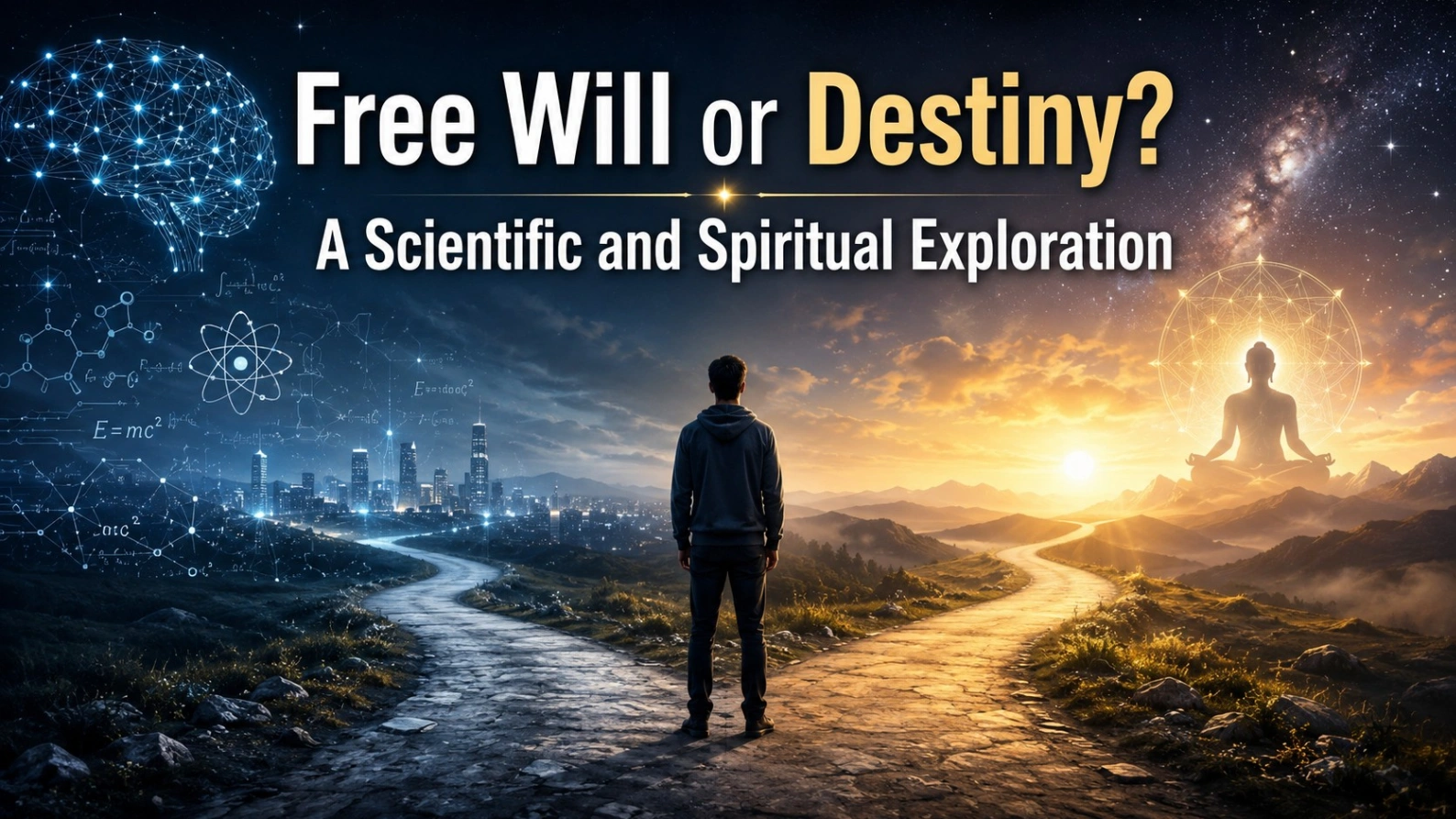
Few questions feel as personal as free will vs destiny. When a relationship ends, a career changes direction, or an unexpected opportunity appears, it is natural to wonder: did I choose this, or was it already meant to happen? Science, philosophy, psychology, and spirituality approach this question differently, yet they often meet at one practical insight: life may contain conditions we did not choose, but our response still matters.
The debate affects how we handle regret, responsibility, ambition, fear, karma, and hope. If everything is fixed, why make an effort? If everything depends on personal choice, how do we make sense of circumstances beyond our control? The goal is not to pick an extreme, but to understand the relationship between influence, action, and acceptance.
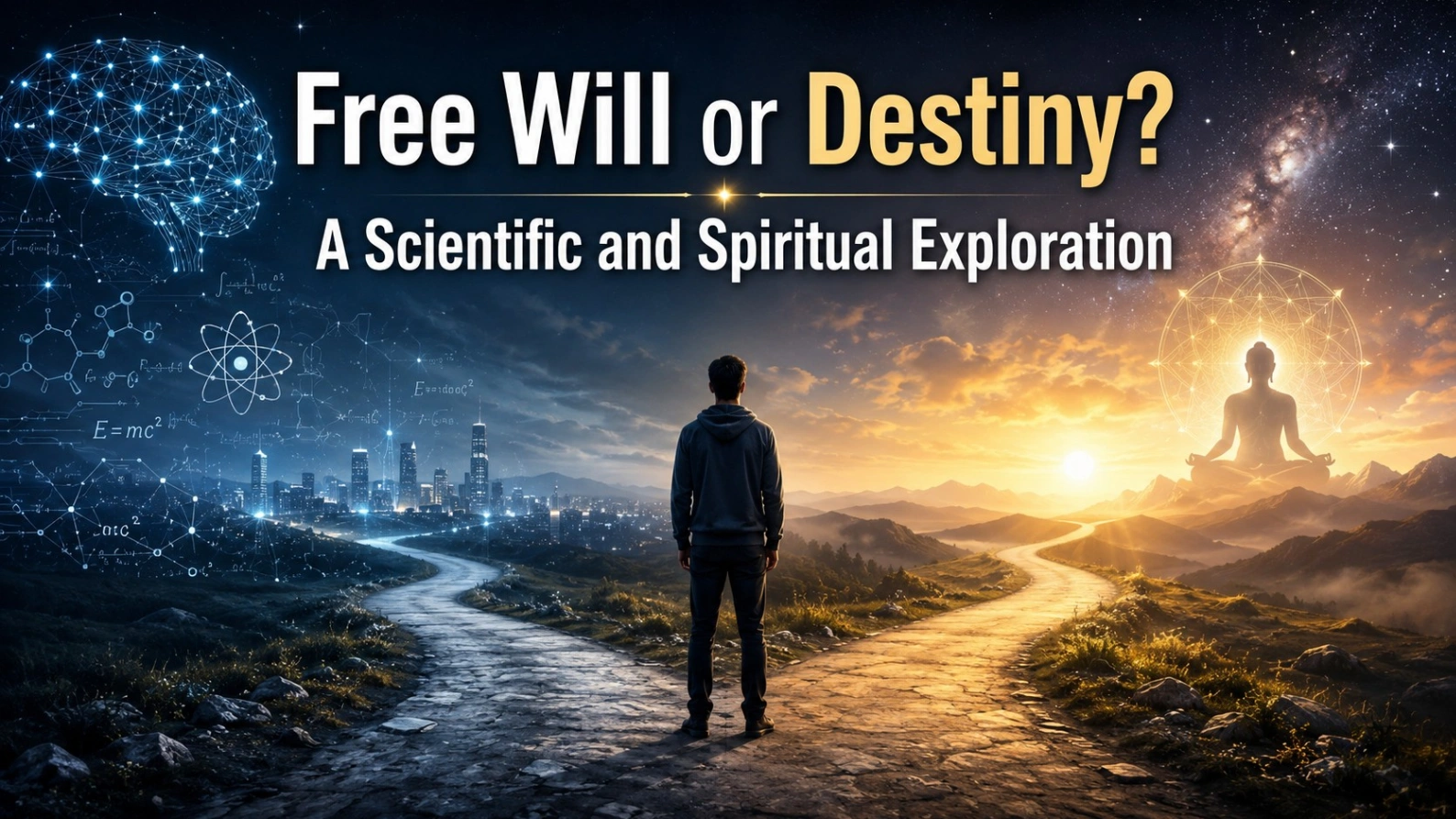
What Do Free Will, Fate, and Destiny Really Mean?
Free will meaning is the ability to make choices that are genuinely our own: pausing, considering options, and deciding how to act. We may not choose every situation, but we can choose whether to speak honestly, work consistently, leave a harmful pattern, or begin again.
Destiny meaning is more layered. Some use it for a larger life path; others see it as the outcome of past actions, present choices, relationships, conditions, and chance. Fate vs free will becomes confusing when these words are treated as identical. Fate usually suggests an unchangeable outcome. Destiny can be understood more flexibly, as a direction that unfolds through participation.
A balanced view recognises both givens and choices. You may not control where you begin, but you can influence what you learn, how you respond, and what you build.
Design Your Destiny
Your past may shape your starting point, but your next choice can shape your direction. Design your destiny through awareness, discipline, purpose, and meaningful action. Begin with one clear step today.
Start Your JourneyThe Scientific View: Are Our Choices Predetermined?
The science of free will does not offer a single final answer. Neuroscience, psychology, and philosophy still debate how conscious decision-making works. Some experiments suggest measurable brain activity can begin before people report awareness of a simple choice. This has led many to ask, are our choices predetermined?
Yet a simple laboratory choice is not the same as deciding whether to forgive, change careers, or act according to a moral principle. Human decisions involve memory, emotion, values, habits, social pressure, information, and long-term goals. The question is far more complex than the idea that the brain acts first, so choice is an illusion.
Neuroscience of free will also offers a practical insight: the brain is adaptable. Habits can strengthen certain responses over time, and reflection, practice, learning, and environment can influence future behaviour. We may not control every thought, but we can build better conditions for wiser action.
Psychology of decision making adds another layer. We use mental shortcuts, emotional reactions, and beliefs we may not fully notice. Stress narrows perspective, fear makes familiar options feel safer, and social expectations shape decisions before we question them. Awareness does not erase these influences, but it gives us room to respond rather than react.
So, do humans have free will? A practical answer is that freedom is real but not unlimited. Biology, upbringing, culture, finances, trauma, opportunity, and timing all matter. Yet influence is not total control. Even within limits, people can develop awareness and take responsibility for their next step.
Determinism vs Free Will: Why the Debate Continues
Determinism vs free will is one of the oldest questions in philosophy. Determinism is the idea that every event follows from earlier causes. From this perspective, each decision may result from prior experiences, genetics, circumstances, and physical processes.
Everyday life still requires responsibility. We praise courage, teach children, apologise, repair mistakes, and encourage growth because actions matter. Understanding causes can help us make better choices.
Free will philosophy often includes a middle position called compatibilism. It suggests that freedom can exist even in a world of causes when a person acts according to their reasons and values rather than being forced or controlled. You may not choose every influence that shaped you, but you can take ownership of how you act once you become aware of it.
This is why free will and consciousness are closely connected. Consciousness lets us observe an impulse, question it, and choose a response closer to our values. That pause can turn anger into a conversation, fear into preparation, and disappointment into learning.
Karma and Destiny: A Spiritual Perspective
In many spiritual traditions, karma and destiny are not meant to make people helpless. Karma is often misunderstood as instant reward or punishment. A deeper understanding sees it as the principle that actions, intentions, and patterns have consequences. Karma and free will are connected because each present action becomes part of the conditions that shape future experience.
Does karma decide destiny? It can influence life without removing human agency. The past may create tendencies or circumstances, but present awareness helps determine how you meet them. Life may carry momentum, yet conscious action can change its direction.
In Hindu thought, free will and karma in Hinduism are often discussed alongside dharma, the right or responsible action for one’s situation. Dharma means recognising your role, values, abilities, and responsibilities, then acting with integrity. This is why destiny and life purpose are often linked. Purpose is not always a single job or dramatic calling. It can be the way you bring clarity, service, courage, and sincerity into the life in front of you.
What the Bhagavad Gita Says About Destiny and Choice
The Bhagavad Gita on destiny is often interpreted through the balance of action and surrender. Arjuna faces a crisis of conscience and confusion. Krishna does not tell him to become passive or escape responsibility. Instead, he guides Arjuna to understand his dharma, act with steadiness, and release attachment to the results.
Bhagavad Gita on free will is equally significant. The teaching repeatedly encourages discernment, self-mastery, and purposeful action. It does not present human beings as powerless. At the same time, it reminds us that outcomes depend on more than personal effort. This is a practical answer to how to balance destiny and effort.
Karma according to Bhagavad Gita is closely connected to Karma Yoga. Karma Yoga means acting with dedication while reducing attachment to praise, fear, success, or failure. It is not a call to stop caring about results. It is a call to stop allowing results to control your inner state. You prepare, act, learn, and improve, but you do not lose yourself in what cannot be fully controlled.
This can change the way we think about fate, karma, and free will. You may not choose every result, but you can choose the quality of your effort: honesty over manipulation, patience over panic, and discipline over avoidance. How karma shapes your life depends not only on what happens to you, but on the intention you bring to what you do next.
Can We Change Our Destiny?
Can we change our destiny? The answer depends on what we mean by destiny. We may not be able to rewrite every circumstance, reverse every loss, or control every external outcome. Some events arrive without our permission. Yet the direction of a life is often shaped by repeated choices: what we practise, who we listen to, what we tolerate, how we recover, and whether we keep learning.
How to create your destiny is not about pretending that challenges do not exist. It is about recognising where your influence begins. You can develop skills, ask for help, build healthier routines, repair relationships, manage money with more care, and choose environments that support your growth. These decisions may seem small on one day, but they become meaningful over months and years.
The role of choice in life becomes clearest during difficult moments. When outcomes are uncertain, choice may simply mean taking the next honest action. Send the application, start the conversation, seek support, study, apologise, rest, or take one step toward the person you want to become. That is not a denial of destiny. It is participation in it.
A Balanced Way to Live With Free Will and Destiny
The question, “Is life written by destiny?”, may never have a universal answer that satisfies everyone. Science can explain many influences on human behaviour, but it cannot fully settle the lived experience of meaning, responsibility, and inner freedom. Spirituality can offer guidance and hope, but it should not be used to dismiss real problems or excuse harmful behaviour.
A healthier approach is to hold both truths together. Accept what you cannot change without surrendering your power to act. Take responsibility without assuming every struggle is your fault. Work toward your goals without making your worth depend entirely on the result. This makes free will vs fate vs destiny a framework for wiser living.
The next time you wonder, “Was this meant to happen?” try adding another question: “What is this moment asking me to do?” That question brings you back to the present. It respects the mystery of life while restoring your ability to choose.
Free will or destiny may not be an either-or question. Life is shaped by causes, conditions, consequences, relationships, and forces beyond our control. Yet it is also shaped by attention, intention, courage, and action. Science and spirituality may use different language, but both can encourage self-awareness. You do not need to control the entire future to live meaningfully today. Recognise the next responsible choice and take it with clarity. That is where freedom begins, and where destiny becomes something you help shape.

Personal Session
Feeling confused about your next step, purpose, karma, or life direction? A personal session can help you reflect with clarity, understand your patterns, and move forward with greater confidence and intention.
Book NowRead Latest Articles
Laughing Outside, Crying Within: A Spiritual Disconnect
Frequently Asked Questions
Is free will stronger than destiny?
Free will and destiny do not have to be opposites. Destiny may describe the circumstances, tendencies, and consequences that shape a person’s path, while free will is the ability to choose a response within those conditions. You may not control every event, but your awareness, effort, values, and actions can influence how your life unfolds.Are our choices predetermined?
Human choices are influenced by biology, experiences, habits, emotions, environment, and available opportunities. However, influence does not always mean complete control. Awareness can help people pause, reflect, and make more intentional decisions.Does karma decide destiny?
Karma can shape future circumstances through the consequences of actions and intentions, but it does not have to remove personal responsibility. Present choices, self-awareness, effort, and ethical action still influence the direction of life.What does the Bhagavad Gita teach about free will?
The Bhagavad Gita encourages people to understand their dharma, act sincerely, and release excessive attachment to outcomes. It teaches purposeful action, self-mastery, and inner balance rather than helplessness or passivity.