
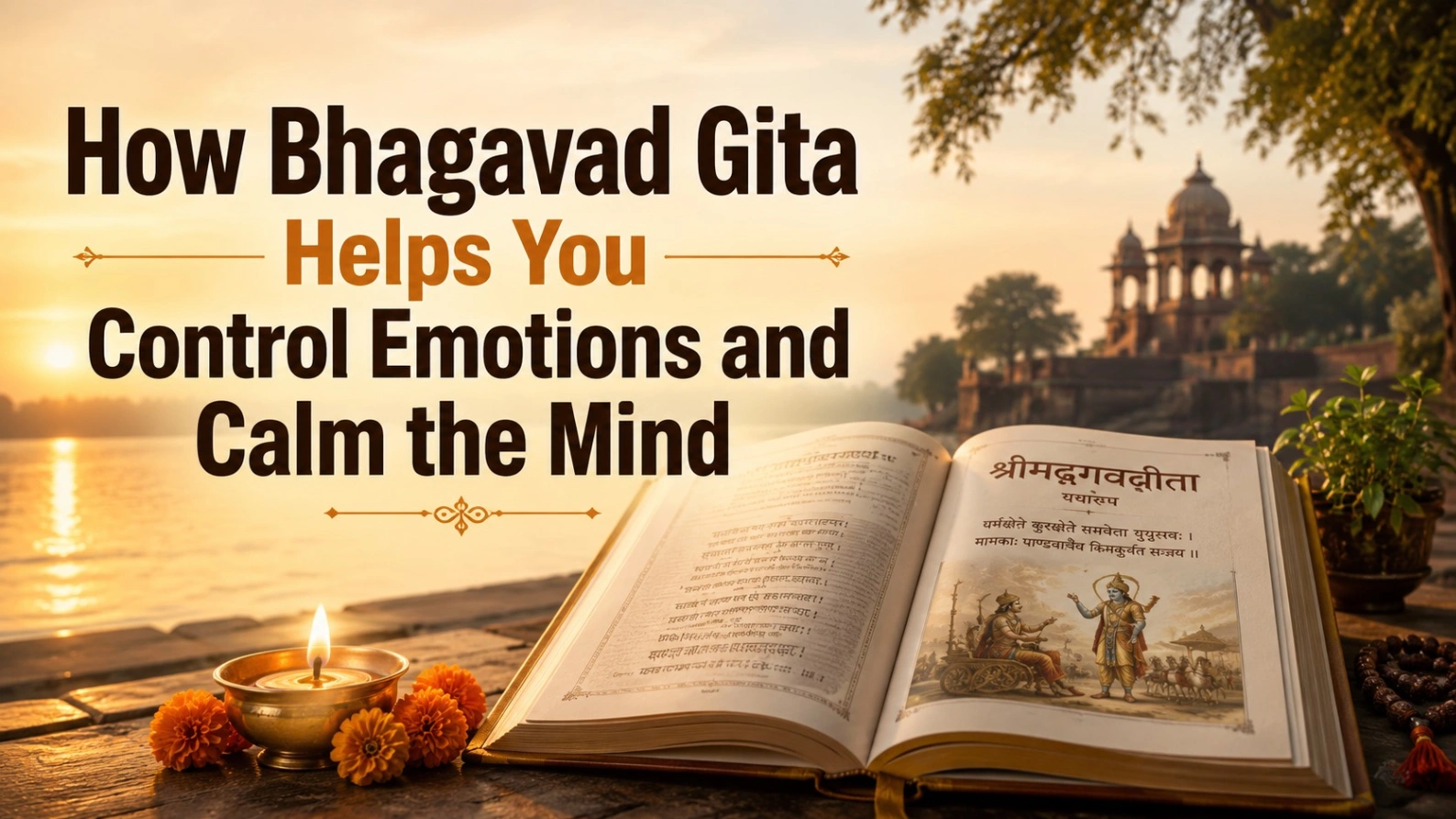
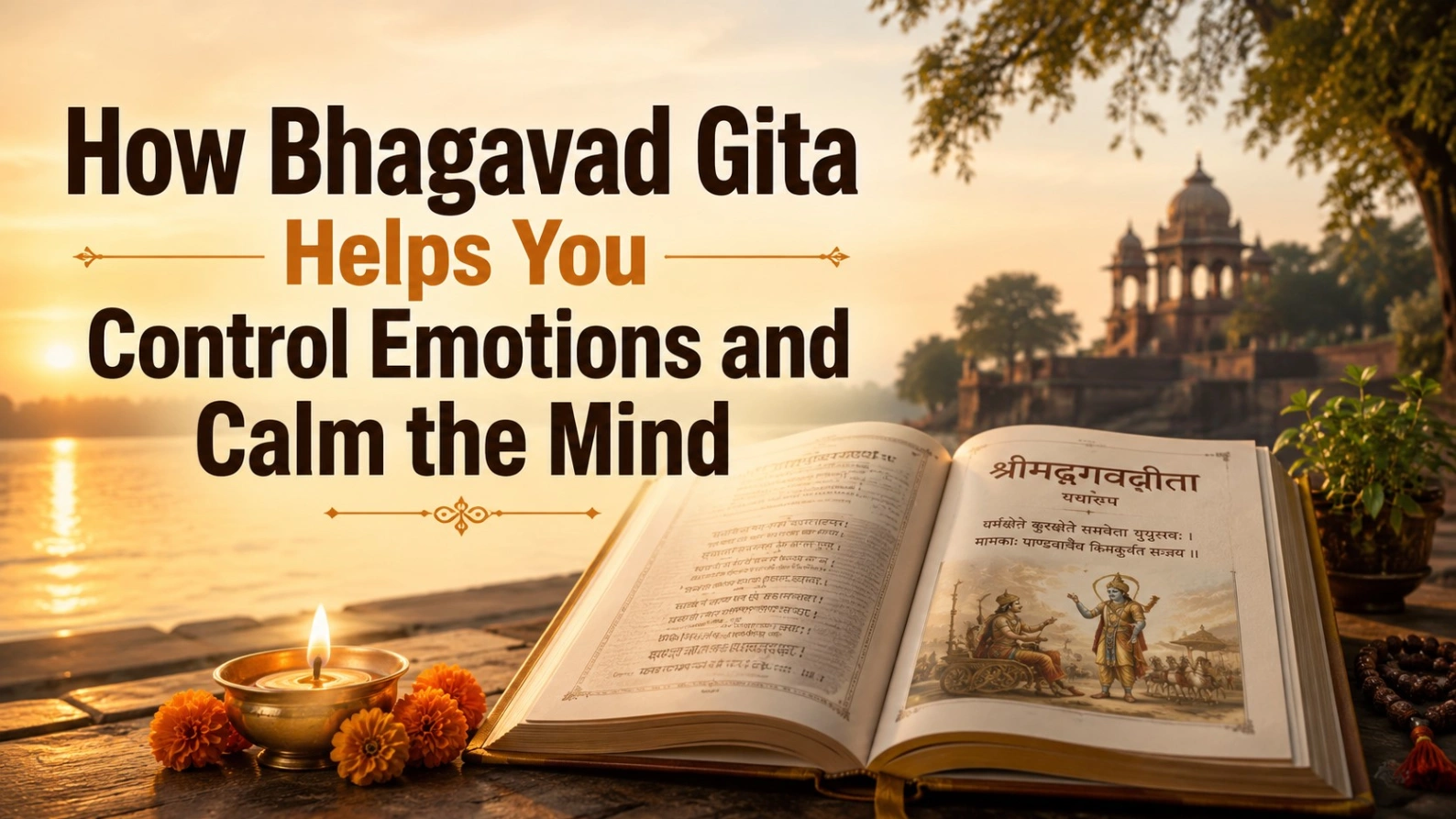
The Bhagavad Gita for emotional balance is not just a spiritual text; it is a practical guide for anyone struggling with stress, anger, fear, confusion, overthinking, or emotional instability. In today’s fast-moving world, people often look outside for peace, but the Bhagavad Gita teaches that true peace begins within. It helps us understand the mind, control emotions, and respond to life with wisdom instead of reacting with fear or frustration.
The Gita begins in a moment of deep emotional crisis. Arjuna, a great warrior, stands on the battlefield of Kurukshetra, overwhelmed by doubt, grief, attachment, and confusion. His hands tremble, his mind becomes restless, and he loses the strength to act. This moment is deeply human. Everyone, at some point, faces an inner battlefield where emotions become heavy and the mind feels disturbed.
Lord Krishna does not simply tell Arjuna to suppress his emotions. Instead, He guides him to understand them. This is why Bhagavad Gita teachings remain relevant even today. Whether someone is dealing with anxiety, anger, sadness, fear, or overthinking, the Gita offers timeless wisdom for mental peace and emotional stability.
Understanding the Mind Through Bhagavad Gita Teachings
One of the most powerful lessons from the Bhagavad Gita is that the mind can be our friend or our enemy. When the mind is uncontrolled, it creates restlessness, fear, and confusion. When the mind is trained, it becomes a source of clarity, strength, and inner peace.
Many people try to control emotions by ignoring them, hiding them, or reacting quickly. But the Bhagavad Gita teaches a more balanced path. It encourages self-awareness. Before we control emotions, we must first understand what is happening within us.
When anger rises, the Gita invites us to pause. When fear appears, it asks us to look deeper. When attachment causes pain, it reminds us that our peace should not depend completely on external situations. This awareness is the first step toward emotional control.
In modern life, this teaching is very practical. Before replying in anger, pause. Before making a decision out of fear, breathe. Before allowing overthinking to take over, observe the mind. This simple shift can bring mental clarity and emotional balance.
Design Your Destiny
Are you ready to move from emotional confusion to inner clarity? Join the Design Your Destiny program and learn practical spiritual tools to calm the mind, control emotions, and live with greater awareness, confidence, and peace. Begin your journey toward a balanced and purposeful life today.
Start Your Journey!Why Emotional Control Does Not Mean Suppression
A common misunderstanding is that controlling emotions means becoming emotionless. The Bhagavad Gita does not teach emotional suppression. It teaches emotional mastery.
Suppression means pushing emotions down without understanding them. Mastery means seeing emotions clearly and not allowing them to control your actions. For example, anger may arise, but you do not have to speak harshly. Fear may appear, but you do not have to give up your duty. Sadness may come, but you do not have to lose hope.
Bhagavad Gita wisdom teaches that emotions are temporary movements of the mind. They come and go. But the self within us is deeper than these passing feelings. When we remember this, we stop identifying with every emotion.
This is an important lesson for anyone searching for how to control emotions. You do not have to fight your emotions. You have to become aware of them, understand them, and choose your response wisely.
The Role of Detachment in Mental Peace
Detachment is one of the most important Bhagavad Gita teachings for mental peace. However, detachment does not mean not caring. It means doing your best without becoming emotionally dependent on the result.
Many emotional struggles begin because we become too attached to outcomes. We want people to behave exactly as we expect. We want every plan to succeed. We want appreciation, success, comfort, and certainty. When life does not match our expectations, the mind becomes disturbed.
The Bhagavad Gita teaches karma yoga, the path of selfless action. It encourages us to focus on our duty and effort while accepting the result with balance. This does not make a person passive. In fact, it makes action more powerful because the mind is not weakened by fear of failure.
When we practice this in daily life, emotional balance becomes easier. We work sincerely, but we do not collapse if the result is delayed. We love deeply, but we do not try to control everything. We make efforts, but we do not allow anxiety to destroy our peace.
This is how detachment helps in emotional control. It frees the mind from unnecessary pressure and creates space for calmness.
How Karma Yoga Brings Peace of Mind
Karma yoga is one of the most practical teachings of the Bhagavad Gita for modern life. It teaches us to act with sincerity, responsibility, and dedication, without being trapped by ego or expectation.
Many people feel stressed because they constantly think about results. Will I succeed? Will people appreciate me? What if I fail? What if things go wrong? This constant worry creates overthinking and emotional exhaustion.
Karma yoga shifts the focus from result to right action. It reminds us that our role is to do what is right with a calm and focused mind. The result may depend on many factors, but our effort, intention, and attitude are in our hands.
This teaching is extremely helpful for students, professionals, parents, spiritual seekers, and anyone facing pressure in life. When we practice karma yoga, our mind becomes lighter. We stop wasting energy on fear and start using energy for meaningful action.
This is why the Bhagavad Gita for mental peace is so powerful. It does not ask us to escape life. It teaches us how to live fully without losing inner balance.
Bhagavad Gita Teachings on Anger and Emotional Reactions
Anger is one of the strongest emotions that can disturb the mind. The Bhagavad Gita explains that uncontrolled desire and attachment often lead to anger. When expectations are not fulfilled, frustration arises. When frustration grows, it can cloud judgment.
This is visible in everyday life. We become angry when someone does not listen to us, when situations do not go as planned, or when our ego feels hurt. In such moments, the mind becomes narrow. We may say things we regret or make decisions that create more suffering.
The Gita’s solution is awareness and discipline. Instead of reacting immediately, we can pause and observe. What expectation was hurt? What attachment is causing this anger? Is my response coming from wisdom or ego?
This kind of self-questioning helps reduce emotional reactions. Over time, the mind becomes more stable. We may still feel anger, but we no longer become slaves to it.

Bhagavad Gita for Overthinking and Mental Clarity
Overthinking is one of the biggest causes of mental unrest today. The mind keeps repeating past events or imagining future problems. This creates anxiety, confusion, and emotional tiredness.
The Bhagavad Gita helps with overthinking by bringing the mind back to clarity and action. It teaches that confusion increases when we are disconnected from wisdom and duty. When we know what is right and focus on doing it, the mind becomes steady.
Overthinking often happens when we try to control everything. The Gita reminds us that we cannot control every result, every person, or every future event. But we can control our attitude, effort, and response.
This simple understanding can calm the mind. Instead of asking, “What if everything goes wrong?” we can ask, “What is the right action I can take now?” This shift reduces anxiety and brings mental peace.
Inner Peace Comes from Self-Awareness
The Bhagavad Gita teaches that true peace does not come from external comfort alone. A person may have success, wealth, and recognition but still feel restless inside. On the other hand, a person with self-awareness can remain peaceful even during challenges.
Self-awareness means knowing your thoughts, emotions, desires, fears, and patterns. It means watching the mind instead of being completely controlled by it. This awareness creates a gap between emotion and action.
In that gap, wisdom becomes possible.
For example, when jealousy arises, self-awareness helps you recognize it without acting negatively. When fear arises, awareness helps you breathe and think clearly. When sadness arises, awareness allows you to care for yourself without losing hope.
This is one of the deepest Bhagavad Gita lessons for emotional healing. Healing begins when we stop running away from the mind and start understanding it.
Devotion and Surrender as Emotional Strength
The Bhagavad Gita also teaches the power of devotion and surrender. Surrender does not mean weakness. It means trusting a higher wisdom while continuing to perform your duty.
Many emotional burdens come from the feeling that we must carry everything alone. We try to control every situation, solve every problem, and predict every outcome. This creates pressure and fear.
Devotion softens the heart. Surrender gives rest to the mind. When we offer our actions, worries, and struggles to the Divine, we feel supported from within. This does not remove all challenges, but it gives us the strength to face them with faith and courage.
For spiritual seekers, this is a powerful way to calm the mind. Prayer, meditation, chanting, or simply remembering the Divine can help reduce emotional heaviness and bring inner peace.

How to Apply Bhagavad Gita Wisdom in Daily Life
The real value of Bhagavad Gita teachings lies in practice. Reading the Gita is helpful, but living its wisdom creates transformation.
Start your day with a peaceful thought or verse from the Bhagavad Gita. Before beginning work, remind yourself to focus on sincere action rather than worrying about results. When emotions become intense, pause and breathe before reacting.
During stressful moments, ask yourself: What is my duty right now? Am I acting from wisdom or emotion? Am I attached to the result more than the right action?
You can also practice a few minutes of meditation daily. Sit quietly, observe your thoughts, and let them pass without judgment. This helps train the mind and creates emotional stability.
Another simple practice is journaling. Write down what disturbed you, what emotion came up, and what the Gita’s wisdom would suggest. This builds self-awareness and helps you respond better in the future.
Bhagavad Gita for a Calm, Positive and Peaceful Life
A calm mind does not mean a life without problems. It means having the inner strength to face problems without losing yourself. The Bhagavad Gita teaches this strength beautifully.
It reminds us that life will always bring change, success, failure, praise, criticism, joy, and sorrow. Emotional balance comes when we stop being thrown around by every situation. We learn to remain steady, do what is right, and keep our connection with inner wisdom.
This does not happen in one day. It is a gradual journey. But every small practice matters. Every pause before anger, every moment of self-awareness, every act done without selfish expectation, and every prayer made with sincerity brings the mind closer to peace.

The Bhagavad Gita for emotional balance is not only for saints or scholars. It is for every person who wants to live with more clarity, courage, discipline, and inner peace. Its teachings help us control emotions, calm the mind, reduce overthinking, and build a life rooted in wisdom.
The Bhagavad Gita teaches that emotional balance and mental peace are possible when we understand the mind, practice detachment, perform right action, and connect with the deeper self. It does not ask us to escape emotions, but to rise above emotional slavery.
When we apply Bhagavad Gita wisdom in daily life, we learn to respond instead of react. We become less controlled by anger, fear, anxiety, and attachment. The mind becomes calmer, the heart becomes stronger, and life becomes more meaningful.
In a world full of noise and pressure, the Bhagavad Gita remains a timeless guide for peace of mind, emotional stability, and spiritual growth. Its message is simple yet powerful: master the mind, act with wisdom, and discover the peace that already exists within you.
Personal Session
If you feel stuck in overthinking, emotional stress, or inner conflict, a personal session can help you receive focused guidance for your situation. Book a personal session to understand your emotional patterns, reconnect with inner wisdom, and take practical steps toward mental peace and spiritual growth.
Book Now