
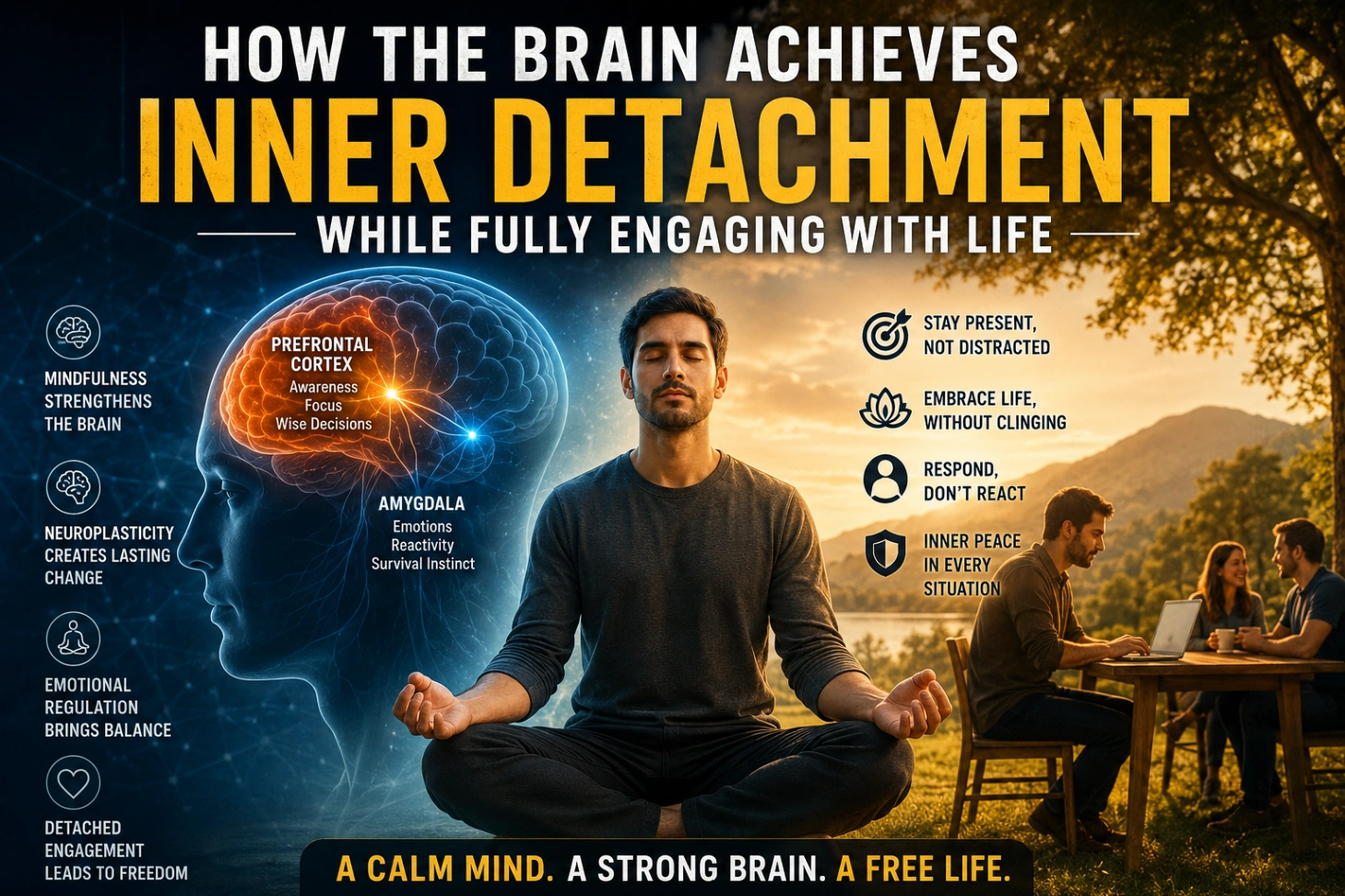
Life constantly asks us to invest our time, emotions, and energy into relationships, careers, ambitions, and personal goals. Naturally, we become attached to people and outcomes that matter to us. However, this attachment often brings stress, anxiety, and disappointment whenever life unfolds differently than expected. This is where the concept of inner detachment becomes valuable. Rather than encouraging emotional withdrawal, inner detachment teaches us how to remain deeply involved in life without allowing external circumstances to dictate our inner peace. Modern neuroscience increasingly supports this approach, showing that the brain can develop emotional resilience, mindfulness, and greater self-awareness through consistent practice.
What Is Inner Detachment?
Many people mistakenly believe that detachment means becoming emotionally distant or indifferent. In reality, inner detachment is quite the opposite. It is the ability to care deeply while maintaining emotional balance regardless of circumstances. A detached person continues to love, work hard, and pursue meaningful goals, but their happiness does not depend entirely on achieving every desired outcome. Instead of suppressing emotions, they experience them with awareness and allow them to pass without becoming overwhelmed.
This mindset enables people to remain fully engaged with life while reducing unnecessary suffering caused by excessive emotional attachment. Rather than reacting impulsively to every challenge, they learn to respond thoughtfully and consciously.
Design Your Destiny
Ready to create lasting inner peace and live with greater clarity? Discover Design Your Destiny and learn practical principles that help you develop self-awareness, emotional balance, and conscious living. Begin your journey toward a calmer mind and a more purposeful life today.
Start Your JourneyHow the Brain Creates Emotional Attachment
The human brain evolved to help us survive by constantly identifying rewards, threats, and opportunities. As a result, it naturally forms emotional attachments to people, achievements, identities, routines, and expectations. These attachments are not inherently negative—they help build relationships and motivate personal growth. Problems arise only when our emotional well-being becomes completely dependent on them.
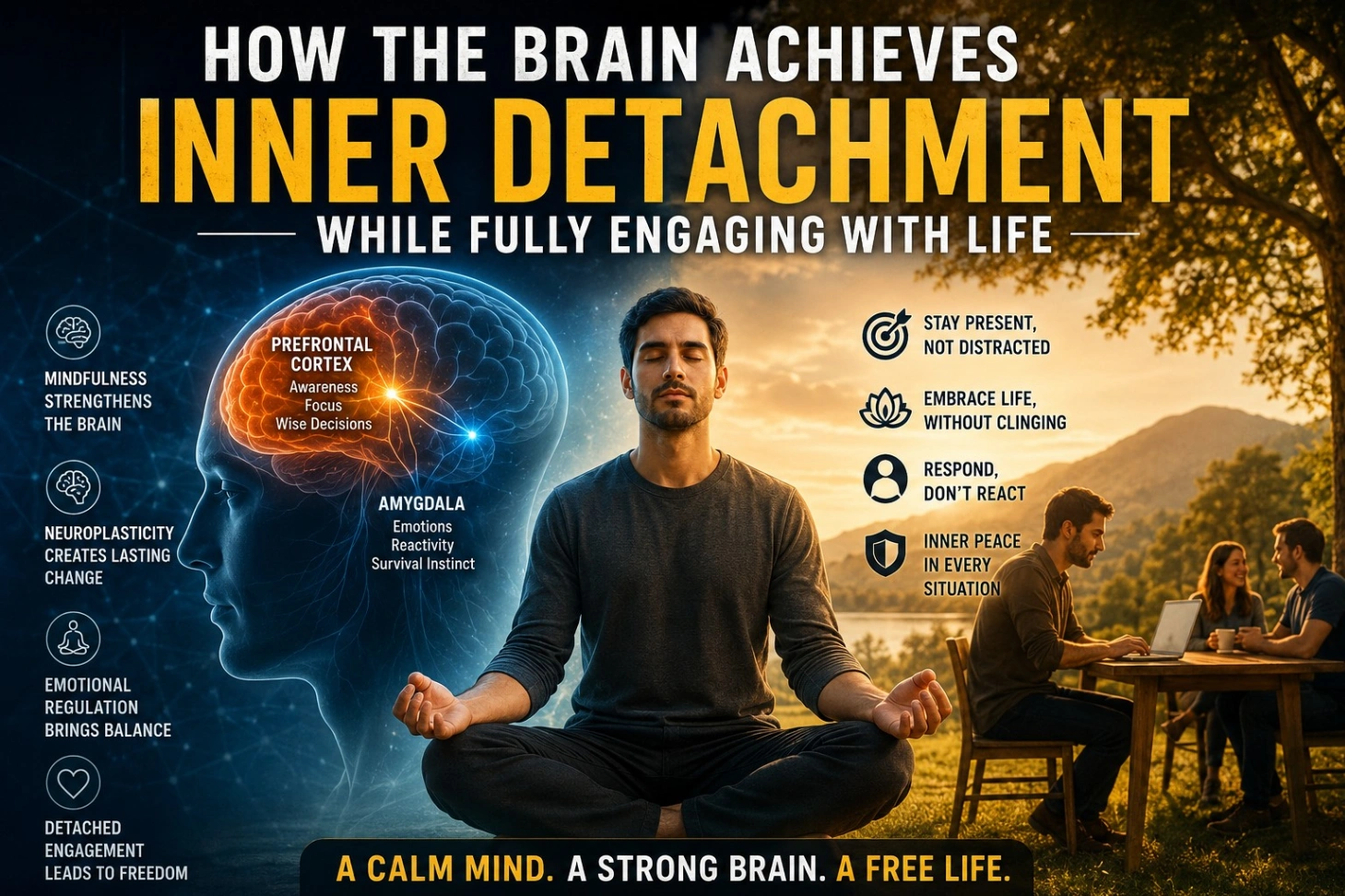
The amygdala, one of the brain's primary emotional centers, quickly evaluates situations for potential danger or emotional significance. When expectations are not met, it can trigger anxiety, fear, frustration, or disappointment. Meanwhile, the brain's reward circuitry reinforces behaviors associated with pleasure and success, making us crave positive outcomes repeatedly. Fortunately, another brain region, the prefrontal cortex, helps regulate these emotional responses by encouraging rational thinking, self-control, and long-term decision-making.
Why Emotional Attachment Leads to Stress
Stress is often less about the situation itself and more about how strongly we cling to a particular outcome. When our happiness depends entirely on success, approval, or certainty, the brain begins interpreting uncertainty as a potential threat. This activates the body's stress response, increasing cortisol levels and narrowing our focus toward worry and overthinking.
Over time, chronic emotional attachment can make the brain increasingly reactive. Small disappointments begin feeling much larger than they actually are because the nervous system remains in a heightened state of alertness. Inner detachment gradually interrupts this cycle by teaching the brain that uncertainty does not always signal danger. Instead of becoming trapped in fear, the mind learns to remain flexible and adaptive.
The Neuroscience of Mindfulness and Inner Detachment
Mindfulness has become one of the most extensively researched methods for strengthening emotional regulation. Rather than attempting to eliminate thoughts or emotions, mindfulness teaches us to observe them without immediately reacting. This simple shift creates psychological space between an experience and our response.
Numerous studies suggest that consistent mindfulness practice improves attention, reduces emotional reactivity, enhances self-awareness, and strengthens cognitive control. As mindfulness becomes a daily habit, the brain becomes better at noticing emotional triggers before they escalate into automatic reactions. This allows people to stay calm even in challenging situations while remaining fully present in their experiences.
Neuroplasticity Makes Detachment Trainable
One of the most encouraging discoveries in neuroscience is that the brain remains adaptable throughout life. This ability, known as neuroplasticity, means that our mental habits physically influence the brain's neural pathways. Every time we consciously choose awareness instead of impulsive reaction, we strengthen the networks responsible for emotional regulation.
With repeated practice, responding calmly becomes increasingly natural. What initially requires effort gradually develops into an automatic pattern of thinking. This explains why meditation, reflective journaling, and mindfulness often produce lasting emotional benefits over time. Inner detachment is therefore not a personality trait that only a few people possess—it is a skill that anyone can cultivate.
Responding Instead of Reacting
One of the clearest signs of inner detachment is the ability to pause before responding. Imagine receiving unexpected criticism at work or experiencing a setback in a personal relationship. A reactive mind immediately becomes defensive, anxious, or angry. A detached mind still experiences disappointment, but it also creates enough mental space to evaluate the situation objectively.
Instead of asking, "Why is this happening to me?" a more detached perspective asks, "What can I learn from this experience?" That subtle shift dramatically changes emotional outcomes. The situation remains the same, but the brain processes it with greater clarity, reducing unnecessary emotional suffering.
Self-Awareness: The Foundation of Emotional Freedom
Self-awareness is one of the most important components of inner detachment. When we become aware of our thoughts and emotional patterns, we stop identifying completely with them. We recognize that emotions are temporary experiences rather than permanent truths.
This awareness creates greater psychological flexibility. Instead of becoming trapped in cycles of overthinking or emotional rumination, we learn to observe our inner experiences with curiosity rather than judgment. Over time, this strengthens emotional resilience and improves decision-making across every area of life.
Detachment Is Not Indifference
Perhaps the biggest misconception about detachment is that it means not caring. In reality, indifference says, "I don't care what happens." Inner detachment says, "I care deeply, but I won't allow my inner peace to depend entirely on the outcome."
This distinction is powerful because it encourages wholehearted participation without emotional dependence. Detached people often become more compassionate, patient, and emotionally available because they are no longer consumed by constant fear of failure, rejection, or uncertainty.

The Bhagavad Gita and Detached Action
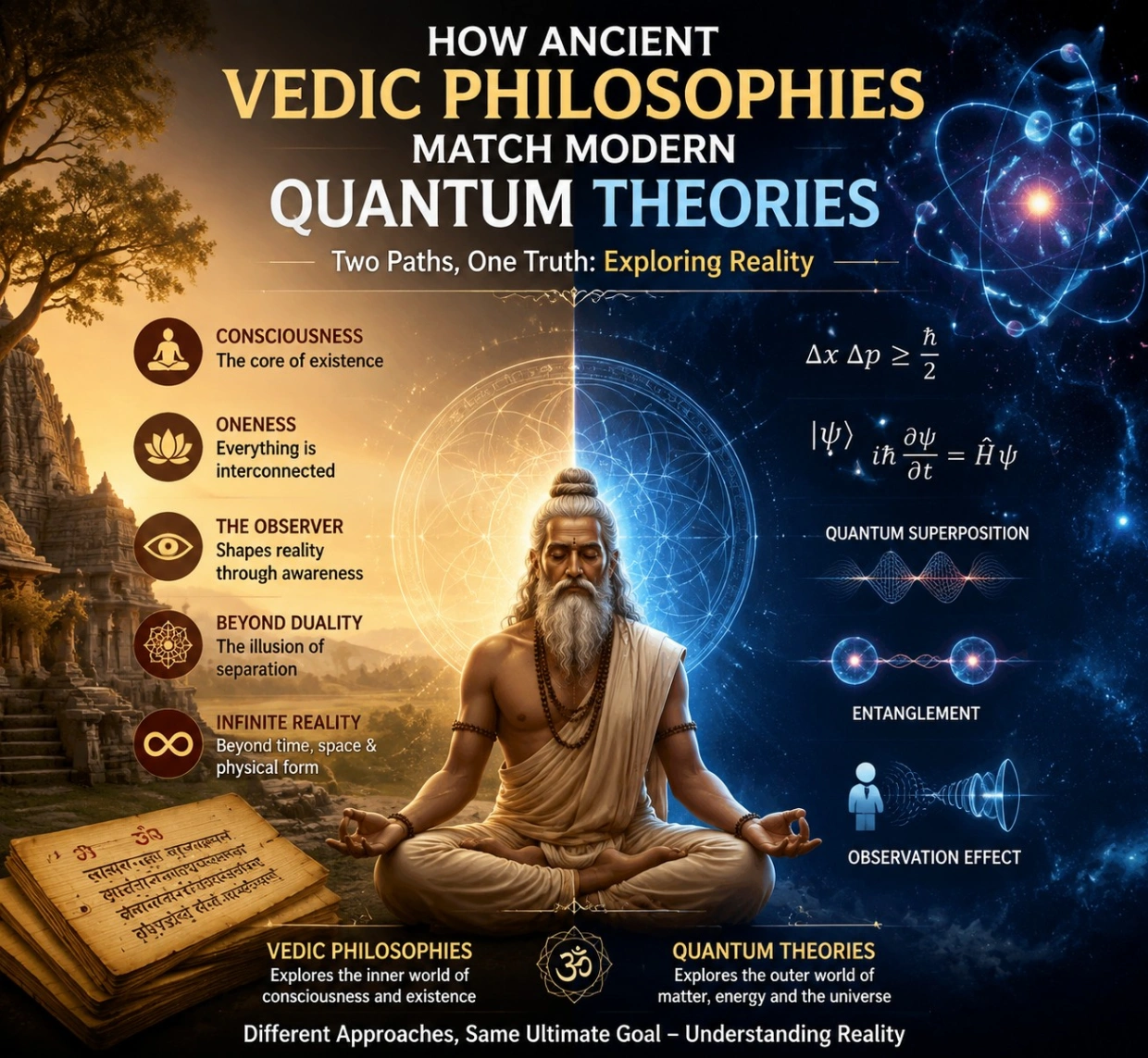
The idea of detached engagement is not new. Thousands of years before neuroscience began studying emotional regulation, the Bhagavad Gita introduced the principle of Karma Yoga, encouraging individuals to focus on sincere effort rather than attachment to results. This timeless teaching aligns remarkably well with modern psychological research.
When people concentrate on actions they can control instead of outcomes they cannot, stress decreases while performance often improves. By remaining fully committed to the present moment, individuals experience greater peace regardless of success or failure.
Practical Ways to Develop Inner Detachment
Developing inner detachment does not require withdrawing from daily responsibilities. Instead, it involves making small, consistent changes in how we relate to our experiences. Practicing mindfulness meditation for just a few minutes each day, observing emotions without judgment, pausing before reacting, limiting unhealthy comparisons, journaling regularly, and spending time in nature can all strengthen emotional regulation.
Equally important is shifting attention from outcomes to actions. By focusing on what we can control instead of constantly worrying about what we cannot, the brain gradually becomes less reactive and more resilient.
Science and Spirituality Meet
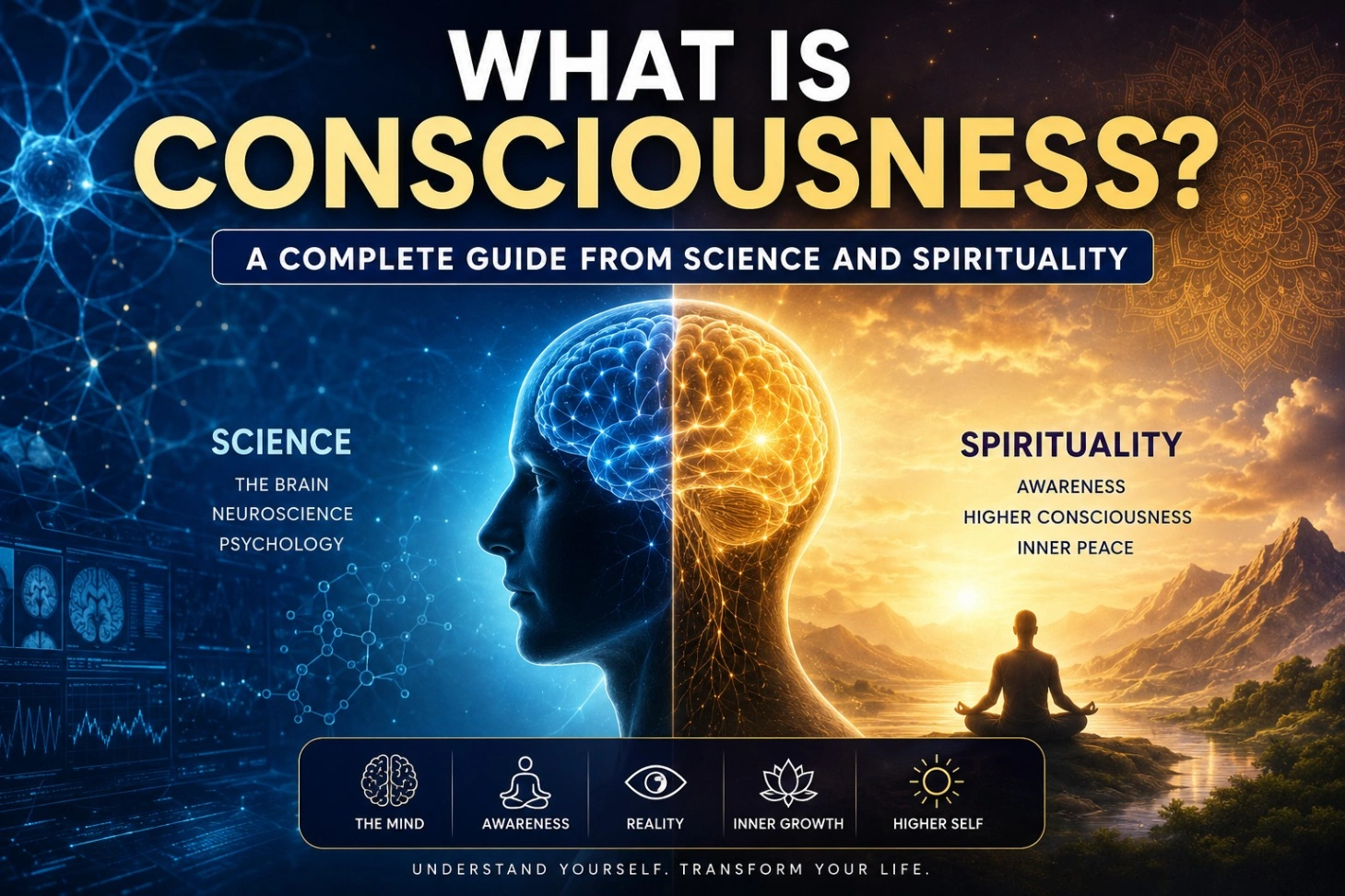
One of the most fascinating aspects of this topic is how closely modern neuroscience and ancient spiritual wisdom converge. Science explains how mindfulness reshapes the brain through neuroplasticity, strengthens the prefrontal cortex, and regulates emotional responses. Spiritual traditions explain why cultivating awareness, non-attachment, and present-moment living leads to lasting inner peace.
Together, these perspectives offer a holistic understanding of human well-being. Science provides the mechanism, while spirituality offers the wisdom to apply it meaningfully in everyday life.

Inner detachment is not about withdrawing from life or suppressing emotions. It is about developing the ability to remain calm, aware, and emotionally balanced while participating fully in every experience. Modern neuroscience shows that the brain is remarkably adaptable, capable of strengthening emotional regulation through mindfulness, self-awareness, and consistent practice. At the same time, timeless spiritual teachings remind us that true freedom comes not from controlling the world around us but from transforming our relationship with it.
When we stop allowing every success, failure, compliment, or criticism to determine our emotional state, we discover a quieter mind and a more resilient heart. That is the essence of inner detachment—living wholeheartedly without losing ourselves in the process.
Personal Session
Looking for personalized guidance on your journey of inner growth? Book a one-on-one personal session to explore practical tools for mindfulness, emotional resilience, self-discovery, and conscious living. Take the next step toward lasting transformation with expert guidance tailored to your unique path.
Book Now