



Life often feels like a tug of war inside us. Some days we feel calm, clear, and balanced. Other days we are restless, ambitious, or overwhelmed. And sometimes, we feel stuck, dull, or unmotivated. According to ancient wisdom, this inner fluctuation is not random; it is governed by the three gunas. Learning how to rise above the three gunas is not about rejecting life but mastering it from within.
The three gunas of nature— sattva, rajas, and tamas are fundamental forces described in Hindu philosophy and explained deeply in the Bhagavad Gita. These gunas influence our thoughts, emotions, actions, and even spiritual growth. Understanding them is the first step toward inner freedom.
What Are the Three Gunas?
The gunas are qualities of material nature that shape human behavior and consciousness.
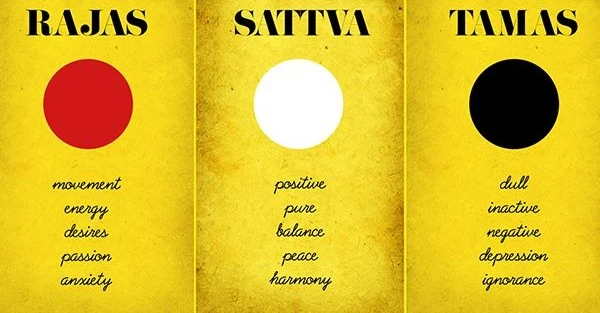
Sattva represents clarity, harmony, wisdom, and balance
Rajas represents action, desire, ambition, and restlessness
Tamas represents inertia, ignorance, confusion, and lethargy
Every human being carries all three gunas, but in different proportions. Your dominant guna shapes your personality, habits, and outlook on life.
How the Gunas Affect the Mind and Behavior
The gunas do not just influence what we do; they influence how we think.
A sattvic mind seeks truth, peace, and higher understanding
A rajasic mind is driven by achievement, recognition, and attachment
A tamasic mind avoids effort, clarity, and responsibility
This is why the same situation can trigger peace in one person and anxiety or avoidance in another. The gunas operate quietly in the background, shaping reactions without us realizing it.
The Three Gunas in the Bhagavad Gita
In Chapter 14 of the Bhagavad Gita, Lord Krishna explains how the gunas bind the soul to material existence. Even sattva, though pure and uplifting, still creates attachment; attachment to goodness, knowledge, and happiness.
This is a powerful insight: being good is not the same as being free.
That is why the Gita does not stop at balancing the gunas. It points toward something higher; the gunatita state, the state beyond all three gunas.
Why Even Sattva Guna Is Binding
Many spiritual seekers aim to increase sattva guna through clean food, meditation, discipline, and positive habits. This is an important stage of spiritual growth. But the Gita reminds us that sattva also binds; it binds through attachment to peace, purity, and moral superiority.
When someone identifies strongly with being “spiritual,” “good,” or “evolved,” ego quietly returns in a refined form. True freedom lies not in perfecting sattva, but in transcending identification altogether.
Signs of Dominant Sattva, Rajas, and Tamas
Understanding your dominant guna helps you move forward consciously.
Sattva-dominant signs
Calmness and inner stability
Love for learning and self-reflection
Contentment with simplicity
Rajas-dominant signs
Constant activity and ambition
Anxiety tied to results
Strong emotional highs and lows
Tamas-dominant signs
Procrastination and avoidance
Confusion or pessimism
Resistance to change
There is no judgment here; only awareness. Awareness itself begins the shift.
How to Overcome Tamas Guna
Tamas thrives in darkness, stagnation, and unconsciousness. To overcome tamas guna:
Establish simple daily routines
Expose yourself to natural light and movement
Reduce excessive sleep, junk food, and mindless scrolling
Practice awareness instead of self-criticism
The goal is not force, but gentle awakening.
How to Reduce Rajas Guna
Rajas is fueled by desire and constant doing. While it helps you function in the world, excess rajas creates burnout and dissatisfaction.
To reduce rajas:
Slow down decision-making
Practice breath awareness and meditation
Detach from outcomes
Observe desires without acting immediately
Rajas settles when action becomes conscious instead of compulsive.
How to Increase Sattva Guna (Without Getting Stuck There)
Sattva is cultivated through:
Mindful eating and living
Truthful speech
Self-study and reflection
Meditation and devotion
But remember: sattva is a ladder, not the destination. Use it to rise, not to cling.
What Is the Gunatita State?
Gunatita means “beyond the gunas.” A gunatita person is not disturbed by pleasure or pain, success or failure. They act without ego and observe life without attachment.
This does not mean becoming inactive or emotionless. It means acting from awareness rather than conditioning.
Krishna describes the gunatita as one who:
Remains steady in all situations
Does not identify with mental states
Acts without craving or aversion
This is the essence of inner freedom.
How to Become Gunatita According to the Gita
The Gita emphasizes bhakti (devotion), jnana (wisdom), and karma yoga (selfless action) as paths to transcend the gunas.
Practically, this means:
Doing your duty without attachment to results
Observing thoughts instead of obeying them
Surrendering ego-driven control
Living with awareness in everyday actions
Freedom comes not by escaping life, but by meeting it consciously.
Living Beyond Sattva, Rajas, and Tamas in Daily Life
Rising above the three gunas does not require renunciation. It requires detachment and awareness.
You still work, love, plan, and act but without being internally shaken. Over time, the grip of ego, desire, and ignorance loosens. Life flows, but you are no longer dragged by it.
This is conscious living. This is spiritual maturity.
Rising Above Material Nature
The journey beyond the gunas is subtle and deeply personal. It unfolds through awareness, not effort alone. When you stop fighting your inner states and start observing them, transformation begins naturally.
True spirituality is not about becoming better; it is about becoming free.
Understanding the three gunas is the first step but recognizing which guna dominates you is where real transformation begins.