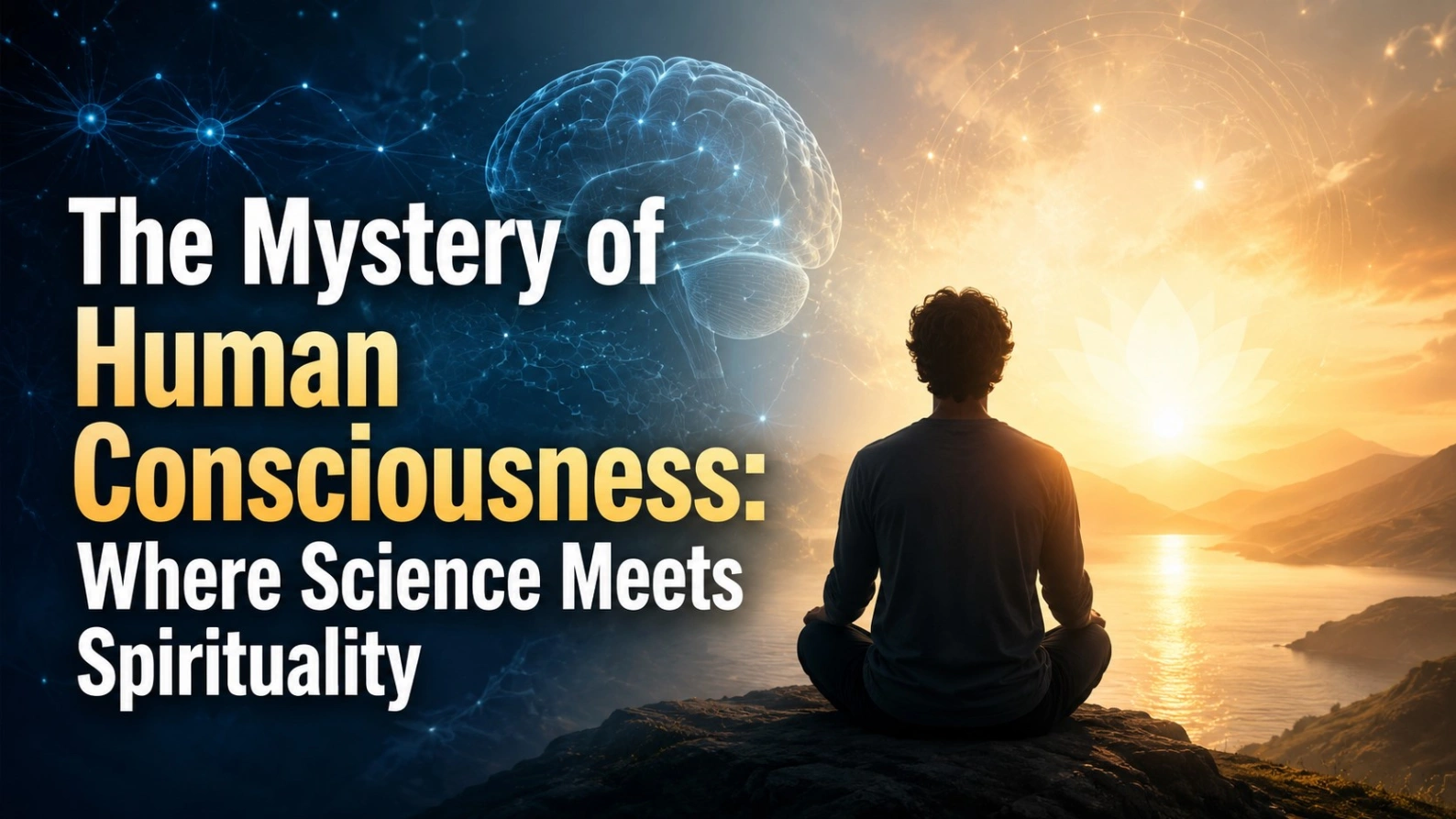
Human consciousness is one of the deepest mysteries of life. Every thought you have, every emotion you feel, every memory you carry, and every moment you experience is possible because you are conscious. Yet, despite centuries of philosophy, spiritual inquiry, and modern neuroscience, the question remains: what exactly is consciousness?
Science can study the brain, observe neural activity, and explore how the mind processes information. Spiritual traditions, on the other hand, often explore consciousness through meditation, self-awareness, silence, and inner experience. Both perspectives are trying to understand the same essential reality: what makes us aware of ourselves and the world around us?
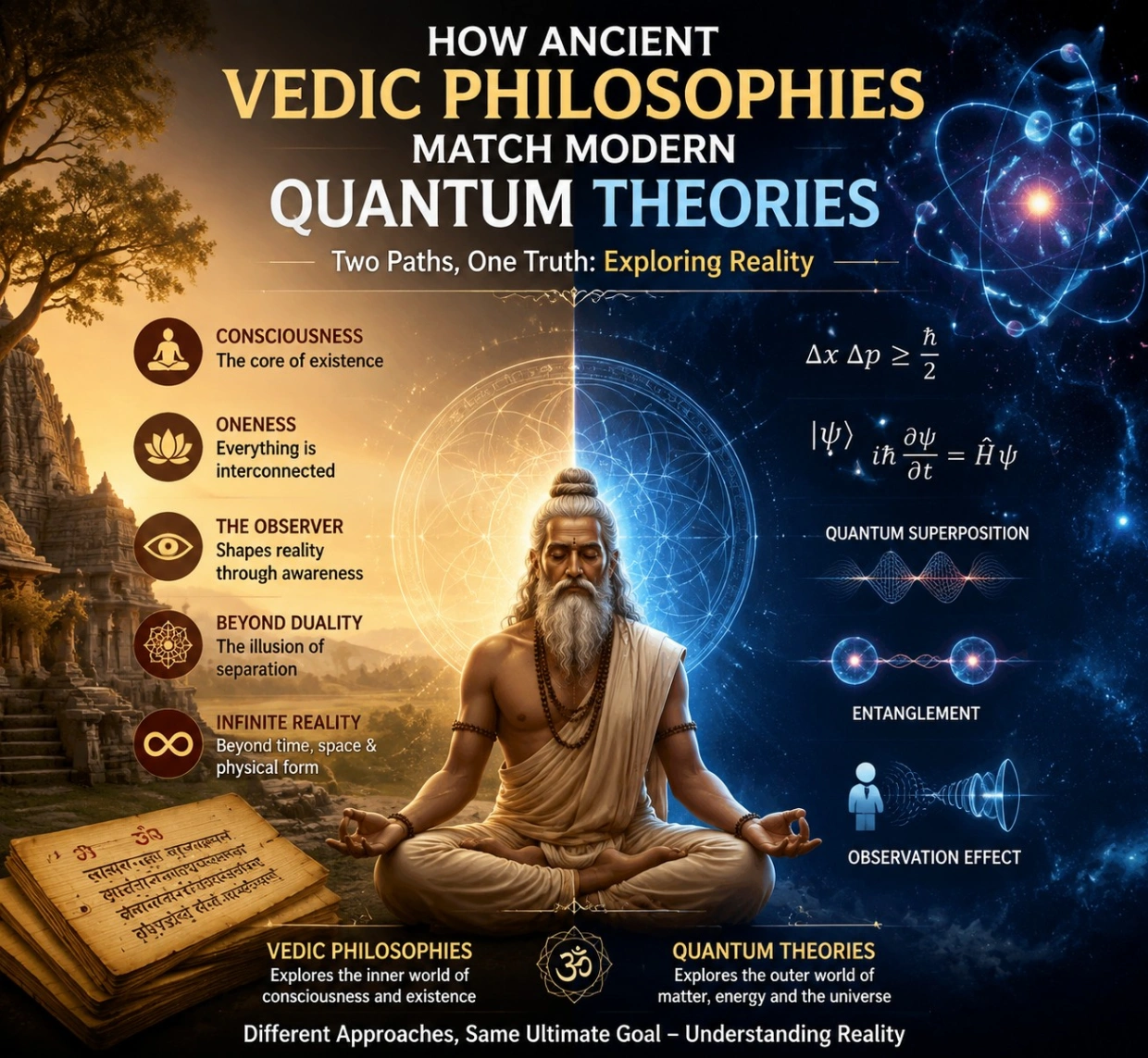
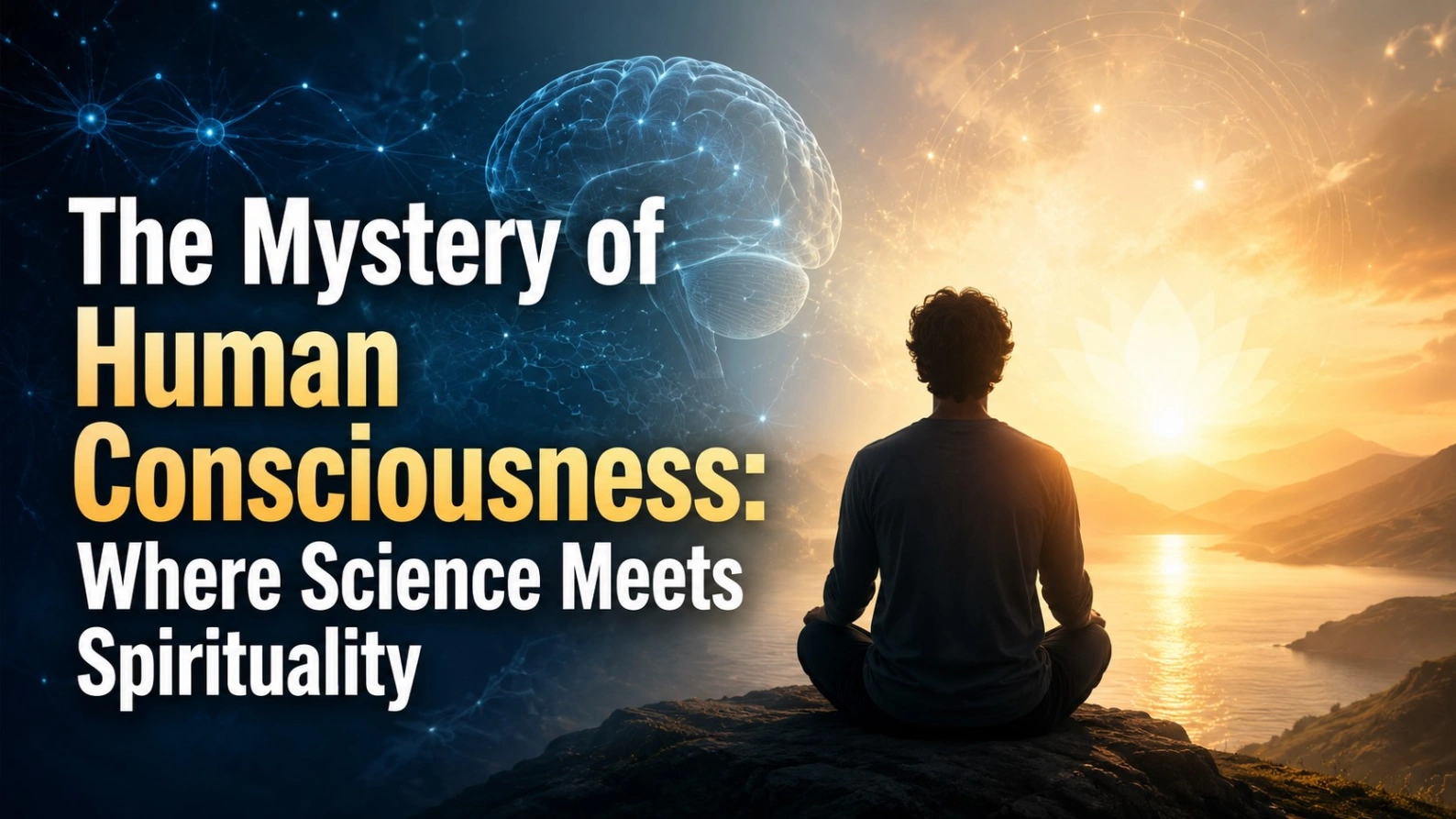
The mystery of human consciousness becomes even more interesting when science meets spirituality. Science asks how consciousness works. Spirituality often asks who is aware. One approach looks outward through research and observation, while the other looks inward through awareness and direct experience.
Together, these perspectives can help us understand the human mind in a more complete and meaningful way.
What Is Human Consciousness?
In simple words, consciousness is the ability to be aware. You are aware that you are reading these words. You may be aware of your breathing, the sounds around you, your emotions, your thoughts, and even your sense of identity. This awareness is the foundation of human experience.
Consciousness is more than simply being awake. A person can be awake but distracted, emotionally overwhelmed, or lost in thought. Consciousness includes the ability to notice what is happening within you and around you.
When people ask, “What is consciousness?” they may be referring to different things. Some may mean awareness of the body and environment. Others may mean self-awareness, which is the ability to recognize your own thoughts, emotions, and identity. In spiritual discussions, consciousness may also refer to a deeper presence that exists beneath changing thoughts and feelings.
The human mind is always active. Thoughts come and go, emotions rise and fall, and memories appear unexpectedly. But there seems to be something within us that notices all of this. This is where the discussion of mind and consciousness becomes especially important.
Design Your Destiny
Your mind can either pull you into fear, overthinking, and confusion, or become a powerful tool for clarity and inner growth. Design Your Destiny is a guided journey to help you understand your thoughts, strengthen self-awareness, and build a more conscious, peaceful, and purposeful life. Begin your inner transformation today.
Start Your Journey Toady!Consciousness and the Brain
Modern neuroscience studies consciousness by examining the brain. Researchers explore how different regions of the brain process sensory information, create memories, regulate emotions, support attention, and help us make decisions.
The brain and consciousness are closely connected. When the brain is affected by sleep, stress, injury, medication, trauma, or illness, conscious experience can change. This suggests that the brain plays a major role in how we experience reality.
For example, when you are sleep deprived, your focus may reduce, your emotions may become more intense, and your ability to make clear decisions may weaken. When you meditate or rest deeply, you may experience greater calm and mental clarity. These changes show that consciousness is influenced by the state of the nervous system and brain.
However, understanding the brain does not fully answer the mystery of consciousness. Science can observe brain activity when a person sees a colour, feels pain, remembers a childhood event, or experiences joy. But it is still difficult to explain why those processes create a personal inner experience.
This question is often called the “hard problem” of consciousness. It asks why physical brain activity is connected to subjective experience. Why does a thought feel like something? Why does music create emotion? Why does love feel personal and meaningful?
Science continues to explore these questions, but there is still much to understand.
The Science of Consciousness
The science of consciousness is an evolving field that brings together neuroscience, psychology, philosophy, cognitive science, and artificial intelligence. Researchers study attention, memory, perception, awareness, sleep, dreams, meditation, and altered states of consciousness.
One major area of interest is how the brain creates a unified experience from many different processes. Your eyes, ears, body sensations, memories, emotions, and thoughts are all processed in different ways. Yet you experience life as one continuous reality.
Another important question is whether consciousness is only created by the brain or whether the brain acts as a receiver, filter, or expression of something deeper. Science has not reached a final answer to this question. The evidence clearly shows that brain activity and conscious experience are deeply linked, but the full nature of that connection remains debated.
This is why the mystery of consciousness remains so powerful. It reminds us that even with advanced technology and research, some of the most important questions about human existence are still open.
Where Science Meets Spirituality
Science and spirituality are often treated as opposites, but they do not always need to be in conflict. Science depends on observation, testing, evidence, and repeatable results. Spirituality often depends on personal experience, reflection, inner transformation, and direct awareness.
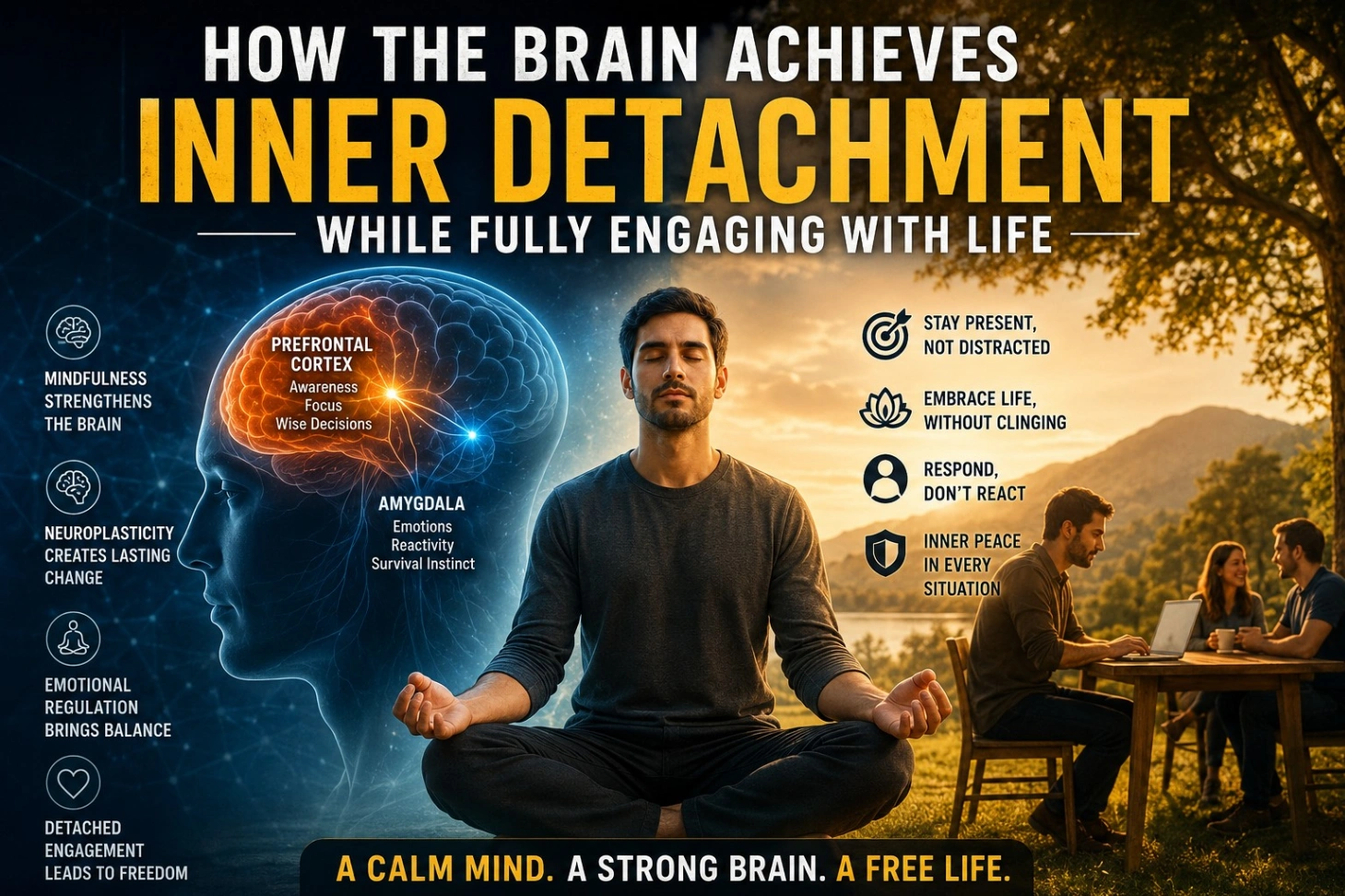
Science may ask, “What happens in the brain during meditation?” Spirituality may ask, “Who is meditating?” Science may study stress hormones, emotional regulation, and attention. Spirituality may explore inner peace, detachment, compassion, and the feeling of unity with life.
Both approaches can be valuable when they are kept in their proper place. Spirituality should not be used to make unsupported medical or scientific claims. At the same time, science does not need to dismiss the depth of inner experience simply because it is personal.
The meeting point between science and spirituality is often found in practices such as mindfulness, meditation, breath awareness, gratitude, and self-reflection. These practices can be studied scientifically while also carrying spiritual meaning for many people.
For some, meditation is a method to reduce stress and improve focus. For others, meditation is a path toward spiritual awakening and higher consciousness. Both experiences can exist without cancelling each other out.
Spirituality and the Search for Higher Consciousness
Many spiritual traditions describe consciousness as something deeper than thoughts, personality, social roles, and emotions. They suggest that beneath the changing activity of the mind, there is a stable awareness that observes everything.
This is sometimes called higher consciousness, witness consciousness, pure awareness, or spiritual awareness. The language differs across traditions, but the central idea is similar. You are not only the thoughts that pass through your mind. You are also the awareness that notices those thoughts.
Imagine sitting quietly and observing your thoughts for a few minutes. You may notice worry, planning, memories, self-doubt, excitement, or random mental images. If you can observe these thoughts, then you are not completely identical to them. There is a space between the thought and the awareness of the thought.
This simple realization can be powerful. It may help you become less reactive, more patient, and more emotionally balanced. Instead of immediately believing every negative thought, you can pause and ask whether it is true, useful, or temporary.
Spiritual awakening does not necessarily mean leaving everyday life behind. It can mean becoming more present in everyday life. It can mean speaking with greater kindness, reacting with less anger, listening more deeply, and living with greater clarity.

Meditation and Consciousness
Meditation and consciousness are closely connected because meditation trains attention. It helps a person notice the movement of the mind without becoming lost in every thought.
There are many forms of meditation. Some focus on the breath. Some use a mantra. Some involve observing thoughts. Some focus on compassion, gratitude, prayer, or silence. The purpose may differ, but many practices develop mindfulness and self-awareness.
Mindfulness and consciousness are not exactly the same, but they are related. Mindfulness is the practice of paying attention to the present moment with openness and less judgment. Consciousness is the broader capacity to be aware at all.
When mindfulness becomes part of daily life, people may begin to notice their emotional patterns more clearly. They may realize that stress often begins with repetitive thoughts. They may see how fear affects the body, how anger affects speech, or how unresolved emotions influence relationships.
This awareness creates the possibility of choice. Instead of reacting automatically, you can respond more consciously.
Meditation does not remove all problems from life. It does not guarantee constant happiness or eliminate difficult emotions. But it can help create inner space. In that space, you may find greater calm, perspective, and emotional strength.
Is Consciousness Beyond the Brain?
One of the biggest questions in consciousness studies is whether consciousness is entirely produced by the brain. This question does not yet have a universally accepted answer.
From a scientific perspective, the brain is essential to ordinary conscious experience. Changes in the brain can alter perception, memory, personality, mood, and awareness. This is strongly supported by research in neuroscience and psychology.
From a spiritual perspective, many traditions believe consciousness is more fundamental than the brain. They may describe the body and mind as instruments through which consciousness expresses itself. In this view, awareness is not created by the brain in the same way that music is not created by a radio, but expressed through it.
This is a philosophical and spiritual idea, not an established scientific conclusion. Still, it continues to inspire reflection because human consciousness is not easy to reduce to a single explanation.
The honest answer is that we do not yet fully know. Science has revealed a great deal about the brain. Spirituality has preserved deep methods for exploring inner awareness. The dialogue between them remains open.
The Difference Between Mind and Consciousness
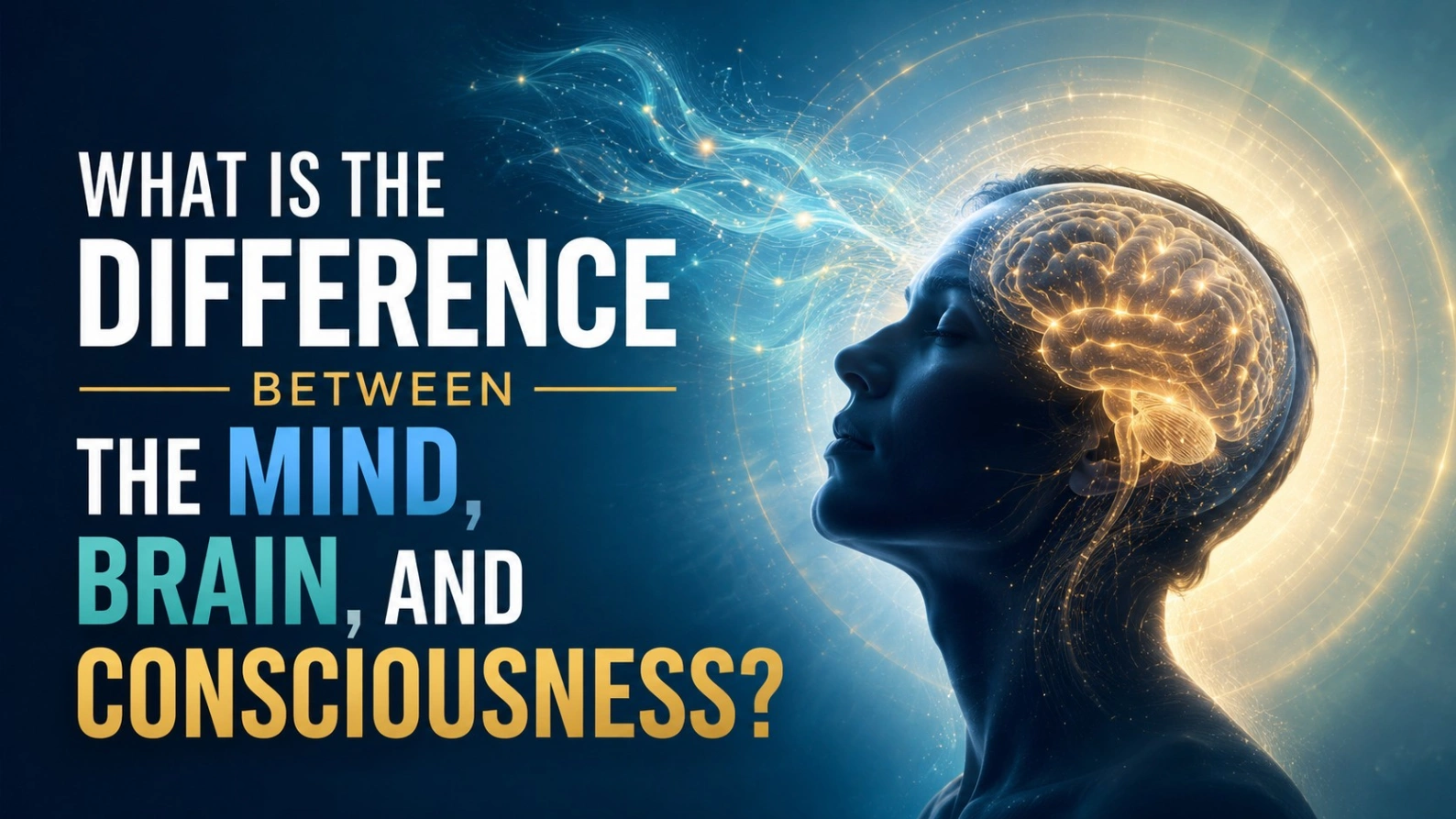
The mind and consciousness are often used as if they mean the same thing, but they can be understood differently.
The mind includes thoughts, memories, imagination, beliefs, emotions, interpretations, and mental habits. It is active and constantly changing. One moment you may be thinking about work, the next moment about family, and then suddenly about something that happened years ago.
Consciousness is the awareness in which these mental events appear. It is the ability to know that a thought is happening. It is the ability to notice that you are anxious, peaceful, distracted, or focused.
A simple way to understand this is to imagine the sky and clouds. Thoughts and emotions are like clouds. They move, change shape, and disappear. Consciousness is like the open sky that allows the clouds to appear.
This does not mean that thoughts are unimportant. Thoughts help us plan, learn, create, communicate, and solve problems. But when we become completely identified with every thought, we may lose inner balance. Awareness helps us use the mind without being controlled by it.

Consciousness, Reality, and Self-Awareness
The relationship between consciousness and reality is another fascinating question. We experience the world through our senses, memories, beliefs, culture, language, and emotional state. Two people can go through the same event and interpret it very differently.
This does not mean reality is imaginary. It means that human perception is shaped by many internal factors. Consciousness influences how we experience reality.
Self-awareness can help us recognize these filters. When you become aware of your fears, assumptions, and emotional patterns, you become less likely to react blindly. You begin to see life with greater clarity.
This is one reason why ancient wisdom and modern science can complement each other. Ancient spiritual teachings often encourage self-observation, discipline, compassion, and detachment from ego. Modern psychology explores emotional regulation, cognitive bias, behaviour, and mental health. Both can help people understand themselves better.
How to Raise Your Consciousness Spiritually
Raising consciousness does not have to mean seeking extraordinary experiences. It can begin with simple daily habits that increase awareness and reduce automatic reactions.
Start by slowing down for a few minutes every day. Sit quietly and observe your breath. Notice what is happening in your body. Watch your thoughts without fighting them. This develops the habit of inner observation.
You can also practice conscious listening. When someone speaks, listen without preparing your response immediately. Notice the urge to judge, interrupt, or defend yourself. This can deepen empathy and improve relationships.
Gratitude is another powerful practice. It shifts attention from constant lack toward what is already meaningful in life. Journaling can also support self-awareness by helping you see repeating thought patterns and emotional triggers.

Most importantly, remember that spiritual growth is not a competition. Higher consciousness is not about feeling superior to others. It is about becoming more humble, more aware, more compassionate, and more responsible for your inner world.
The mystery of human consciousness may never be explained by one single theory. Science continues to reveal how the brain, nervous system, perception, and attention shape our experience. Spirituality continues to invite us inward, asking us to discover who we are beyond fear, ego, and constant mental noise.
Perhaps the real value of this mystery is not only finding a final answer. Perhaps it is learning to live with deeper awareness.
When science meets spirituality, we are reminded that human life is both measurable and meaningful. We are made of biology, memory, emotion, and neurons. Yet we are also capable of wonder, reflection, compassion, creativity, and inner transformation.
The journey into consciousness is not only about understanding the mind. It is also about becoming more conscious in the way we live, love, respond, and grow.
Personal Session
Are you feeling mentally stuck, emotionally overwhelmed, or disconnected from your deeper self? Book a personal session to explore your thought patterns, spiritual questions, and inner challenges with compassionate guidance. Take the first step toward greater clarity, emotional balance, and conscious living.
Book Now