

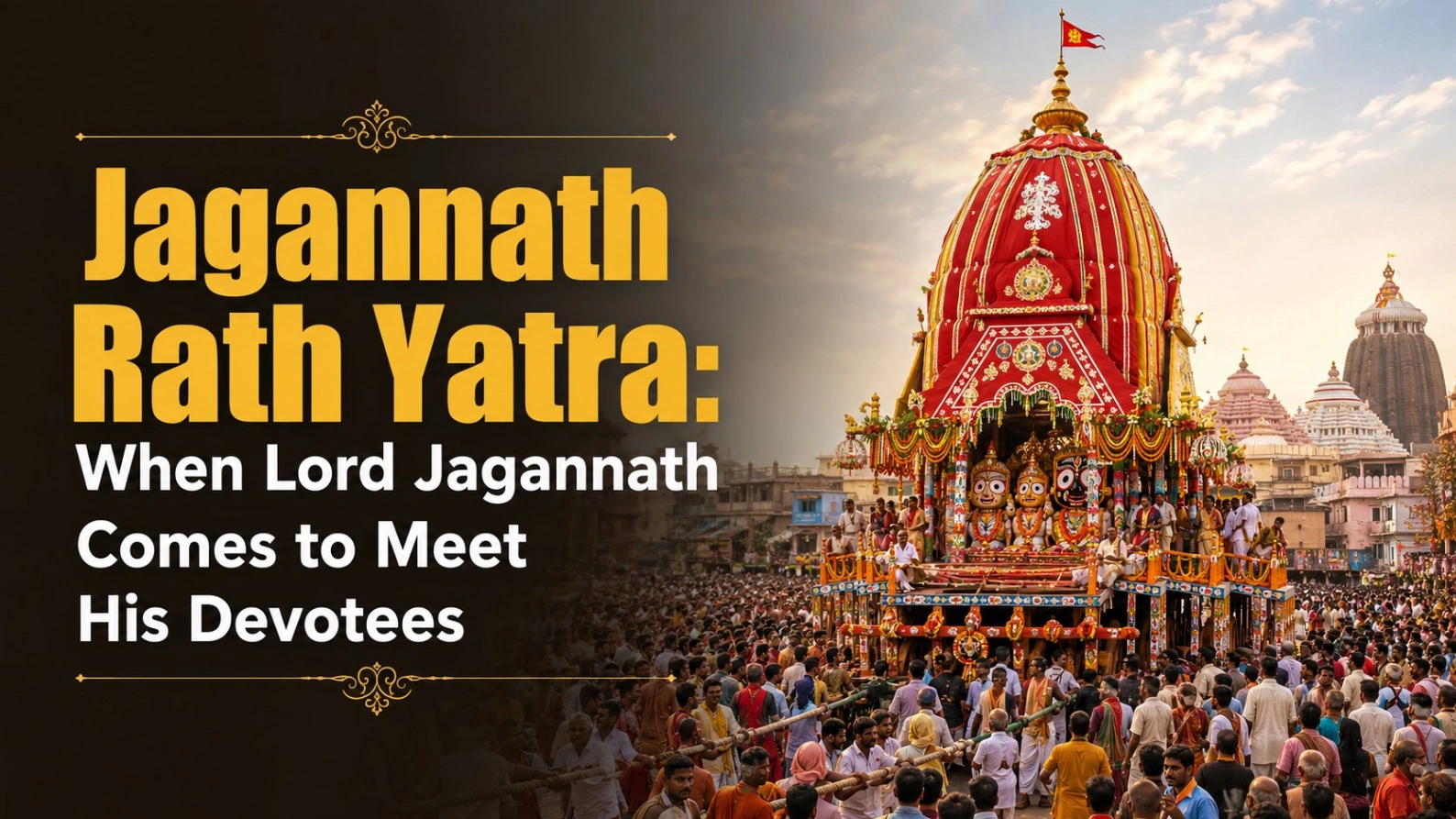
The Jagannath Rath Yatra is one of India’s most magnificent and deeply loved spiritual celebrations. Every year, the sacred town of Puri in Odisha becomes filled with devotion as Lord Jagannath leaves the sanctum of the Jagannath Temple and travels among His devotees.
For many people, this is not merely a procession or a traditional festival. It is a rare and emotional moment when God comes out of the temple to meet people from every background.
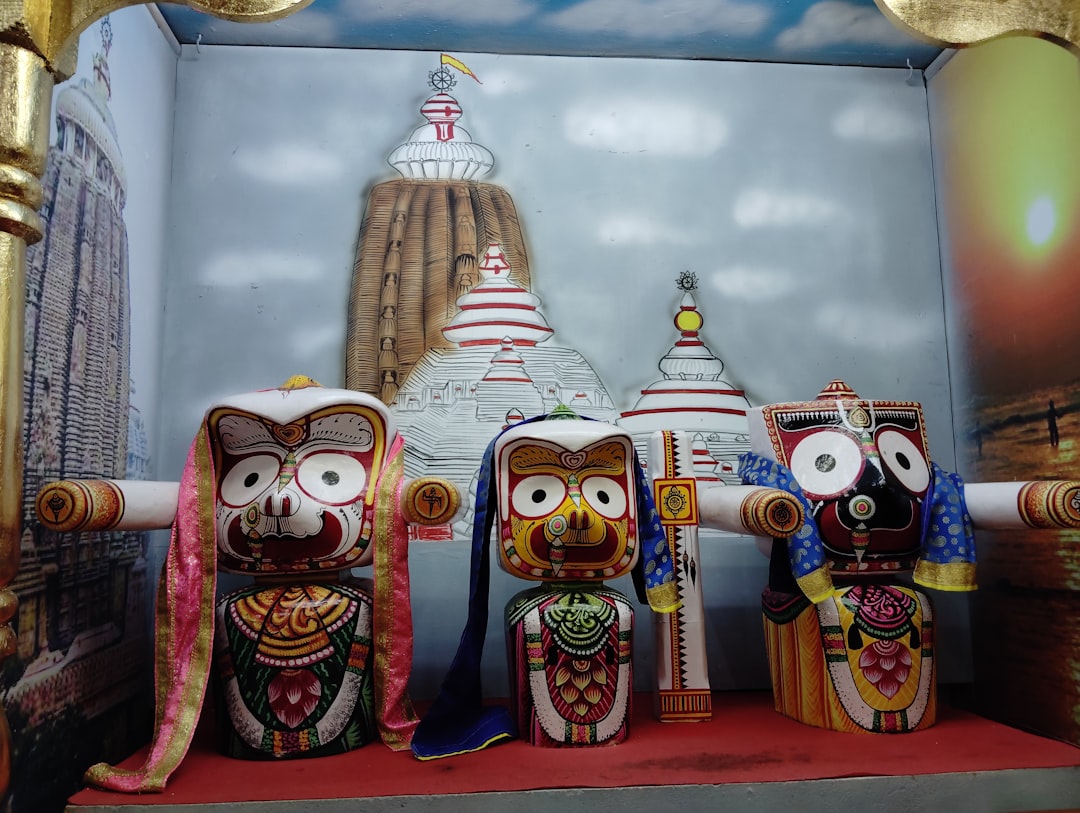
During the Puri Rath Yatra, Lord Jagannath travels with His elder brother, Lord Balabhadra, and His sister, Goddess Subhadra, in three beautifully decorated wooden chariots. The deities journey from the Jagannath Temple to the Gundicha Temple as devotees chant, pray and pull the enormous chariots through the streets.
Jagannath Rath Yatra 2026 is observed on Thursday, July 16, 2026. The festival traditionally begins on the second lunar day of the bright fortnight of the Hindu month of Ashadha.
Yet the true beauty of the festival lies beyond its scale. Its deepest message is simple: divine love belongs to everyone.
What Is Jagannath Rath Yatra?
Jagannath Rath Yatra, also known as Puri Rath Yatra, Shri Gundicha Yatra or the Festival of Chariots, is the annual ceremonial journey of Lord Jagannath, Lord Balabhadra and Goddess Subhadra.
The deities normally remain inside the Jagannath Temple in Puri. During Rath Yatra, however, they are brought out in a ceremonial procession known as Pahandi and placed on their respective chariots.
The three chariots then travel along Puri’s Grand Road towards the Gundicha Temple. Devotees gather to receive darshan, chant the names of the Lord and participate in pulling the chariot ropes.
The official Odisha Tourism description highlights how people of different castes, communities and backgrounds gather together in Puri to catch a glimpse of Lord Jagannath and His siblings.
This openness is one of the defining qualities of the Lord Jagannath festival. The Lord who is worshipped inside a sacred temple steps outside so that people who may not otherwise enter the sanctum can still receive His darshan.
Design Your Destiny CTA
Your outer journey changes when your inner journey begins. Join the Design Your Destiny program to move beyond limiting thoughts, understand your deeper self and consciously create a life guided by clarity, awareness and spiritual wisdom.
Start Your Journey Today!When Is Jagannath Rath Yatra 2026?
Jagannath Rath Yatra 2026 falls on Thursday, July 16, 2026.
It takes place during Ashadha Shukla Dwitiya, the second day of the waxing phase of the moon in the Hindu month of Ashadha. This usually falls in June or July.
The date is important for people planning to visit Puri, attend a local Rath Yatra celebration or observe the festival at home. Searches for terms such as “Jagannath Rath Yatra date 2026,” “Rath Yatra 2026” and “Puri Rath Yatra 2026” generally increase as the festival approaches.
Visitors should always check current instructions from the Odisha government, local authorities and the Shree Jagannath Temple Administration before travelling because crowd-control arrangements, entry routes and public advisories may change.
The Story Behind Jagannath Rath Yatra
The Jagannath Rath Yatra story is connected to Lord Jagannath’s annual visit to the Gundicha Temple, traditionally regarded as a special and beloved destination of the Lord.
Lord Jagannath is accompanied by Lord Balabhadra and Goddess Subhadra. Together, they leave the main Jagannath Temple and travel in grand chariots to the Gundicha Temple, where they remain temporarily before beginning their return journey.
Different devotional traditions explain the journey through various stories and interpretations. Some view it as a visit to the Lord’s garden residence. Others understand it as an expression of His affection for His devotees.
Instead of remaining distant, hidden or available only to a limited group, Lord Jagannath becomes visible to the wider world.
That is why the emotional idea that “God comes to meet His devotees” is so closely associated with Rath Yatra.
The festival reverses the usual direction of pilgrimage. Normally, devotees travel towards God. During Jagannath Rath Yatra, God travels towards the devotees.
Why Does Lord Jagannath Come Out of the Temple?
One of the most searched questions about the festival is: why does Lord Jagannath leave the temple?
Spiritually, His journey represents accessibility, compassion and unconditional divine love.
When Lord Jagannath comes out of the temple, He offers darshan to everyone present on the streets. Social identity, wealth, profession and status lose their importance before the moving chariots.
The Lord does not ask whether someone is rich or poor, learned or uneducated, powerful or ordinary. His presence becomes available to all.
This makes Jagannath Rath Yatra a powerful symbol of spiritual equality.
The journey can also be understood as an invitation. Lord Jagannath comes closer, but the devotee must also take an inward step through faith, surrender and remembrance.
The Three Chariots of Rath Yatra
The three deities travel in separate chariots, each with its own name and distinct identity.
Nandighosha
Nandighosha is the chariot of Lord Jagannath. It is the most recognised chariot of the procession and becomes the central focus of immense devotion.
Taladhwaja
Taladhwaja is the chariot of Lord Balabhadra, the elder brother of Lord Jagannath.
Darpadalana
Darpadalana is the chariot of Goddess Subhadra. Its name is often interpreted as the destroyer of pride or ego.
Odisha Tourism identifies the three chariots as Nandighosha for Lord Jagannath, Taladhwaja for Lord Balabhadra and Darpadalana for Goddess Subhadra.
The chariots are constructed anew as part of the annual tradition. Their creation involves generations of specialised knowledge, sacred customs and skilled craftsmanship.
They are not simply vehicles. They are moving sacred spaces carrying the divine into the heart of public life.
Important Jagannath Rath Yatra Rituals
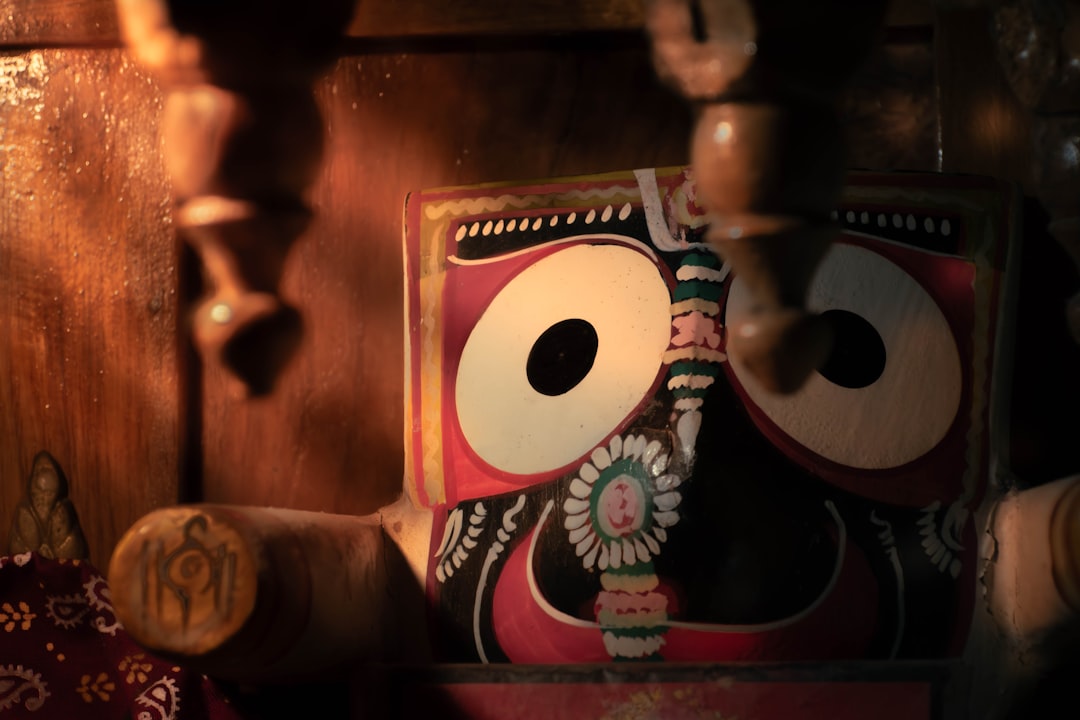
The Jagannath Rath Yatra rituals give the festival its spiritual depth and ceremonial beauty.
Pahandi
Pahandi is the ceremonial movement of the deities from the temple towards their chariots. The deities are carried in a rhythmic, swaying manner amid chants, music and intense devotion.
For many devotees, Pahandi is one of the most emotional moments of the entire Jagannath Rath Yatra celebration.
Chhera Pahara
Chhera Pahara is a significant ritual performed by the Gajapati King of Puri. During the ceremony, the king sweeps the area around the chariots using a ceremonial broom.
The ritual carries a profound message. Before Lord Jagannath, even a king becomes a humble servant.
It reminds devotees that worldly power has no importance in the presence of the Divine. The Lord sees sincerity and devotion rather than social rank.
Pulling the Chariots
After the ceremonies, devotees pull the three chariots using long ropes.
The act of pulling Lord Jagannath’s chariot is considered deeply auspicious. Spiritually, it may also be seen as pulling the Divine closer to one’s heart.
Thousands of hands hold the same rope. People who may never have met each other move with one purpose and one emotion.
Gundicha Yatra
The outward journey from the Jagannath Temple to the Gundicha Temple is known as Gundicha Yatra.
The deities stay at the Gundicha Temple before beginning their journey back to the main temple.
Bahuda Yatra
Bahuda Yatra is the return journey of Lord Jagannath, Lord Balabhadra and Goddess Subhadra to the Jagannath Temple.
The return journey reminds devotees that every outward pilgrimage must eventually become an inward transformation.
Suna Besha
Suna Besha is the magnificent golden appearance of the deities. During this ritual, the deities are decorated with gold ornaments, creating a visually extraordinary form of darshan.
The Spiritual Significance of Jagannath Rath Yatra
The spiritual significance of Rath Yatra can be understood on several levels.
At the most visible level, it is the divine journey of Lord Jagannath through the streets of Puri. At a deeper level, it represents the journey of consciousness from separation towards union.
The chariot can be viewed as the human body. The ropes may represent devotion and spiritual discipline. The moving deity represents divine consciousness guiding life towards its true destination.
The crowd reflects the many desires, thoughts and distractions surrounding the human mind. Amid this noise, the devotee holds firmly to the rope of remembrance.
Rath Yatra therefore becomes more than an external celebration. It becomes a symbol of the inner spiritual journey.
We may live surrounded by responsibilities, ambitions and emotional struggles, yet something within us continues to search for peace, meaning and belonging.
Lord Jagannath’s journey reminds us that the Divine is not absent from ordinary life. Spirituality can travel through busy streets, crowded places and human relationships.
A Festival of Equality and Inclusion
One of the most powerful lessons from Jagannath Rath Yatra is equality.
When the deities come out of the temple, everyone standing along the road can receive darshan. No one owns the view of the Lord.
The Chhera Pahara ritual strengthens this message. The king performs the humble service of sweeping before the chariots, showing that everyone is equal before Lord Jagannath.
The festival also brings together people from different regions, languages, traditions and economic backgrounds.
They may arrive in Puri through different paths, but they stand before the same Lord.
This is why Jagannath Rath Yatra is not only a celebration of devotion. It is also a living expression of unity.
Why Do Devotees Pull Lord Jagannath’s Chariot?
Pulling the chariot is an act of devotion, participation and surrender.
A devotee is not merely watching the divine journey from a distance. By holding the rope, the devotee becomes part of the journey.
On a symbolic level, the rope can represent the bond between God and the human heart.
The devotee pulls the chariot forward, while the presence of Lord Jagannath pulls the devotee inward.
It is a beautiful exchange. Human hands move the chariot, but divine grace moves the soul.
Life Lessons from Jagannath Rath Yatra
The festival offers several lessons for everyday life.
First, humility is greater than status. The ceremonial sweeping performed by the king reminds us that leadership becomes meaningful when it is rooted in service.
Second, faith must move beyond closed spaces. Lord Jagannath does not remain confined to the temple. In the same way, spirituality should influence our relationships, decisions and behaviour.
Third, no journey is completed alone. Thousands of devotees pull the chariots together. Progress becomes possible through cooperation and shared intention.
Fourth, pride must be released. The journey of Goddess Subhadra’s Darpadalana chariot symbolically reminds us that ego creates distance, while humility creates connection.
Finally, divine grace is available to all. Lord Jagannath’s public journey communicates that nobody is too ordinary, broken or distant to receive love and blessings.
How to Celebrate Rath Yatra Spiritually
Not everyone can travel to Puri, but the spirit of Jagannath Rath Yatra can be experienced anywhere.
You can begin the day with prayer, meditation or chanting the name of Lord Jagannath. You may read about the Jagannath Rath Yatra history and explain its meaning to children or family members.
You can watch the Puri Rath Yatra with devotion, support a community celebration or offer food to someone in need.
Most importantly, practise the festival’s values.
Let go of pride. Treat people equally. Offer service without expecting recognition. Bring compassion into your home and workplace.
The greatest celebration of Rath Yatra does not happen only on the road outside the Jagannath Temple. It happens when the heart becomes a chariot for divine qualities.
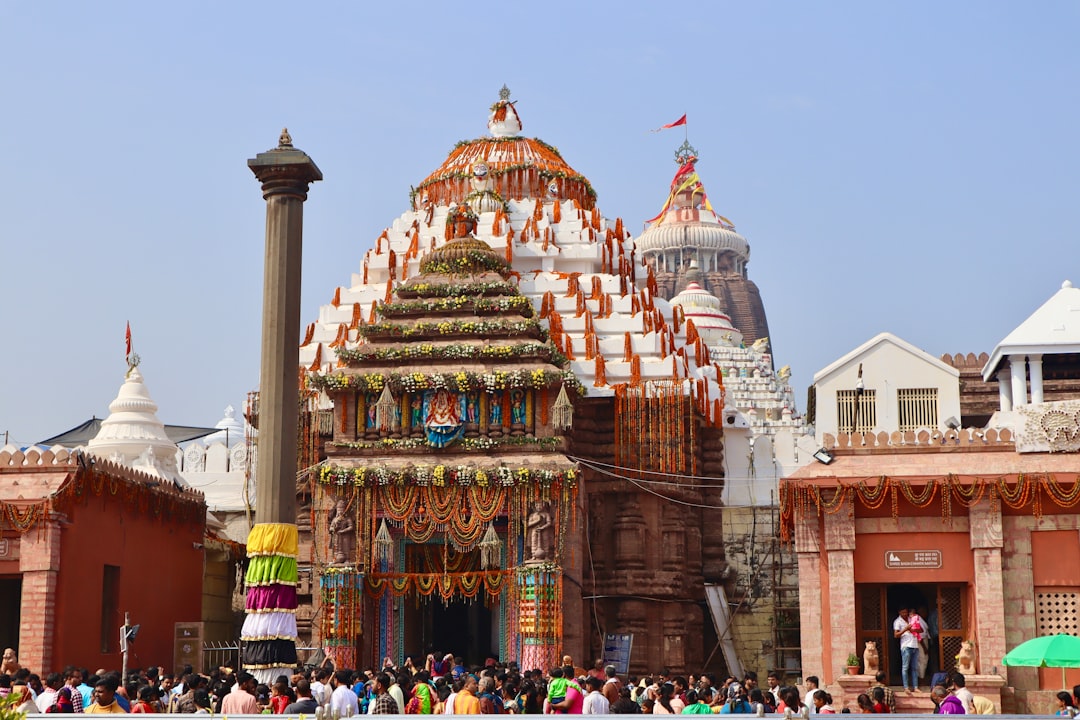
When God Comes to Meet His Devotees
The most touching meaning of Jagannath Rath Yatra is captured in one idea: Lord Jagannath comes to meet His devotees.
The temple doors open. The deities come forward. The chariots begin to move. The streets become filled with prayer.
In that moment, God does not appear distant.
He becomes present among ordinary people.
Jagannath Rath Yatra reminds us that devotion is not only about searching for the Divine. Sometimes, the Divine is already moving towards us.
We only need to become still enough, humble enough and open enough to recognise that presence.
Jagannath Rath Yatra is a grand expression of faith, culture and spiritual unity. Through the journey of Lord Jagannath, Lord Balabhadra and Goddess Subhadra, the festival communicates a timeless message of equality, humility and unconditional divine love.
The chariots may travel from the Jagannath Temple to the Gundicha Temple, but the deeper journey takes place within the devotee.
It is a journey from pride to surrender, separation to unity and restlessness to remembrance.
When Lord Jagannath comes out to meet His devotees, He reminds humanity that divine grace is not reserved for a chosen few.
It is open, compassionate and available to everyone.
Personal Session CTA
Are you feeling confused, emotionally overwhelmed or disconnected from your purpose? Book a personal session for individual spiritual guidance, greater clarity and practical support in overcoming the inner patterns that may be holding you back.
Book Now