
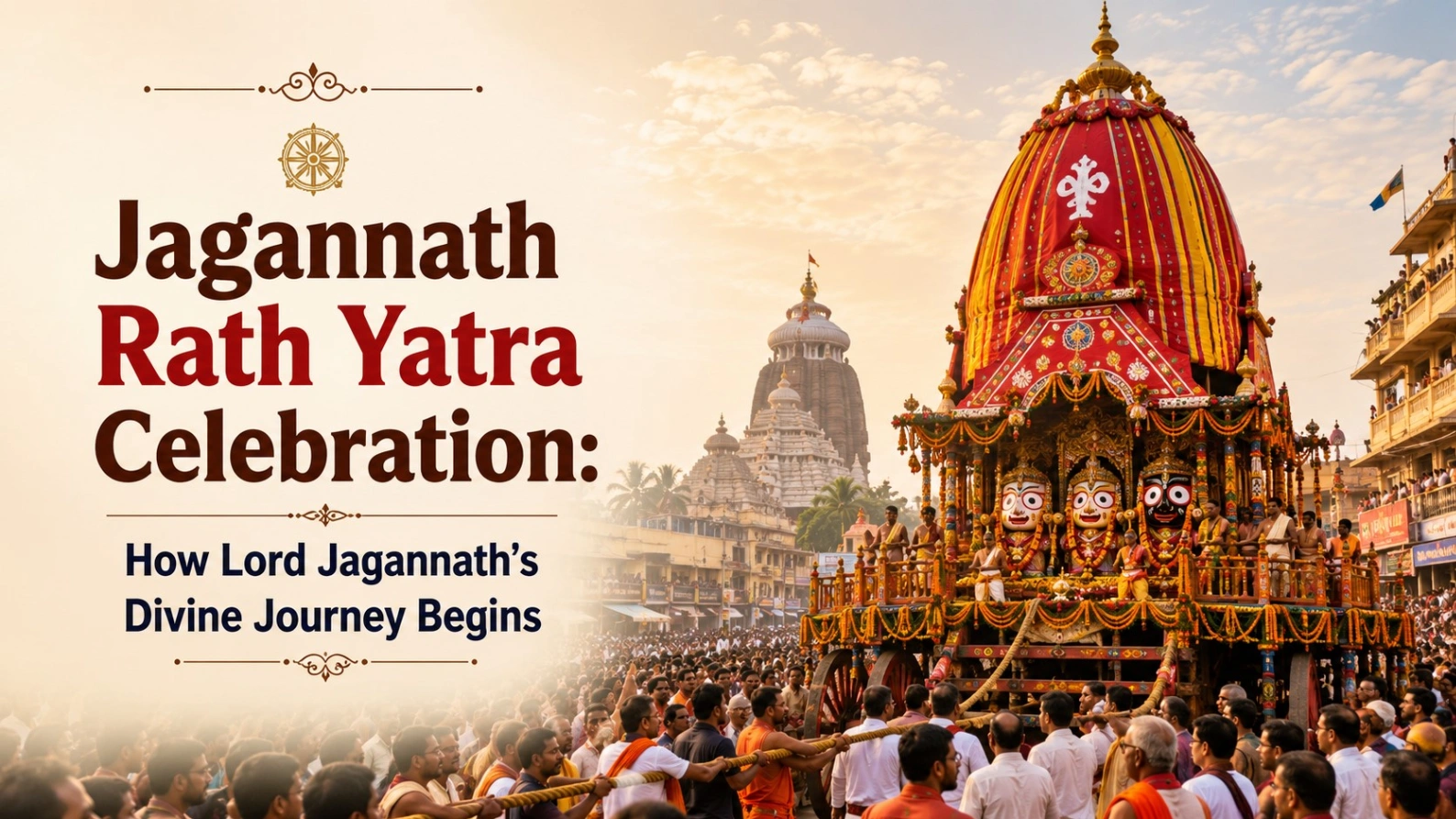
Every year, Jagannath Rath Yatra transforms Puri into a moving expression of faith, music, colour and shared devotion. This sacred festival brings Lord Jagannath, Lord Balabhadra and Goddess Subhadra out of the Jagannath Temple, where devotees gather to pull their decorated chariots. For many people, the sight of the three raths on Puri’s Grand Road is a powerful reminder that the divine is not distant. It comes forward to meet its devotees.
Rath Yatra, also known as Ratha Yatra or the Festival of Chariots, is observed in Puri, Odisha, on the second day of the bright fortnight of the Hindu month of Ashadha. In 2026, current published listings place Jagannath Rath Yatra on Thursday, July 16, with the return rituals following later that month. Visitors should confirm the latest official temple and government advisories before making travel plans.
The Jagannath Rath Yatra celebration blends temple tradition, devotion and ritual, from the ceremonial procession to the return journey called Bahuda Yatra. Let us understand how Lord Jagannath’s divine journey begins, what happens during the festival, and why this annual yatra holds such deep significance.
What Is Jagannath Rath Yatra?
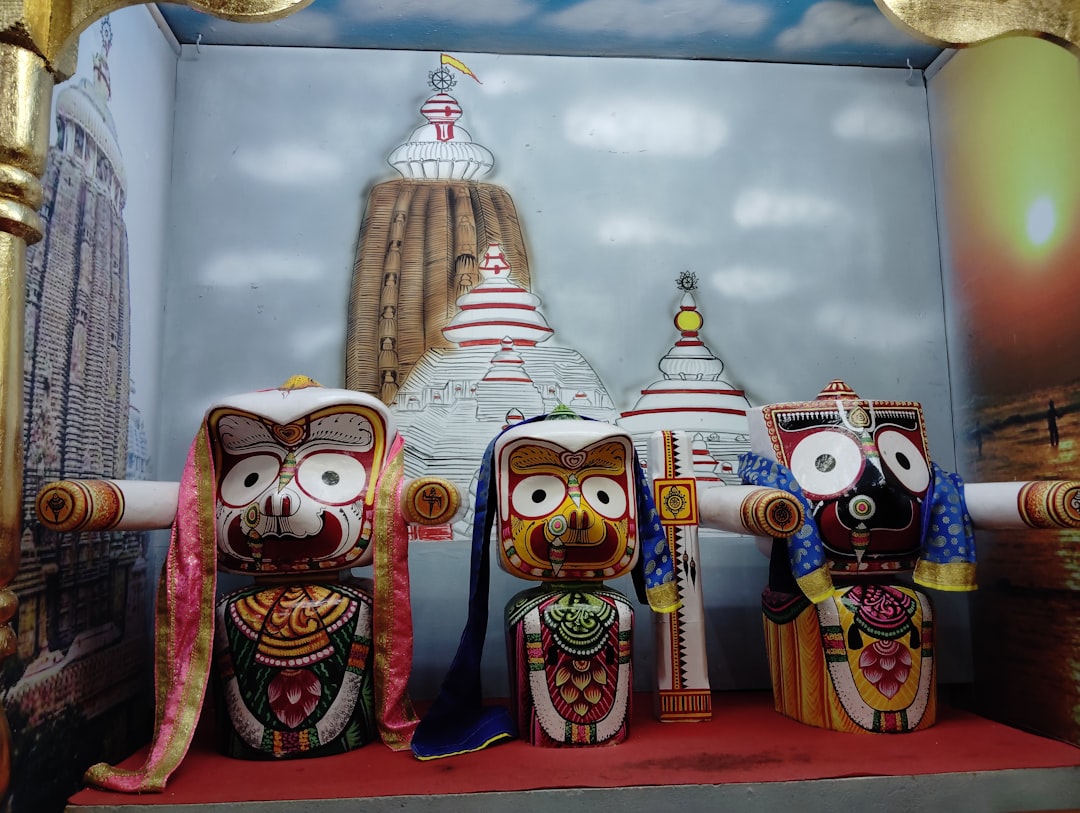
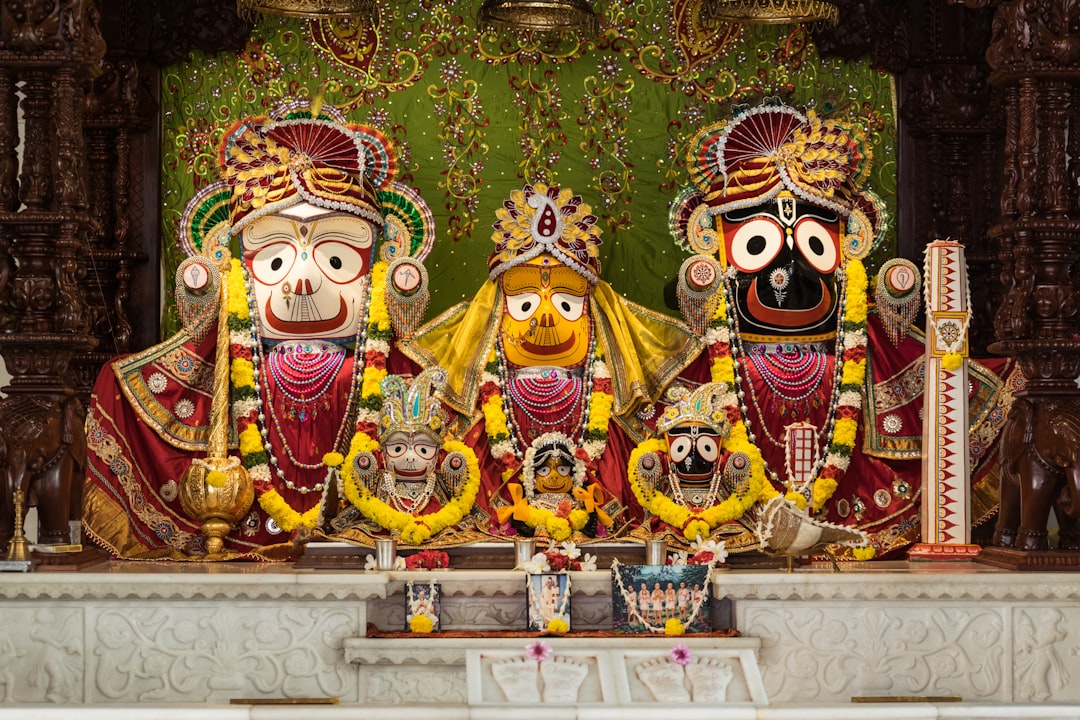
Jagannath Rath Yatra is the annual chariot festival of Lord Jagannath in Puri. The central journey begins when Lord Jagannath, his elder brother Lord Balabhadra and sister Goddess Subhadra are brought from the Jagannath Temple to their individual chariots, along with Sudarshana Chakra. The chariots then travel along Bada Danda, or the Grand Road, towards Gundicha Temple.
This public journey is the heart of the Rath Yatra festival. Gundicha Temple becomes the deities’ temporary abode, so the festival unfolds as a sequence of departure, stay and return rather than a one-day procession.
The festival is also called Gundicha Yatra, Ghosa Yatra and Nava Dina Yatra. Its essence is a grand act of devotion in which the Lord journeys outside the main temple and people help pull the chariots forward.
Design Your Destiny
Your life is also a journey. Join Design Your Destiny to explore timeless spiritual wisdom and practical inner practices that can help you build clarity, peace and purpose in everyday life.
Start Your Journey Toady!Why Is Jagannath Rath Yatra Celebrated?
For devotees, Jagannath Rath Yatra celebrates the Lord’s annual journey to Gundicha Temple. The festival is cherished because it makes darshan possible in a public setting, especially for people who may not enter the temple’s inner spaces. The deities appear on the chariots, allowing enormous crowds to offer prayers from the Grand Road.
The yatra also expresses a beautiful spiritual idea: no one is too ordinary to be touched by grace. When devotees hold the ropes of the Rath Yatra chariots, they are not simply moving wood and wheels. They are participating in seva, or selfless service. The shared effort turns devotion into a collective experience.
On a personal level, the story speaks to movement in life. Rath Yatra suggests that spiritual life can begin through humility, service, community and a sincere heart.
How Is Jagannath Rath Yatra Celebrated?
The Jagannath Rath Yatra rituals begin long before the chariots roll onto Bada Danda. Preparations unfold through temple customs, traditional craftsmanship and the work of sevayats, or temple servitors.
Chariot Construction Begins on Akshaya Tritiya
One of the most remarkable parts of the Jagannath Rath Yatra celebration is that new wooden chariots are constructed every year. According to Odisha Tourism, the traditional work begins on Akshaya Tritiya and is carried out by hereditary groups of carpenters and artisans. The annual rebuilding reflects renewal: an ancient journey made alive again each year.
The three chariots are not identical. They are made for the three deities and recognised by their distinct names. Lord Jagannath rides in Nandighosha, Lord Balabhadra in Taladhwaja, and Goddess Subhadra in Darpadalana.
Snana Yatra and the Anasara Period
Before the Rath Yatra, the deities take part in Snana Yatra, also known as Deba Snana Purnima. On this occasion, Lord Jagannath, Lord Balabhadra and Goddess Subhadra are ceremonially bathed with 108 pitchers of sacred water. This ritual is followed by Anasara, a period when the deities remain away from public darshan in temple tradition.
Anasara is often described as a time of rest and recovery after the ceremonial bath. For devotees, the wait for darshan makes the Rath Yatra feel even more joyful. The reappearance of the deities before the chariot festival is known in tradition as Navajouban Darshan.
Pahandi Bije: The Swaying Procession
On Rath Yatra day, the deities are brought from the temple to their chariots in a ceremonial movement called Pahandi Bije. The procession is distinctive because the deities move forward in a rhythmic, swaying manner, accompanied by drums, cymbals, chants and a sea of devotees.
Pahandi Bije is not merely a transfer from one place to another. It is a visual expression of celebration. The divine journey begins slowly, with care and reverence, before the energy of the chariot-pulling takes over. For many devotees, this is deeply emotional because the deities emerge from the temple to meet the waiting crowd.
Chhera Pahanra: A Ritual of Humility
Another important Jagannath Rath Yatra ritual is Chhera Pahanra. In this ceremony, the Gajapati Maharaja of Puri symbolically sweeps the platforms of the chariots with a golden broom. The act carries a clear message: before the divine, status and power do not make anyone superior.
This ritual places humility at the centre of celebration. Even the king takes on the role of a servant, reinforcing the belief that seva is greater than pride.
The Three Chariots of Rath Yatra
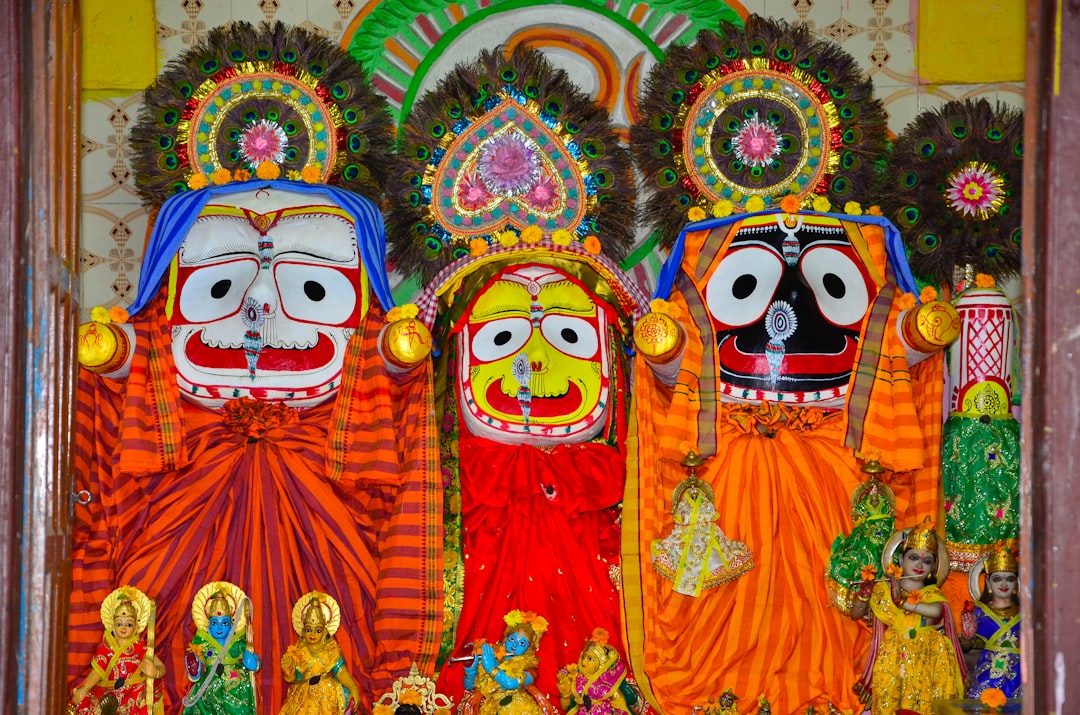
The names of Jagannath Rath Yatra chariots are closely connected with the festival’s identity. Nandighosha carries Lord Jagannath, Taladhwaja carries Lord Balabhadra, and Darpadalana carries Goddess Subhadra. Seeing the three chariots together creates a striking image of family, unity and divine companionship.
Devotees often ask how many chariots are there in Rath Yatra. The answer is three main chariots, one for each of the sibling deities. Each is prepared with traditional detail. The chariots are drawn by hand, with devotees pulling the ropes in a collective act of worship.
The chariots become sacred spaces in motion, turning the road itself into a place of prayer.
The Journey to Gundicha Temple
Once the rituals are complete, the Rath Yatra chariots begin their journey along Bada Danda towards Gundicha Temple. Government tourism information describes the route as a journey from the Jagannath Temple to Gundicha Temple, where the deities stay for about a week. This outward journey is called Gundicha Yatra.
Gundicha Temple is affectionately understood in local tradition as the Lord’s aunt’s home. This personal, family-like expression is part of what makes Jagannath devotion so warm and relatable. Rather than presenting the divine only through grandeur, the festival also imagines the Lord visiting loved ones, resting, receiving offerings and returning home.
At Gundicha Temple, devotees seek darshan during the deities’ stay. The rhythm then shifts from the excitement of the procession to reflection, prayer and waiting for the return journey.
Bahuda Yatra, Suna Besha and Niladri Bije
The return journey of the deities from Gundicha Temple to the Jagannath Temple is called Bahuda Yatra. On the way back, tradition includes a stop near the Mausi Maa Temple, where Poda Pitha is offered. This detail gives the festival a sense of affection and familiarity, as though the divine journey includes the warmth of home and hospitality.
After the return, the deities appear in Suna Besha, a special golden attire observed on the chariots. The final phase is Niladri Bije, when Lord Jagannath returns to the main temple. Odisha Tourism describes a playful tradition connected with this return, in which Goddess Lakshmi is symbolically reconciled with Lord Jagannath through an offering of rasagola.
These closing rituals complete the festival’s emotional arc: departure, celebration, return, reconciliation and renewal.
The Spiritual Significance of Jagannath Rath Yatra
The significance of Jagannath Rath Yatra lies in its ability to make profound ideas feel accessible. The chariots remind us that life is a journey. The ropes remind us that progress often happens through shared effort. Chhera Pahanra reminds us to choose humility over ego. And the public darshan reminds us that spiritual connection should not be limited by social position.
The festival also highlights the value of presence. Millions may gather, yet the most meaningful part of devotion can be simple: a prayer, a chant, a moment of silence, or the intention to become kinder and more selfless. In this way, Lord Jagannath’s divine journey becomes an inner journey too.
For those who cannot visit Puri, celebrating at home can still be meaningful. Read about the festival with family, offer a simple prayer, listen to devotional music, prepare a vegetarian bhog, or watch an authorised live broadcast where available. The focus can be on honouring the spirit of devotion, gratitude and service.
Jagannath Rath Yatra 2026: A Timely Reminder
For 2026, current published schedules list Jagannath Rath Yatra on July 16 in Puri, with the festival’s return-related observances following afterward. If you plan to attend, treat official temple and government updates as the final authority for entry rules, crowd management, transport and ritual timings.
Whether experienced in Puri or remembered from afar, Jagannath Rath Yatra remains a celebration of movement, humility and belonging. When the chariots begin to roll, they carry more than the deities. They carry the prayers of countless people who find hope in the Lord’s journey and strength in walking, chanting and serving together.
Personal Session
Feeling confused, emotionally stuck or disconnected from your path? Book a personal session to receive focused spiritual guidance, reflect on your challenges and reconnect with a more peaceful, purposeful direction.
Book Now