
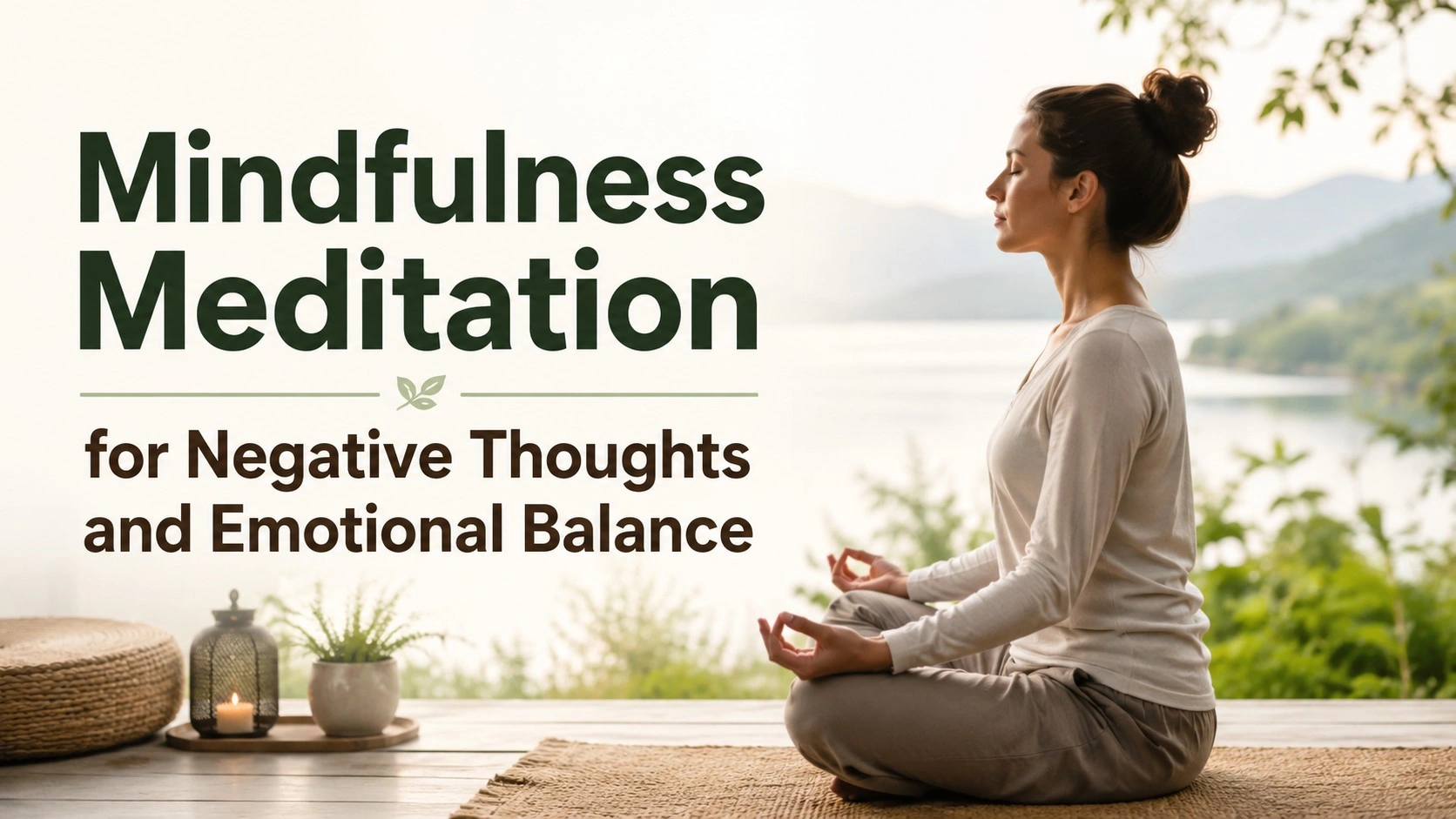
Mindfulness meditation for negative thoughts is a simple yet powerful way to calm the mind, observe emotions, and return to inner balance. In daily life, the mind often becomes filled with overthinking, fear, stress, self-doubt, and unnecessary worries. When these thoughts repeat again and again, they disturb mental peace and emotional stability. Mindfulness meditation teaches us to pause, breathe, observe, and respond with awareness instead of reacting blindly.
Many people try to fight negative thoughts, but fighting the mind often makes the thoughts stronger. Mindfulness takes a different approach. It does not ask you to suppress thoughts or force positivity. Instead, it gently teaches you to notice what is happening inside you without judgment. This simple shift can slowly create emotional balance, mental clarity, and inner peace.
What Is Mindfulness Meditation?
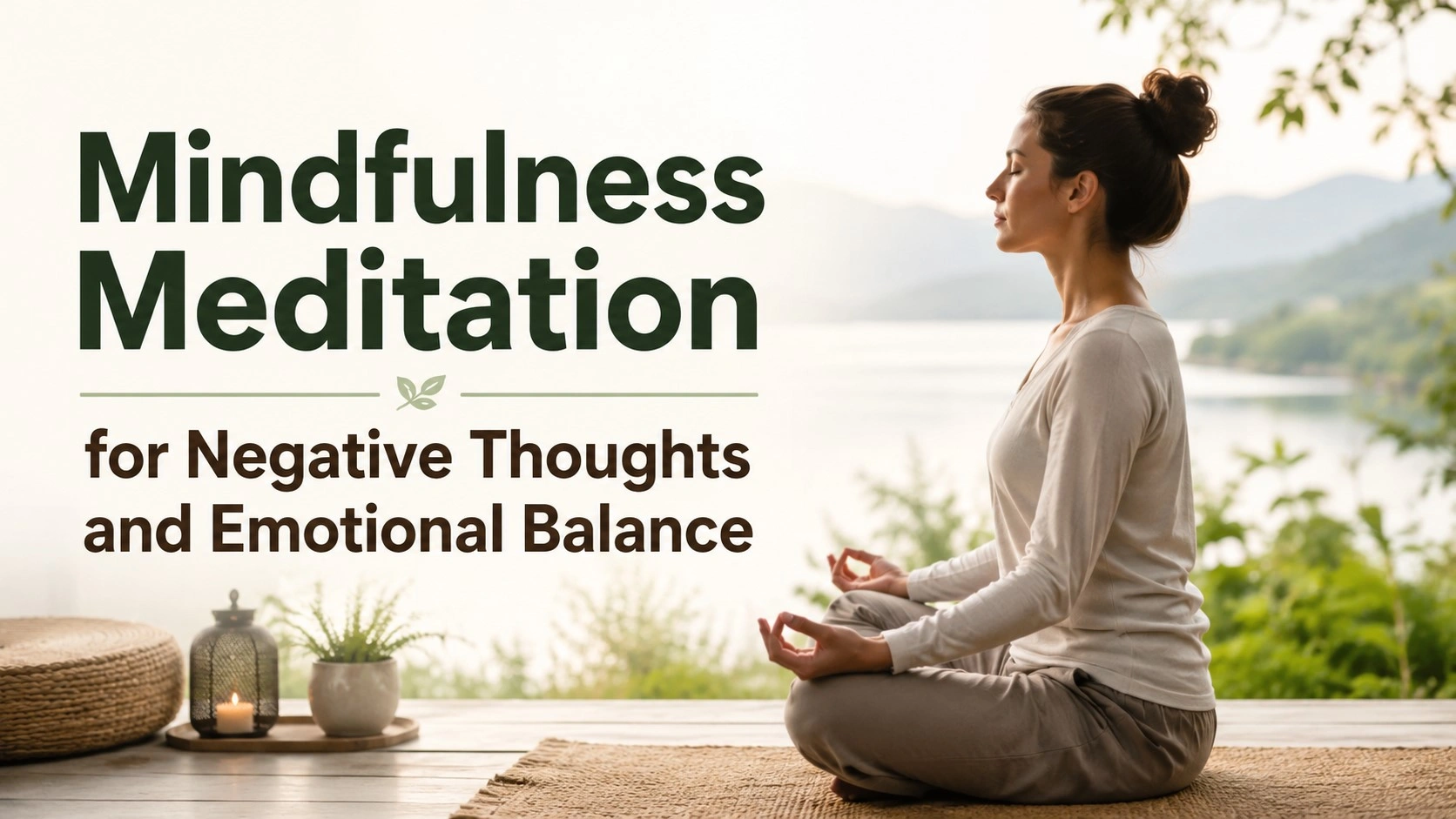
Mindfulness meditation is the practice of being fully present in the moment. It means becoming aware of your breath, body, thoughts, emotions, and surroundings without trying to control everything. When you practice mindfulness meditation, you learn to observe your thoughts instead of becoming trapped in them.
For example, when a negative thought arises, you do not immediately believe it or react to it. You simply notice, “A thought is arising.” This small gap between you and your thought can bring great freedom. Over time, mindfulness helps you understand that thoughts come and go, but your awareness remains steady.
This is why mindfulness meditation is helpful for negative thoughts, overthinking, stress relief, anxiety relief, emotional healing, and peace of mind. It brings you back from mental noise to present moment awareness.
CTA for Design Your Destiny
Are you ready to move beyond negative thoughts and create a more peaceful, conscious life? Join the Design Your Destiny program and learn practical spiritual tools, meditation techniques, and self awareness practices to bring clarity, emotional balance, and inner transformation into your daily life.
Start Your Journey Today!Why Negative Thoughts Feel So Powerful
Negative thoughts often feel powerful because we give them attention, emotion, and belief. A single thought like “I am not good enough” can create sadness, fear, or anxiety if we keep repeating it in the mind. The more we identify with such thoughts, the more real they begin to feel.
The mind has a habit of replaying past mistakes and imagining future problems. This creates overthinking. When overthinking continues for a long time, it can disturb emotional balance and mental peace. You may feel tired, irritated, restless, or emotionally heavy.
Mindfulness meditation helps by bringing awareness to this cycle. Instead of getting lost in the story of the thought, you begin to observe the thought itself. You start seeing that a thought is only a passing movement in the mind. It does not have to define your reality.
How Mindfulness Helps with Negative Thoughts
Mindfulness for negative thoughts works by changing your relationship with the mind. Normally, people either believe their thoughts completely or try to push them away. Both can create inner struggle. Mindfulness gives you a third path: observe with calmness.
When you sit quietly and watch the breath, thoughts naturally arise. Some may be positive, some may be negative, and some may be random. Your practice is not to chase them or fight them. Your practice is to notice them and come back to the breath.
This process slowly trains the mind. You become less reactive. You stop giving every thought the power to disturb you. You learn how to calm negative thoughts naturally by creating space between awareness and thinking.
With regular practice, mindfulness meditation for anxiety, overthinking, and stress relief can become a daily support system for emotional balance.
Meditation for Emotional Balance
Emotional balance does not mean you never feel sadness, anger, fear, or worry. It means you are able to experience emotions without being completely controlled by them. Meditation for emotional balance helps you sit with your feelings in a healthier way.
When emotions arise, most people either react immediately or suppress what they feel. Mindfulness meditation teaches you to observe emotions in the body and mind. You may notice tightness in the chest, heaviness in the head, fast breathing, or restlessness. Instead of judging these sensations, you simply allow them to be seen.
This gentle awareness can reduce emotional pressure. When emotions are observed without resistance, they often begin to soften. You may still feel them, but they do not overpower you in the same way.
That is why mindfulness techniques for emotional balance are helpful in daily life. They allow you to respond with patience, clarity, and self awareness.
Simple Mindfulness Meditation Practice for Negative Thoughts
You do not need a complicated method to begin. A simple daily meditation practice can help quiet the mind and bring mental peace.
Sit in a comfortable position. Keep your back straight but relaxed. Close your eyes gently or keep them slightly open. Take a few slow breaths. Feel the air entering and leaving your body.
Now bring your attention to your natural breathing. Do not try to change the breath. Just observe it. When thoughts come, notice them. You can silently say, “thinking,” and then bring your attention back to the breath.
If a negative thought appears, do not panic. Do not fight it. Simply observe it as a thought. Let it pass like a cloud in the sky. Return again to your breath.
Practice this for 10 minutes every day. With time, you may increase the duration. The goal is not to stop all thoughts. The goal is to stop being controlled by every thought.
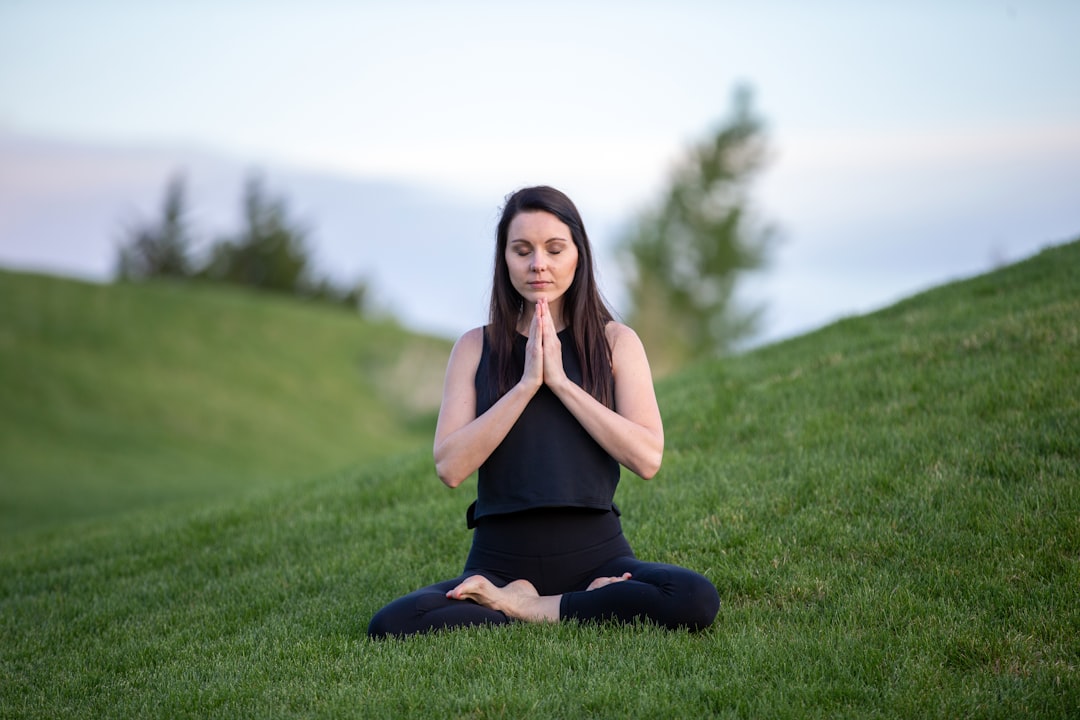
Observing Thoughts Meditation
Observing thoughts meditation is one of the most useful practices for people struggling with negative thoughts and overthinking. In this practice, you sit silently and watch the movement of the mind.
You may notice thoughts about work, relationships, the past, future worries, or personal fears. Instead of entering each thought, you remain like a witness. You observe the thought and allow it to move on.
This practice builds thought awareness. You begin to understand that the mind is constantly producing thoughts, but you are not every thought that appears. This realization can bring deep inner peace.
Observing thoughts meditation also supports spiritual awareness. It helps you connect with the calm space behind mental noise. That space is peaceful, steady, and free from unnecessary fear.
Mindful Breathing for a Calm Mind
Mindful breathing is one of the easiest ways to calm the mind. Whenever negative thoughts become too strong, bring your attention to your breath.
Take a slow inhale. Pause for a moment. Exhale gently. Feel your body relaxing with each breath. Even a few mindful breaths can create a pause in the cycle of overthinking.
Breathing brings you back to the present moment. Negative thoughts usually live in the past or future. The breath always happens now. When you focus on breathing, you return to the present.
This is why mindful breathing is often used in meditation for stress relief, meditation for anxiety, and meditation for peace of mind. It is simple, natural, and can be practiced anywhere.
How to Stop Negative Thoughts Through Meditation
Many people ask, “How to stop negative thoughts through meditation?” The answer is to first stop trying to forcefully stop them. Negative thoughts reduce when you stop feeding them with fear, judgment, and constant attention.
Meditation helps you see thoughts clearly. When you observe a negative thought without reacting, its power slowly decreases. You may notice that the same thought comes again and again, but your reaction becomes lighter.
For example, earlier a thought may have disturbed you for hours. After regular meditation, you may notice it, breathe, and return to calmness within a few minutes. This is real progress.
Daily meditation for positive thinking does not mean pretending everything is perfect. It means training the mind to return to awareness, gratitude, clarity, and positive energy instead of being stuck in negativity.
Meditation for Overthinking and Anxiety
Overthinking often begins with one small worry and turns into a chain of thoughts. The mind starts asking, “What if this happens?” or “Why did that happen?” This creates anxiety and emotional tiredness.
Meditation for overthinking and anxiety helps break this chain. When you focus on the breath, body, or present moment, the mind slowly becomes less scattered. You begin to see that not every thought needs your response.
During meditation, if anxiety arises, bring your attention to the body. Feel your feet on the ground. Notice your breath. Relax your shoulders. Let the body remind the mind that you are safe in this moment.
This simple practice helps build emotional stability. It teaches the mind to return to the present instead of running endlessly into fear.

Mindfulness Practice for Emotional Healing
Negative thoughts are often connected to old pain, guilt, fear, or hurt. Mindfulness practice for emotional healing allows these feelings to be seen with kindness.
Instead of blaming yourself for feeling negative, you begin to create a compassionate relationship with your inner world. You may say to yourself, “I am noticing pain,” or “I am feeling fear right now.” This gentle language reduces inner resistance.
Healing begins when you stop running away from yourself. Mindfulness meditation gives you the courage to sit with your emotions without judgment. Slowly, the mind becomes softer, and the heart becomes lighter.
This is also why mindfulness meditation supports spiritual healing. It helps you move from inner conflict toward acceptance, awareness, and peace.
Daily Meditation Routine for Mental Peace
A daily meditation routine does not have to be long. Consistency is more important than duration. Even 10 to 15 minutes every day can help create a calmer relationship with your thoughts.
You can begin your morning with mindful breathing. Sit quietly, observe your breath, and set a peaceful intention for the day. During the afternoon, take a short pause whenever you feel stressed. At night, practice a few minutes of observing thoughts meditation before sleep.
This routine can help you build mental peace and emotional stability. Over time, mindfulness becomes part of your lifestyle. You begin to walk, speak, work, and respond with more awareness.
How to Release Negative Emotions Through Meditation
To release negative emotions through meditation, you first need to allow them to be felt. Sit quietly and notice where the emotion is present in the body. Is it in the chest, stomach, throat, or head?
Breathe into that area gently. Do not force the emotion to disappear. Simply observe it with patience. You may silently repeat, “I allow this feeling to be seen.”
As you continue breathing, the emotion may shift, soften, or release naturally. Sometimes it may take time, and that is okay. The purpose of meditation is not to rush healing. It is to create a safe space where healing can happen.
This practice develops inner strength and emotional balance.

Benefits of Mindfulness Meditation for Negative Thoughts
Mindfulness meditation can support your inner journey in many ways. It helps quiet the mind, reduce overthinking, improve self awareness, and bring emotional clarity. It also encourages positive thinking, inner peace, and present moment awareness.
The deeper benefit is that you stop being a prisoner of your own thoughts. You realize that negative thoughts may come, but they do not have to control your mood, decisions, or identity.
With regular practice, meditation for mental peace and emotional stability becomes a natural part of your life. You begin to respond instead of react. You begin to observe instead of panic. You begin to live with more calmness, clarity, and positive energy.
Mindfulness meditation for negative thoughts and emotional balance is not about creating a perfect mind. It is about creating a peaceful relationship with the mind. Thoughts will come and go. Emotions will rise and fall. But with awareness, you can remain centered.
Through mindful breathing, observing thoughts meditation, present moment awareness, and daily practice, you can slowly quiet the mind and develop emotional stability. You do not need to fight your thoughts. You only need to watch them with patience, compassion, and awareness.
The more you practice, the more you discover that peace is not somewhere outside you. It is already present within you, waiting to be noticed.
CTA for Personal Session
Feeling stuck in overthinking, emotional confusion, or negative thought patterns? Book a personal session for guided support and practical spiritual direction. Get personalized guidance to calm the mind, understand your emotions, and reconnect with your inner peace.
Book Now