

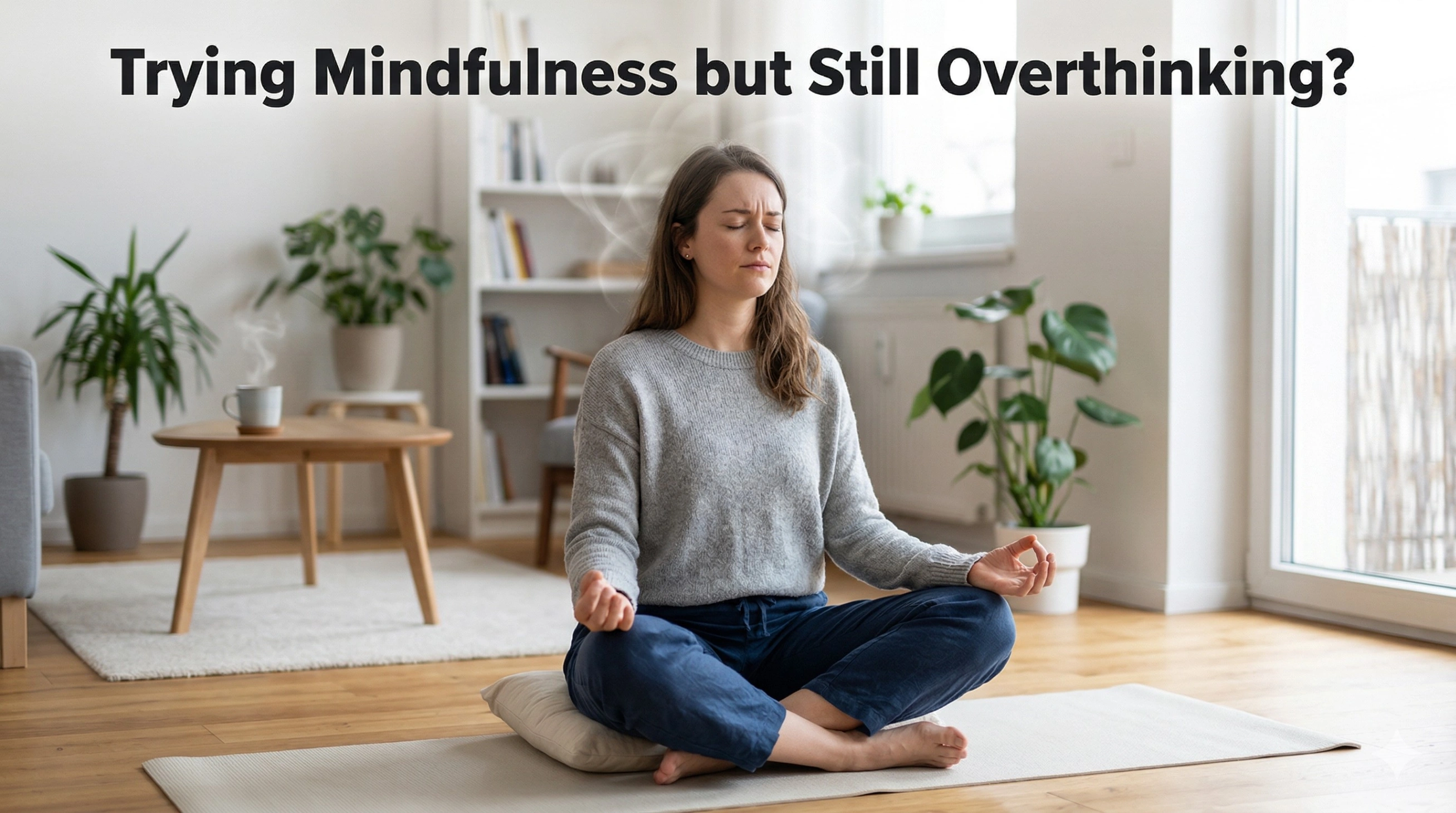
If you’ve been practicing mindfulness meditation hoping to figure out how to stop overthinking, but your mind still feels like a nonstop loop of thoughts, you’re not alone.
In fact, one of the most common frustrations people face is this:
“Why is mindfulness not working for me?”
You sit down to meditate… and suddenly, your mind becomes louder than ever. Thoughts race, distractions increase, and instead of peace, you experience more overthinking during meditation.
Let’s clear this up honestly because the problem isn’t you.
The problem is how mindfulness is misunderstood.
Why Mindfulness Isn’t Working for You
Most people approach mindfulness with one goal:
“I want to stop thinking.”
But here’s the truth:
Mindfulness is not about stopping thoughts.
It’s about observing them.
When you try to control your mind forcefully, you create resistance. And resistance leads to:
more mental chatter
more anxiety and overthinking
frustration with meditation
This is why many people feel:
mindfulness doesn’t work for me
mindfulness not helping anxiety
why am I still overthinking after meditation?
Because they are trying to do the opposite of what mindfulness actually is.
Personal Session
Feeling stuck with overthinking or anxiety? Book a personal session to get personalized guidance and simple steps to calm your mind and build inner peace.
Book NowThe Real Problem: Your Relationship with Thoughts
Overthinking isn’t just about having too many thoughts.
It’s about how you react to them.
Your mind produces thoughts naturally. That’s its job.
But when you:
analyze every thought
try to control them
judge yourself for thinking
You create a loop.
This loop leads to:
constant overthinking problem
mental chatter overload
emotional exhaustion
Mindfulness doesn’t remove thoughts it changes your relationship with them.
Why Overthinking Gets Worse During Meditation
This might surprise you, but it’s completely normal.
When you slow down and sit in silence, your brain:
releases suppressed thoughts
becomes more aware of mental activity
stops being distracted
So it feels like your mind is louder but in reality,
you’re just noticing it more.
This is why people experience:
overthinking during meditation
cannot focus during meditation
why meditation feels difficult
It’s not failure. It’s awareness beginning.
Mindfulness vs Overthinking: What’s the Difference?
Let’s simplify:
Overthinking: Getting lost in thoughts
Mindfulness: Watching thoughts without reacting
That’s it.
When you observe thoughts without attaching meaning,
they lose their power.
But when you engage with every thought,
they multiply.
Common Mindfulness Mistakes Beginners Make
If mindfulness feels frustrating, you might be making one of these mistakes:
1. Trying to “Empty the Mind”
This creates pressure and leads to more thoughts.
2. Expecting Instant Calm
Mindfulness is a practice, not a quick fix.
3. Judging Yourself
Thinking “I’m bad at this” only increases anxiety.
4. Overconsuming Techniques
Jumping between methods creates confusion.
5. Forcing Focus
Trying too hard creates resistance.
Here’s a simple way to understand why mindfulness isn’t stopping your overthinking…
Trigger → Thought → Analysis → Anxiety → More Thoughts → Overthinking Loop
↓
Mindfulness Awareness
↓
Observe → Accept → Release → Calm
How to Stop Overthinking (The Right Way)
Now let’s get practical.
Here’s how to actually use mindfulness to calm your mind:
1. Stop Fighting Your Thoughts
Instead of:
“I need to stop thinking”
Shift to:
“Let me observe this thought”
This one shift reduces mental pressure instantly.
2. Label Your Thoughts
When a thought arises, simply say:
“thinking”
“worrying”
“planning”
This creates distance between you and the thought.
3. Focus on the Body, Not the Mind
Your mind is noisy but your body is present.
Try:
noticing your breath
feeling your feet
observing sensations
This anchors you in present moment awareness.
4. Use Simple Breathing Techniques
One powerful method:
Inhale for 4 seconds
Hold for 4 seconds
Exhale for 6 seconds
This calms your nervous system and reduces anxiety.
5. Accept That Thoughts Will Exist
You don’t need a silent mind to feel peace.
You need a non-reactive mind.
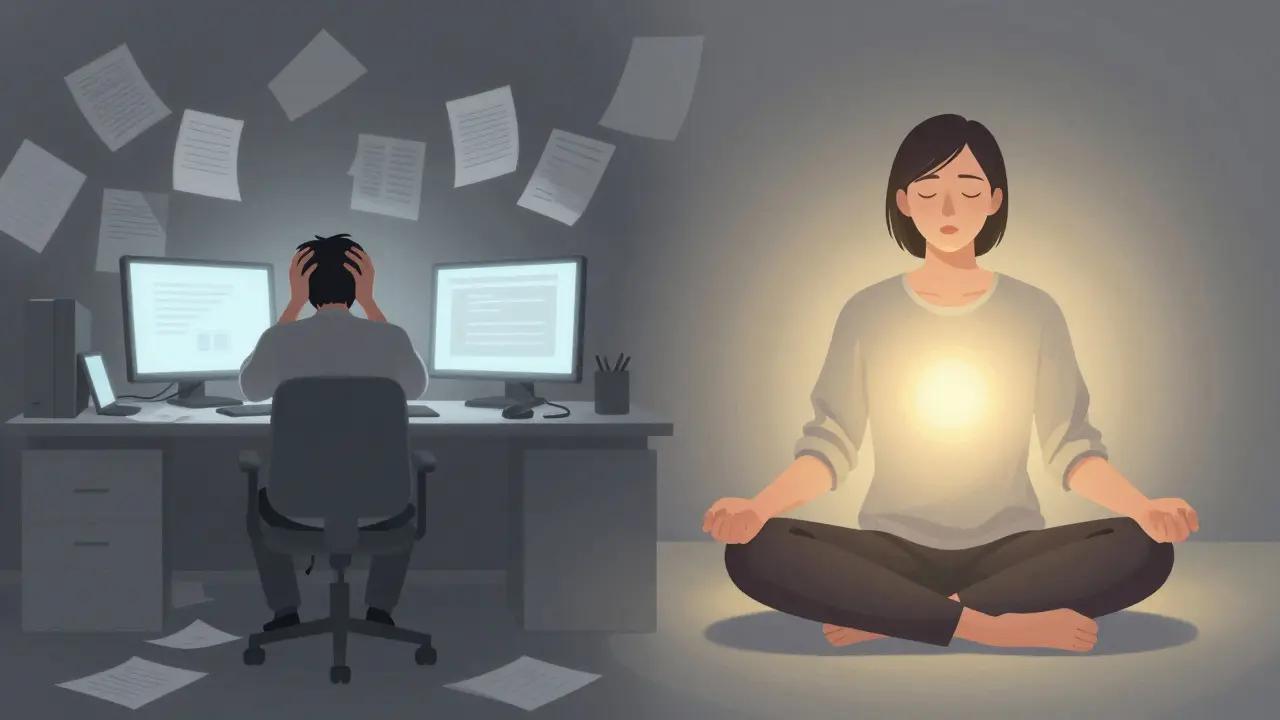
How to Calm an Overactive Mind Instantly
If your mind feels overwhelming, try this:
Splash cold water on your face
Take a short walk
Write your thoughts down
Shift your environment
These grounding techniques help break the overthinking cycle.
Mindfulness for Anxiety and Overthinking
When practiced correctly, mindfulness helps:
reduce emotional reactivity
improve emotional regulation
increase mental clarity
create inner peace
But the key is consistency, not perfection.
Even 5 minute mindfulness meditation daily can make a difference.
Why You Feel Like You Can’t Control Your Thoughts
Here’s an important truth:
You don’t control thoughts.
You control your response to them.
Once you understand this, everything changes.
You stop fighting your mind…
and start understanding it.

Daily Mindfulness Habits That Actually Work
Keep it simple:
5 minutes of breathing daily
observing thoughts without reaction
limiting distractions
taking mindful pauses during the day
These small habits build long-term conscious living.
From Overthinking to Inner Peace
At first, mindfulness feels uncomfortable.
Then, slowly:
thoughts lose intensity
reactions reduce
clarity increases
And one day, you realize:
your mind is no longer controlling you
That’s real progress.

You’re Not Failing, You’re Learning
If mindfulness feels difficult, remember:
You’re not doing it wrong
You’re just becoming aware
Overthinking doesn’t disappear overnight.
But with the right approach, it becomes manageable.
And eventually… peaceful.
Design Your Destiny
Ready to stop overthinking and take control of your mind? Join “Design Your Destiny” and learn practical techniques to build awareness, clarity, and emotional balance in your daily life.
Start Your Journey Today!