

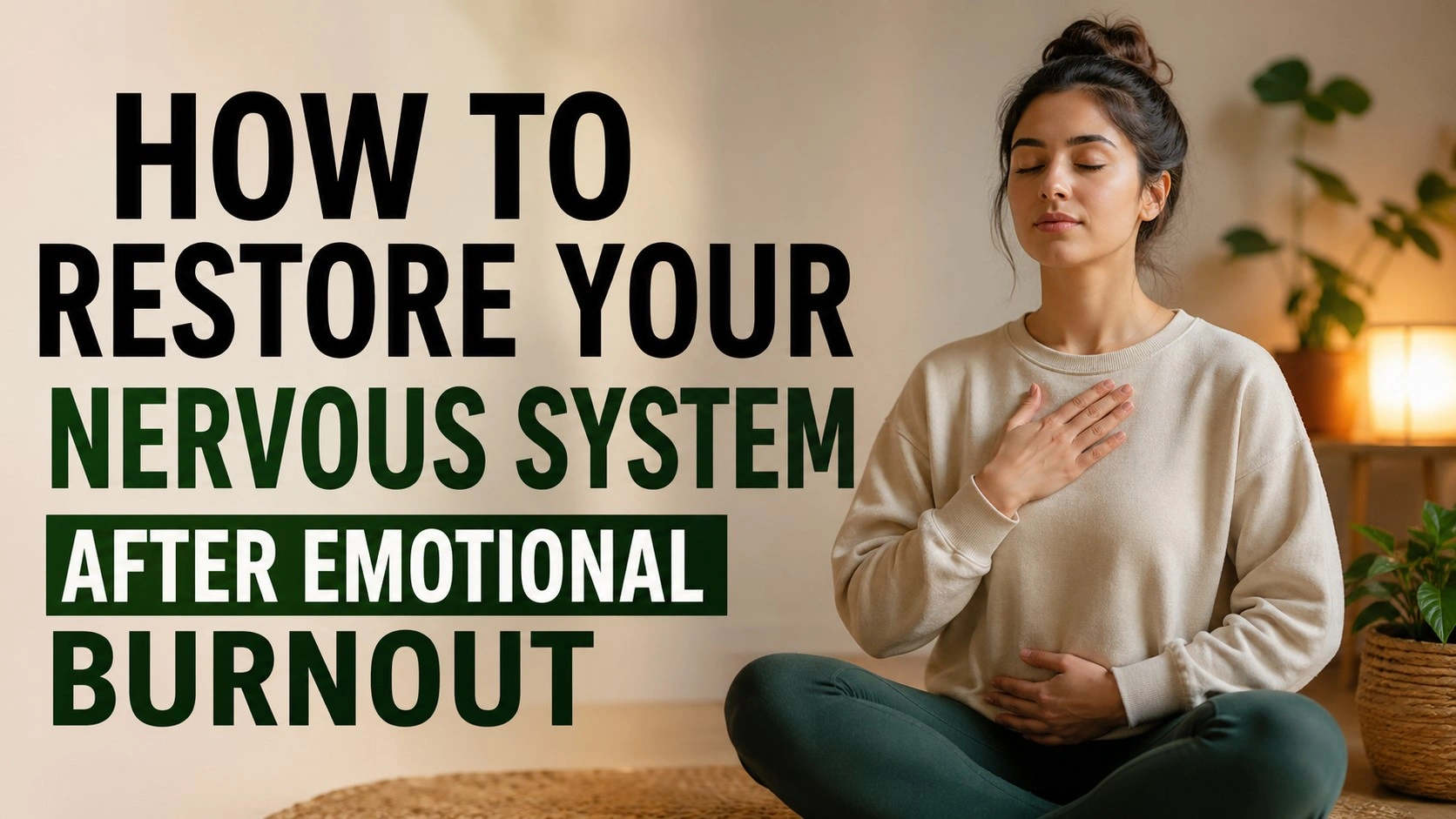
Emotional burnout doesn’t just live in your mind, it lives in your body. If you’ve been feeling constantly tired, overwhelmed, or unable to relax, your nervous system might be stuck in survival mode. This is where nervous system healing becomes essential.
When your system is dysregulated for too long due to chronic stress, your body forgets what “calm” feels like. The good news? You can restore your nervous system after emotional burnout naturally, without forcing anything.
Let’s understand how.
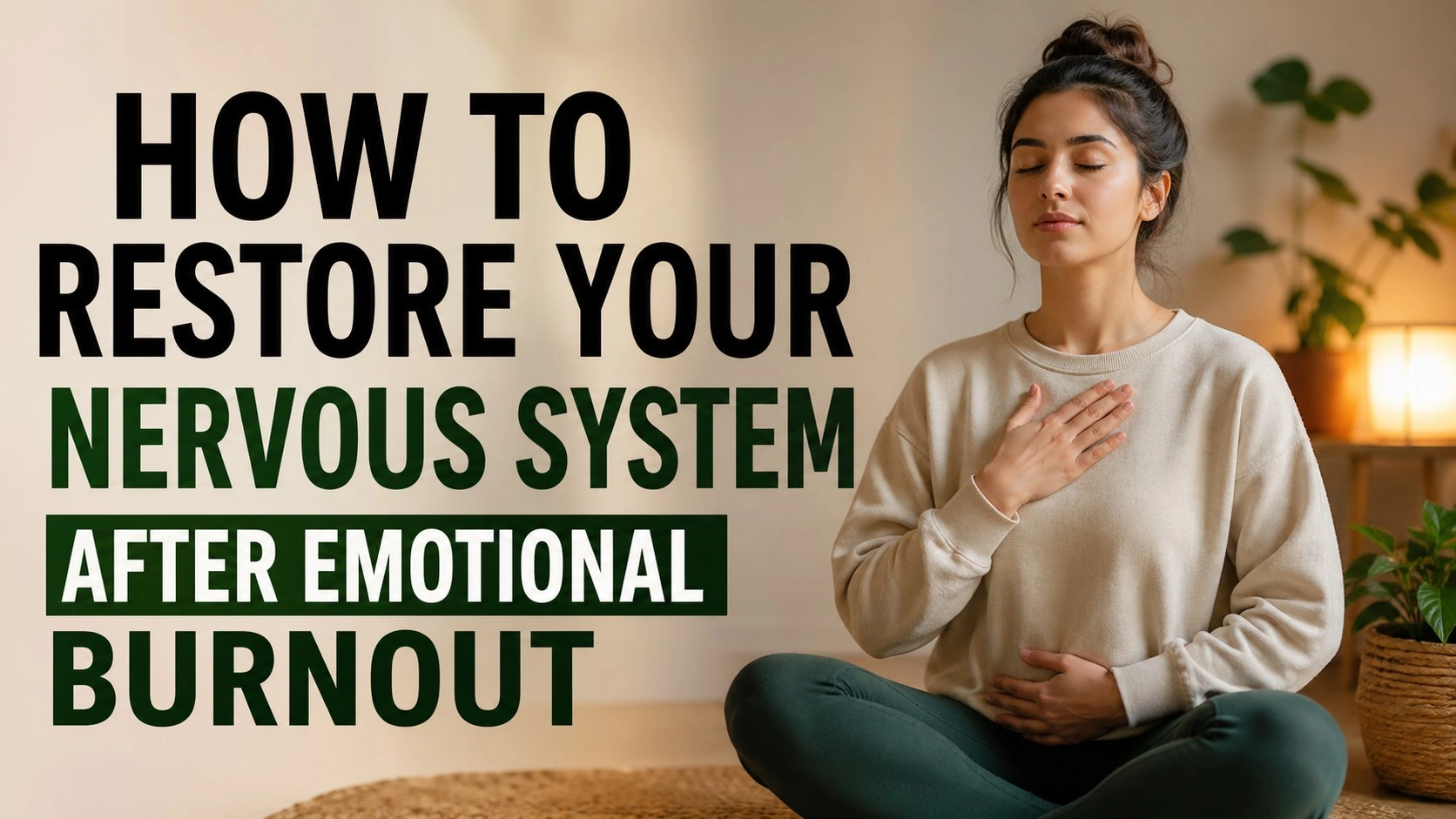
What Happens During Emotional Burnout?
Burnout isn’t just about being “too busy.” It’s a deep state of emotional exhaustion recovery needed at a body level.
When you experience long-term stress:
Your nervous system stays activated (fight-or-flight mode)
Cortisol levels remain high
Your body struggles to relax, even during rest
This leads to:
Mental fatigue
Feeling overwhelmed easily
Low energy despite sleeping
Difficulty focusing
Emotional numbness
This condition is called nervous system dysregulation.
Personal Session with Sakshi Shree
Need deeper guidance on healing and clarity? Book a personal session with Sakshi Shree and experience personalized spiritual insights to restore balance, peace, and purpose in your life.
Book NowSigns Your Nervous System Needs Healing
Before jumping into solutions, recognize these signs:
You feel anxious for no clear reason
Your body feels tense even when nothing is wrong
You struggle to “switch off” your mind
You’re always tired but can’t fully rest
Small things feel overwhelming
If this sounds like you, your body isn’t broken, it’s just asking for nervous system reset.
Step-by-Step: How to Restore Your Nervous System
Let’s keep this simple, practical, and real.
1. Start with Awareness (Not Force)
Most people try to “fix” themselves quickly. But healing begins with awareness.
Instead of resisting your stress, observe it:
Notice your breathing
Feel your body tension
Acknowledge your emotions
This simple shift signals safety to your nervous system.
2. Calm Your Nervous System Through Breath
Your breath is the fastest way to regulate your system.
Try this:
Inhale for 4 seconds
Hold for 4 seconds
Exhale slowly for 6–8 seconds
Do this for 5 minutes daily.
This activates your parasympathetic nervous system, the part responsible for relaxation.
3. Reduce Overstimulation
If your mind is constantly active, your nervous system never gets a break.
Start small:
Limit screen time before bed
Take 10–15 minutes of silence daily
Avoid multitasking
Your body heals in stillness, not in chaos.
4. Move Your Body Gently
You don’t need intense workouts.
Simple movement helps:
Walking
Stretching
Light yoga
This releases stored stress from your body and supports chronic stress recovery.
5. Create a Daily Nervous System Healing Routine
Consistency matters more than intensity.
A simple routine:
Morning: 5-minute breathing + sunlight
Afternoon: mindful breaks
Night: no screens + slow wind-down
These small habits support long-term burnout recovery.
6. Learn to Feel Safe Again
This is the most important step.
Your nervous system heals when it feels safe.
You can create safety by:
Spending time in nature
Being around calm people
Practicing self-compassion
Instead of asking “How do I fix myself?”
Ask: “How can I feel safe right now?”
7. Stop Forcing Productivity
One of the biggest mistakes?
Trying to “push through” burnout.
Healing requires slowing down.
Take breaks without guilt
Do less, but consciously
Allow your body to rest
Your energy will return naturally.
Natural Ways to Heal Chronic Stress and Burnout
Here are additional techniques:
Meditation for calming the mind
Journaling to release emotional buildup
Grounding (earthing) to reconnect with your body
Healthy sleep routine for deep restoration
All these support nervous system repair techniques.
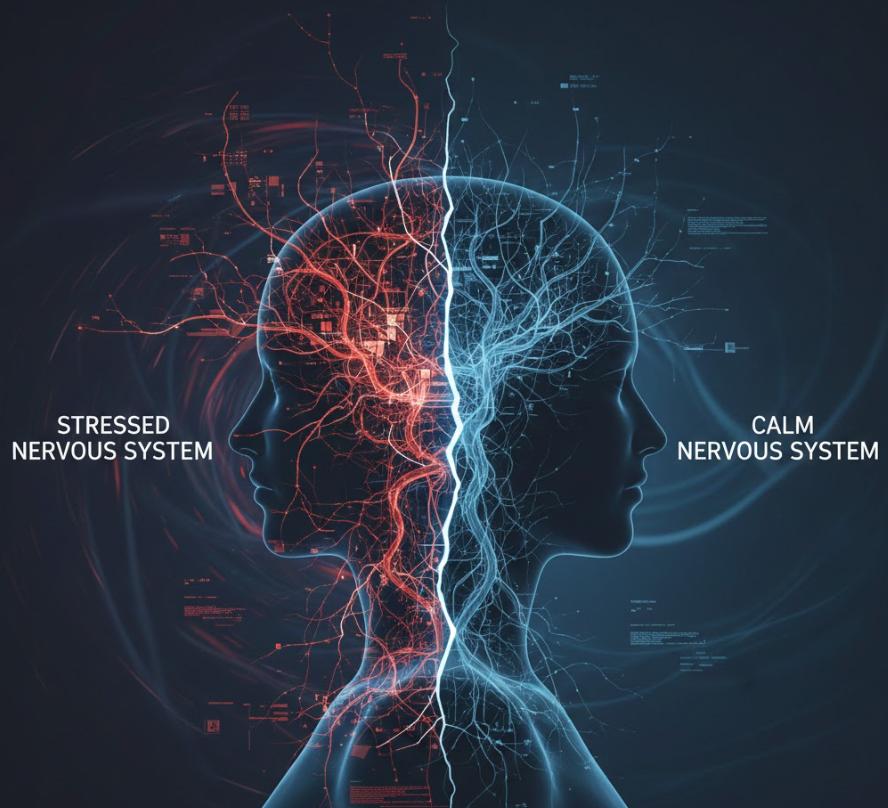
The Mind-Body Connection in Healing
Your thoughts affect your body, and your body affects your mind.
When your nervous system is calm:
Your thoughts become clearer
Your emotions stabilize
Your energy improves
This is why nervous system healing is the foundation of emotional healing.
How Long Does Nervous System Healing Take?
There’s no fixed timeline.
Some people feel better in weeks, others take months.
What matters:
Consistency
Patience
Self-awareness
Healing isn’t linear and that’s okay.
If you’re feeling emotionally drained, exhausted, or stuck, it’s not because you’re weak.
It’s because your nervous system has been overloaded for too long.
Instead of forcing change, start creating safety.
Slow down. Breathe. Be present.
Your body knows how to heal, you just need to support it.

Design Your Destiny
Feeling stuck, overwhelmed, or disconnected? It’s time to take control of your inner world. Join the “Design Your Destiny” program and learn how to align your mind, body, and energy for a powerful transformation.
Start your transformation today.