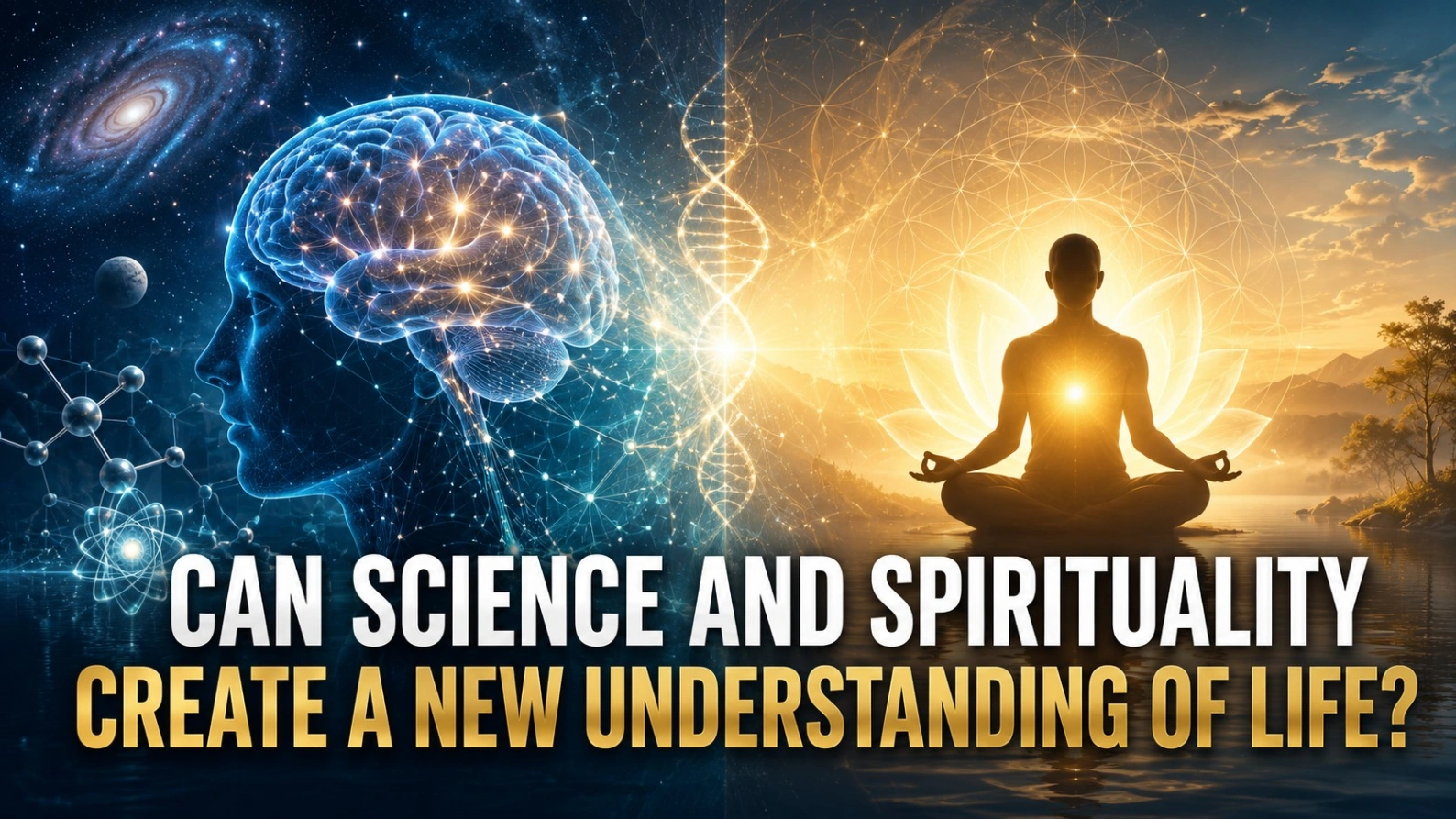
For a long time, science and spirituality were presented as opposites. One was associated with evidence, logic, and measurable facts; the other with faith, inner experience, and questions that cannot always be placed under a microscope. Yet today, more people are asking whether science and spirituality can work together to create a deeper understanding of life.
This is not about turning spirituality into a laboratory experiment or asking science to answer every personal mystery. Human life is both outward and inward. We need science to understand the body, the brain, the natural world, and the systems shaping our lives. We also need reflection, values, awareness, and meaning to understand how we want to live within that world.
When approached with humility, science and spirituality may not compete at all. They can offer different but valuable ways of exploring consciousness, wellbeing, purpose, and the human experience.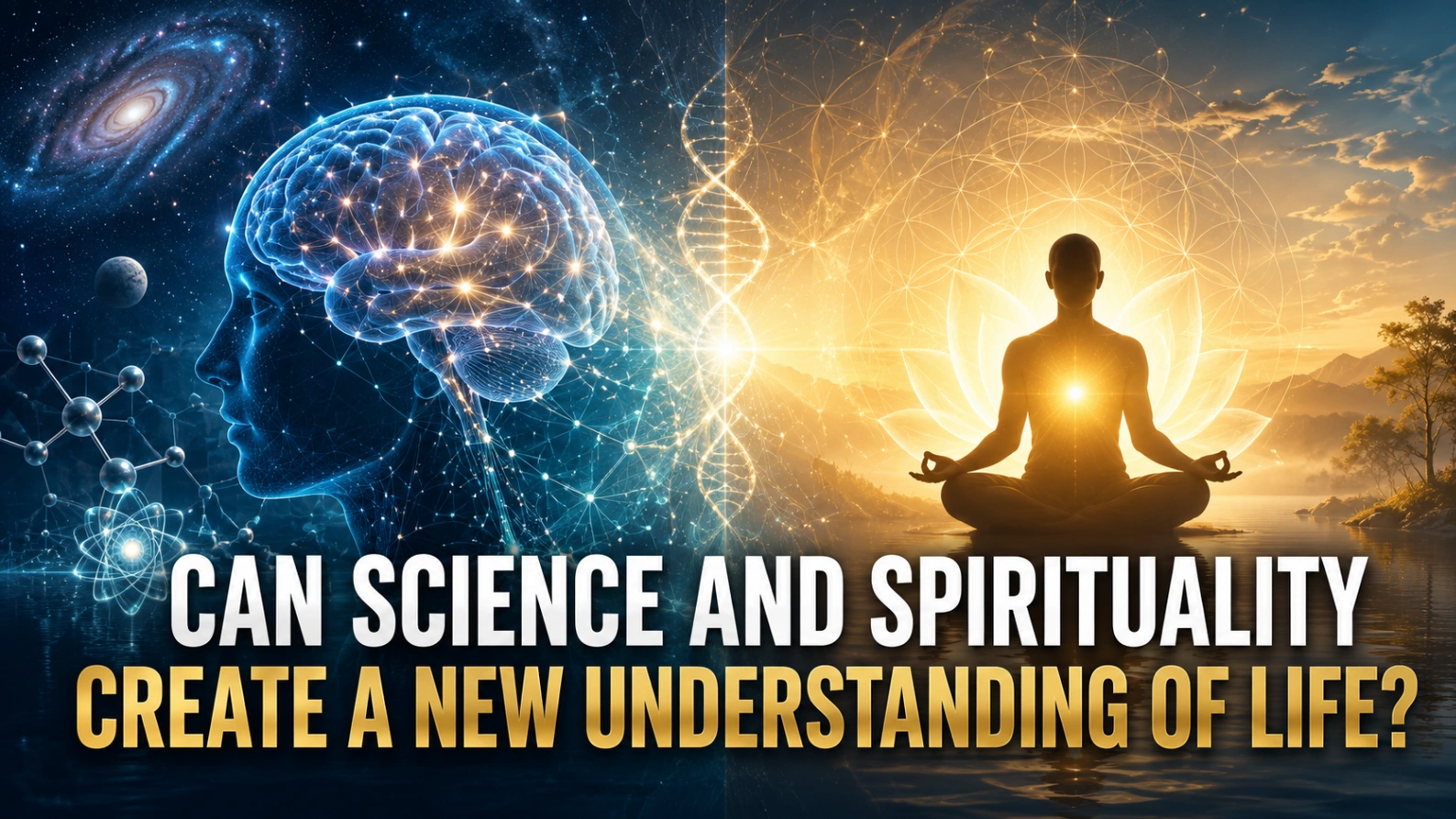
What Do Science and Spirituality Each Explore?
Science is a method of asking questions. It observes patterns, tests ideas, measures outcomes, and revises conclusions when new evidence emerges. Its strength lies in its willingness to question and verify.
Spirituality explores personal questions: Who am I beyond my roles? What gives life meaning? How do I respond to suffering and live with compassion? It may involve religion and prayer, or meditation, nature, service, self-awareness, and a search for purpose.
Science asks, “How does this work?” Spirituality asks, “What does this mean?” Both matter. Knowledge of the brain and stress can guide wellbeing, while values such as connection and responsibility help us use that knowledge wisely.
The science of spirituality does not need to reduce every spiritual experience to a chemical reaction. Instead, it can study practices such as meditation, mindfulness, gratitude, and social connection, while spirituality continues to explore their personal meaning.
Design Your Destiny
Ready to go beyond information and live with more clarity? Explore Design Your Destiny to understand your patterns, align your choices with your deeper values, and take meaningful steps toward a more conscious life.
Start Your JourneyThe Relationship Between Science and Spirituality
The phrase science vs spirituality creates an unnecessary conflict. Problems arise when either side tries to do a job it was not designed to do. Science cannot tell a person what their life purpose should be. Spirituality should not dismiss strong evidence simply because it challenges a cherished belief.
This is also where science and religion are often confused. Religion may offer a shared tradition, ethical framework, and form of worship, while spirituality can be an individual search for meaning. Neither is a substitute for careful scientific evidence when a claim is testable.
A healthier relationship begins with intellectual honesty. Some spiritual claims may be symbolic, philosophical, or deeply personal rather than scientifically testable. That does not automatically make them meaningless. It simply means we should be clear about the kind of question being asked.
Science and spirituality together can support a fuller human perspective. Science can protect us from misinformation. Spirituality can remind us that knowledge without wisdom is incomplete.
Consciousness: How It Connects Science and Spirituality
Consciousness is a fascinating meeting point. Human consciousness includes awareness of thoughts, feelings, memories, and the world around us. We can observe our minds, reflect, and question the nature of our existence.
The science of consciousness explores how brain activity, attention, perception, sleep, memory, and emotion contribute to subjective experience. Researchers continue to study how physical processes in the brain relate to the felt quality of being alive. There is still much that remains unknown, and unanswered questions should not be treated as proof of any particular spiritual theory.
Spiritual traditions have also explored consciousness for centuries. Many teachings encourage people to observe thoughts rather than become controlled by them. They invite us to notice the difference between a passing emotion and the awareness that notices it. This does not replace neuroscience, but it can offer practical ways to experience greater self-awareness and spiritual growth.
When we ask, “What is human consciousness?” we may need both perspectives. Science can investigate mechanisms and measurable patterns. Spirituality can help people explore the lived experience of awareness, identity, attention, and inner stillness.
Meditation, Mindfulness, and the Brain
Meditation and mindfulness are important bridges between neuroscience and spirituality. In many traditions, meditation is not merely a technique for relaxation. It is a practice of training attention, developing clarity, and becoming less reactive to inner noise.
Can meditation be explained by science? Modern research has examined meditation and the brain, including possible links with attention, stress response, emotional regulation, and wellbeing. The findings deserve interest, but they should not be overstated. Meditation is not a magical cure, and its effects vary depending on the person, the practice, and the context.
The growing interest in the neuroscience of meditation shows that inner practices deserve thoughtful study. Mindfulness and neuroscience meet in a practical space: both are interested in what happens when we notice thoughts and emotions without immediately acting on them. Questions about how spirituality changes the brain are still being studied, but reflective practices can help many people become more present and intentional.
A few minutes of conscious breathing before a difficult conversation may create space between impulse and response. Paying attention while eating, walking, or listening can reduce the feeling of living on autopilot. This is one simple example of the science behind mindfulness becoming useful in everyday life.
Ancient Wisdom and Modern Science
The relationship between ancient wisdom and modern science does not require us to claim that every old teaching has been scientifically proven. That kind of claim weakens both fields.
Yet many teachings continue to resonate because they focus on timeless struggles: fear, desire, grief, attachment, anger, comparison, and the search for peace. Modern psychology, behavioural science, and neuroscience study many of these same experiences through different methods.
For example, spiritual traditions often teach that constant craving can create suffering. Psychology also examines how comparison, unrealistic expectations, and compulsive reward-seeking can affect wellbeing. Spiritual teachings encourage compassion and service, while human behaviour research explores how supportive relationships and prosocial actions can strengthen connection.
The language is different, but the overlap can be useful. Modern science and ancient spiritual wisdom can invite us to ask better questions about how the mind works and how people can live with greater balance.
Meaning of Life Cannot Be Measured Alone
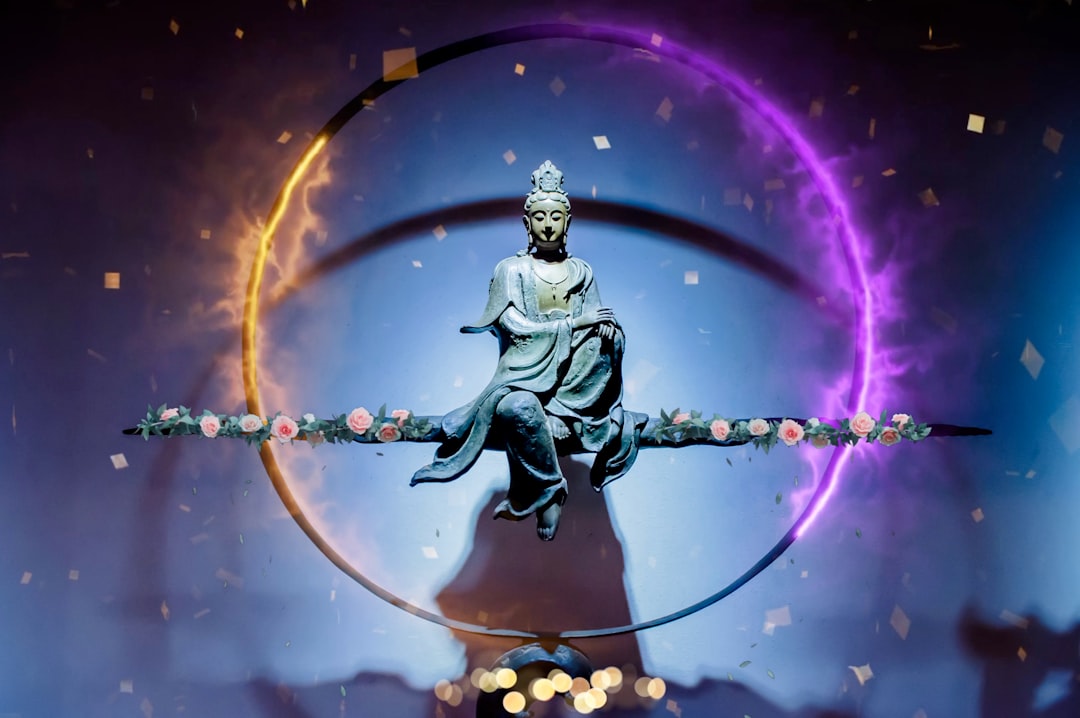
The meaning of life is not a question that can be solved only through data. Can science explain the purpose of life? It can explain many conditions that support a good life, including physical health, safety, social connection, and mental wellbeing. But it cannot provide one universal answer to what a meaningful life must look like.
For one person, purpose may come through family. For another, it may come through creativity, service, learning, faith, healing, or building something valuable. Spirituality and the meaning of life are often connected because spiritual reflection encourages us to look beyond immediate achievement and ask whether our goals align with deeper values.
This does not mean material goals are unimportant. The problem begins when success becomes the only measure of worth. A spiritual perspective can remind us that a meaningful life also includes how we treat people, how we respond to challenges, and whether our choices leave us with inner peace.
Spirituality, Mental Health, and Wellbeing
Spirituality and mental health can be connected in helpful ways, particularly when spirituality gives a person hope, community, routine, gratitude, and a sense of meaning. Practices such as prayer, meditation, journaling, spending time in nature, and acts of service may support spirituality and wellbeing for many people.
At the same time, spirituality should not be used to dismiss real mental health needs. Telling someone to “just think positive” when they are experiencing serious anxiety, depression, trauma, or burnout can be harmful. Professional support, medical care, and therapy remain important when needed.
A more compassionate approach is to see spirituality as a companion to healthy care, not a replacement for it. It can support resilience, but it should never create guilt for struggling. Spiritual awakening is not about pretending that pain does not exist. It is about meeting life honestly, with support and self-compassion.
Can Science Explain Spirituality?
So, what does science say about spirituality? It can study some parts of spiritual experience. Researchers can examine how meditation affects attention, how rituals influence social connection, or how gratitude practices affect mood. Science can also investigate why certain experiences feel meaningful or transformative.
But science may not fully capture the personal meaning of a spiritual experience. A person may describe a moment of silence, prayer, music, or connection with nature as sacred. Another may describe the same moment in psychological or biological terms. Both descriptions can exist without cancelling each other out.
The question “Can science prove spirituality?” may be too narrow because spirituality includes values, interpretation, and lived experience. Not everything meaningful is measurable in the same way, yet not every powerful feeling should be treated as objective proof. The better approach is to stay open, careful, and curious.
A New Understanding of Life
A new understanding of life may emerge when we stop asking science and spirituality to fight for control. Science gives us tools to understand the world more accurately. Spirituality asks us to use those tools with responsibility, awareness, and compassion.
This matters in a fast-moving world. Technology can increase convenience, but it cannot automatically create wisdom. Science can tell us how to extend life; spirituality asks how to live it well.
The connection between science and spirituality is most valuable when it makes us more grounded, not more arrogant. It should help us become better observers, kinder people, and more thoughtful decision-makers. It should make room for evidence while also respecting the depth of human experience.
How to Bring Both Into Daily Life
You do not need to choose between logic and inner reflection. Read reliable information when you want to understand health, psychology, or the world around you. At the same time, create quiet space to notice your values, habits, and emotional patterns.
Spend five minutes in silence, write down one question you are carrying, and notice what your mind does when there is no distraction. Practice gratitude without using it to deny difficulties. Ask whether your goals are helping you become more alive, more connected, and more honest.
Science and spirituality can coexist in the same life. One can sharpen your understanding; the other can deepen your presence. Together, they may not give us every answer, but they can help us ask more meaningful questions.
Can science and spirituality create a new understanding of life? Yes, when we allow each to contribute what it does best. Science offers evidence, inquiry, and practical knowledge. Spirituality offers reflection, meaning, and an invitation to live with greater awareness.
Rather than choosing one over the other, we can use both to explore consciousness, wellbeing, purpose, and human potential. The most valuable outcome is not a perfect theory of life. It is a more conscious way of living it.
Personal Session
Looking for guidance that speaks to your unique journey? Book a personal session to explore the questions, emotional patterns, and life direction that matter most to you in a supportive and practical space.
Book Now