

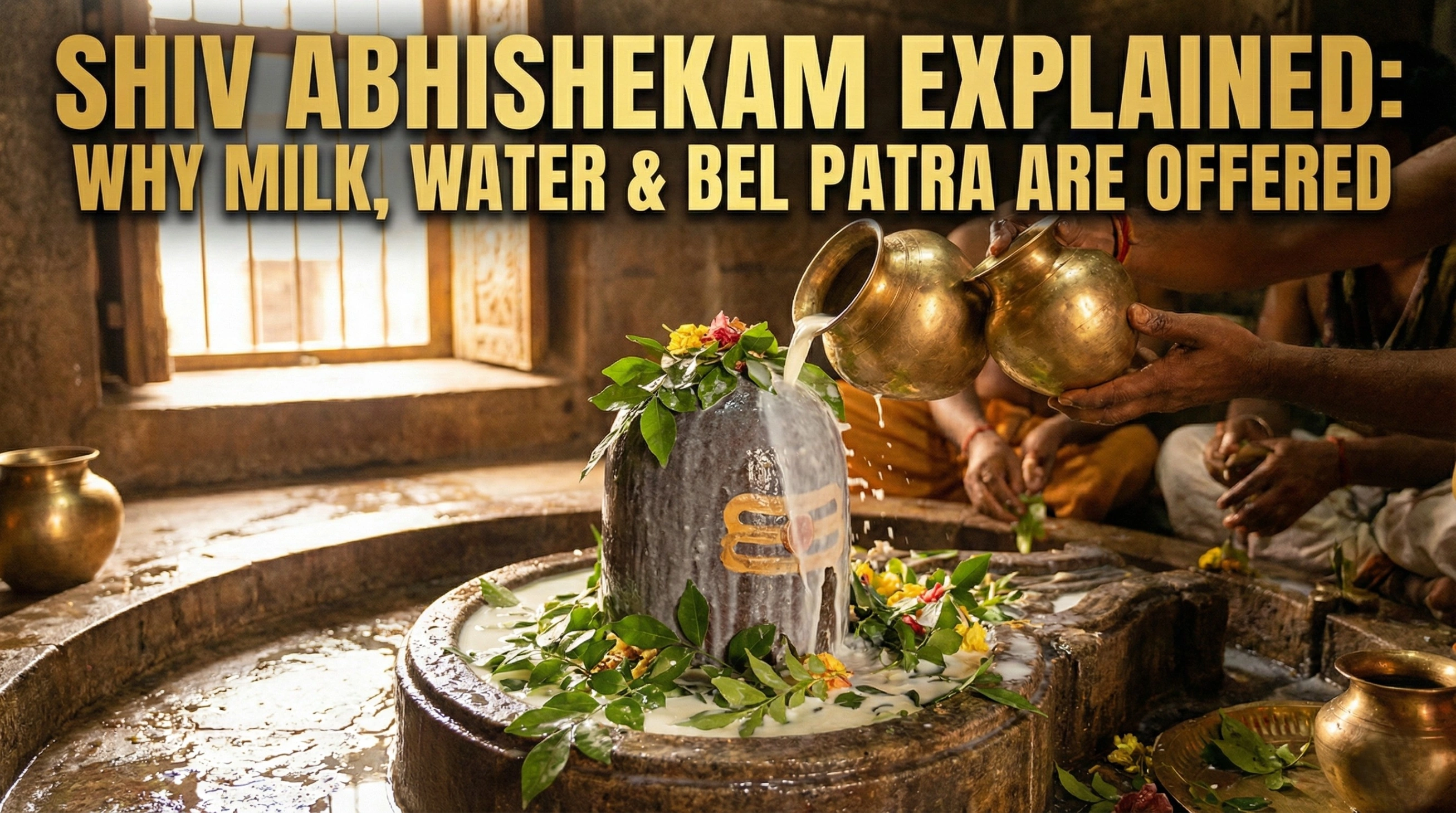
Shiv Abhishekam is one of the most sacred and widely practiced rituals in Hindu spirituality. From early morning temple visits to elaborate Maha Shivratri ceremonies, devotees across generations pour milk, water, and offer bel patra on the Shivling with deep faith. But have you ever paused to ask why these offerings are made? Is Shiv Abhishekam merely symbolic, or does it carry deeper spiritual, energetic, and even scientific meaning?
In this blog, we’ll explore shiv abhishekam meaning, its significance, rituals, benefits, and most importantly why milk, water, and bel patra are offered during this powerful act of devotion.
What Is Shiv Abhishekam?
Shiv Abhishekam (also known as shiv abhishek) is a ritual bathing of the Shivling using sacred substances like water, milk, curd, honey, ghee, and sugar, accompanied by mantra chanting. Among all offerings, water, milk, and bel patra are considered the most essential and universally practiced.
The word Abhishekam means “to bathe” or “to anoint.” Spiritually, it represents cleansing; not just of the deity, but of the devotee’s own mind, ego, and karmic burdens. This is why shiv abhishekam explained often goes far beyond ritual rules and enters the realm of inner transformation.
Shiv Abhishekam Meaning in Hinduism
At a deeper level, the Shivling represents pure consciousness— formless, infinite, and beyond attributes. Performing shivling abhishekam is a way of honoring this consciousness within and outside us.
The continuous pouring of substances symbolizes:
Letting go of accumulated negativity
Cooling the intensity of inner turmoil
Surrendering ego and mental restlessness
This is why shiv abhishekam significance is linked with peace, clarity, and spiritual balance rather than material gain alone.
Why Water Is Offered to the Shivling
One of the most common questions devotees ask is: why is water offered to Shivling?
Water represents life, purity, and flow. According to spiritual symbolism, Shiva embodies intense cosmic energy. Pouring water during abhishekam is believed to cool and balance this energy, making it accessible and compassionate for devotees.
From a yogic perspective, water also symbolizes emotional purification. As water flows over the Shivling, devotees mentally release stress, fear, and confusion. This is why many people experience calmness after even a simple water abhishekam.
Why Milk Is Offered to Shiva
Another frequently searched question is why milk is offered to Shiva.
Milk symbolizes nourishment, selflessness, and purity. Spiritually, offering milk reflects the devotee’s desire to nourish divine qualities within compassion, patience, and stability.
Many also ask, is milk abhishekam scientific? Traditionally, milk is considered cooling and sattvic in nature. Symbolically, it soothes the intense ascetic energy of Shiva and reflects the devotee’s wish for inner harmony.
Importantly, milk abhishekam shiva meaning is not about pleasing the deity materially but about offering one’s purity of intent.
Why Bel Patra Is Offered to Shiva
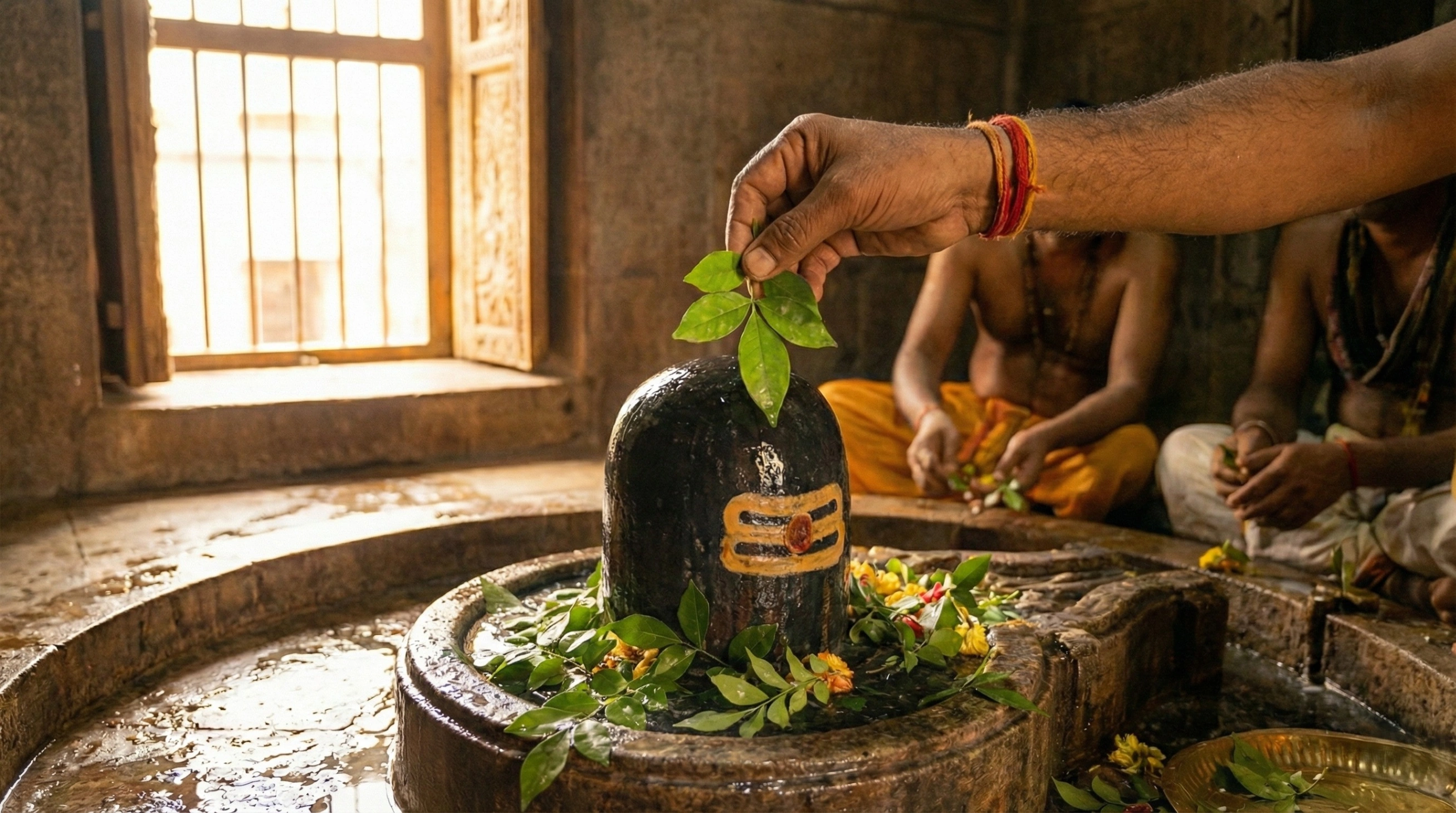
Bel patra (bael leaves) hold a unique place in shiv puja. The question why bel patra is offered to Shiva has both symbolic and scriptural roots.
The bel leaf typically has three leaflets, believed to represent:
Creation, preservation, and dissolution
The three gunas: sattva, rajas, tamas
Body, mind, and soul
Offering bel patra signifies surrendering all three aspects of one’s existence to Shiva. This is why bel patra importance in shiv puja is emphasized more than flowers.
Another common query why bel leaves are sacred to Lord Shiva is answered spiritually: bel trees thrive in harsh conditions, reflecting Shiva’s ascetic nature.
Shiv Abhishekam Rituals and Puja Vidhi
The shiv abhishekam puja vidhi can be simple or elaborate, depending on time and occasion.
A basic shiv abhishekam step by step includes:
Cleaning the Shivling
Offering water while chanting “Om Namah Shivaya”
Pouring milk slowly with devotion
Offering bel patra with prayer
Ending with incense and gratitude
For home worship, many ask how to do shiv abhishekam at home. The answer is simple: sincerity matters more than scale.
Shiv Abhishekam Rules and Samagri
Some devotees worry about shivling abhishekam rules, but the core principle is purity of space, body, and intention.
Common shiv abhishekam samagri list includes:
Clean water
Milk
Bel patra
Incense and lamp
Even daily water abhishekam is considered highly auspicious.
Spiritual Meaning and Benefits of Shiv Abhishekam
The spiritual meaning of shiv abhishekam lies in transformation rather than transaction.
Key shiv abhishekam benefits include:
Mental peace and emotional release
Reduction in anxiety and restlessness
Improved focus and inner clarity
Feeling grounded and spiritually connected
This is why shiv abhishekam for peace and clarity is often recommended during stressful life phases.
Best Time and Occasions for Shiv Abhishekam
Many ask, what is the best time for shiv abhishekam?
Auspicious times include:
Early morning (Brahma Muhurta)
Mondays
Pradosh Kaal
Maha Shivratri
Shiv abhishekam on Monday benefits are especially associated with emotional healing, while maha shivratri abhishekam significance is linked with deep spiritual awakening.
Can We Do Shiv Abhishekam Daily?
Yes; can we do shiv abhishekam daily is a common query, and the answer is yes, especially water abhishekam. Even a few moments of mindful offering can create a powerful spiritual anchor in daily life.
What Happens When We Do Shiv Abhishekam?
Spiritually speaking, what happens when we do shiv abhishekam is an internal shift. The act slows the mind, centers awareness, and invites surrender qualities essential for inner growth.
Scientific Reason Behind Shiv Abhishekam
While the ritual is deeply spiritual, many explore the scientific reason behind shiv abhishekam. Continuous rhythmic pouring, mantra chanting, and focused intention induce a meditative state, calming the nervous system and reducing mental agitation.
Ultimately, shiv abhishekam meaning in hinduism is not confined to ritual correctness. Whether it’s milk, water, or bel patra, the essence lies in devotion, awareness, and surrender. When done consciously, Shiv Abhishekam becomes a moving meditation; washing not just the Shivling, but the mind itself.
Shiv Abhishekam reaches its highest spiritual power on Maha Shivaratri, the night dedicated entirely to Lord Shiva’s awakening. If you want to know when Maha Shivaratri 2026 falls, its deeper spiritual significance, the correct puja vidhi, and fasting rules explained clearly, don’t miss our complete guide.
Read Next: Maha Shivaratri 2026: Date, Significance, Puja Vidhi & Fasting Rules