
Why do you feel calm and clear on some days, restless and ambitious on others, and tired or unmotivated at certain times? According to Indian spiritual philosophy, these changing states can be understood through the three gunas: Sattva, Rajas and Tamas.
The three gunas are qualities of nature that influence the mind, emotions, behaviour and lifestyle. They are also discussed extensively in the Bhagavad Gita, particularly in Chapter 14. Understanding these qualities can help you become more aware of your habits, reactions and choices.
The purpose of learning about Sattva, Rajas and Tamas is not to judge yourself or place yourself into a fixed category. Instead, it is to observe which quality is influencing you at a particular moment and make conscious choices that support a more balanced and positive life.
What Are the Three Gunas?
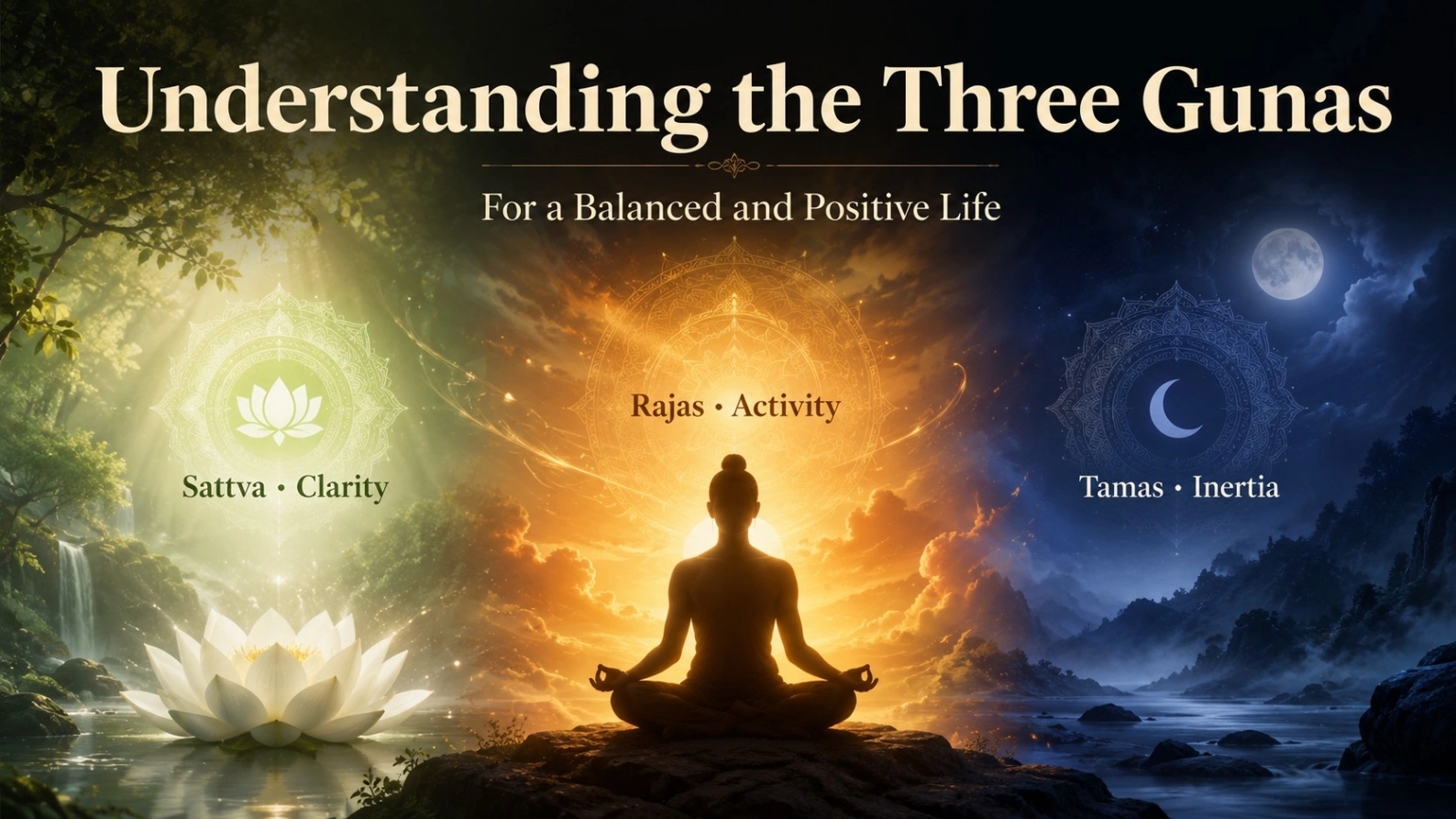
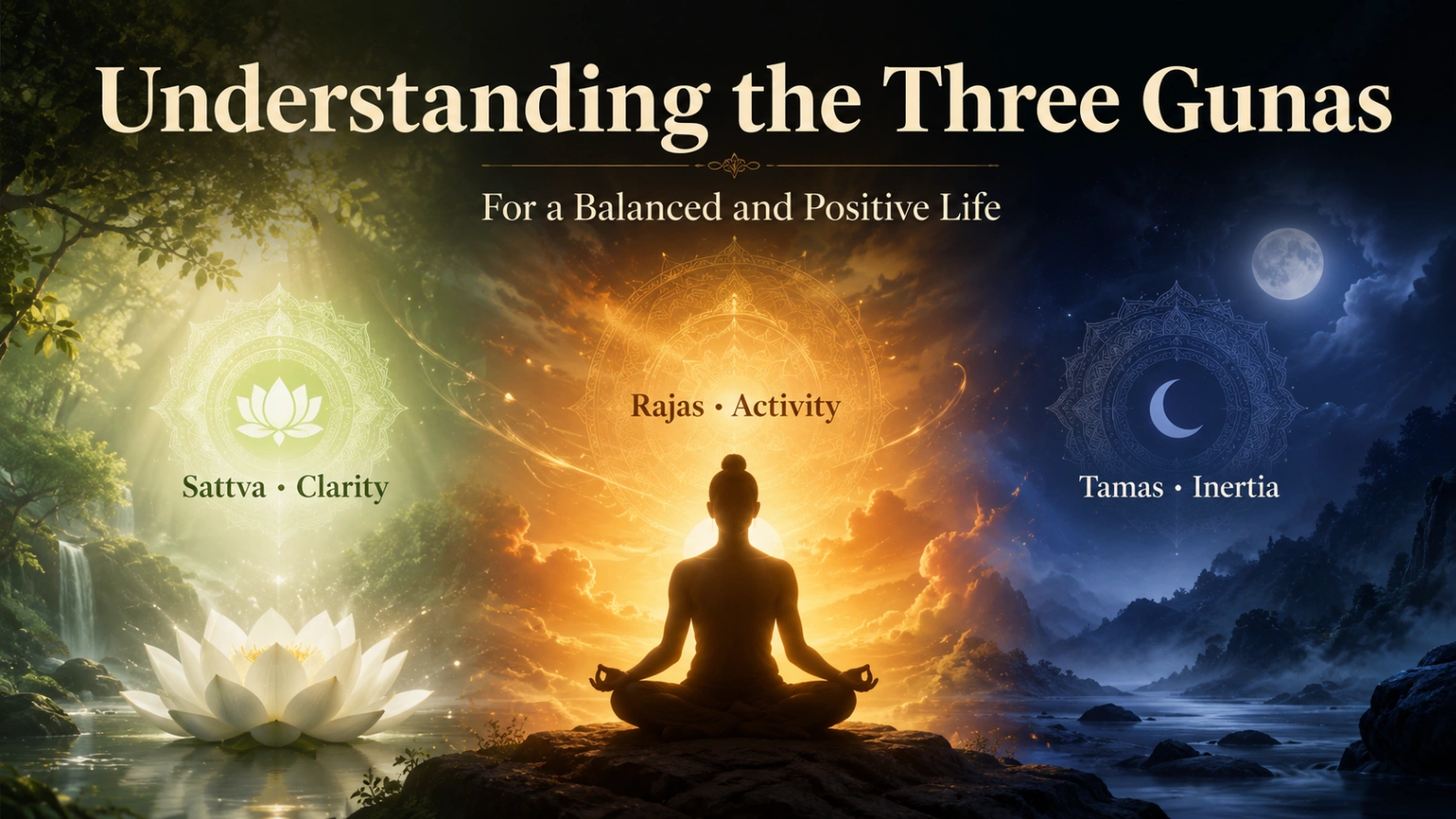
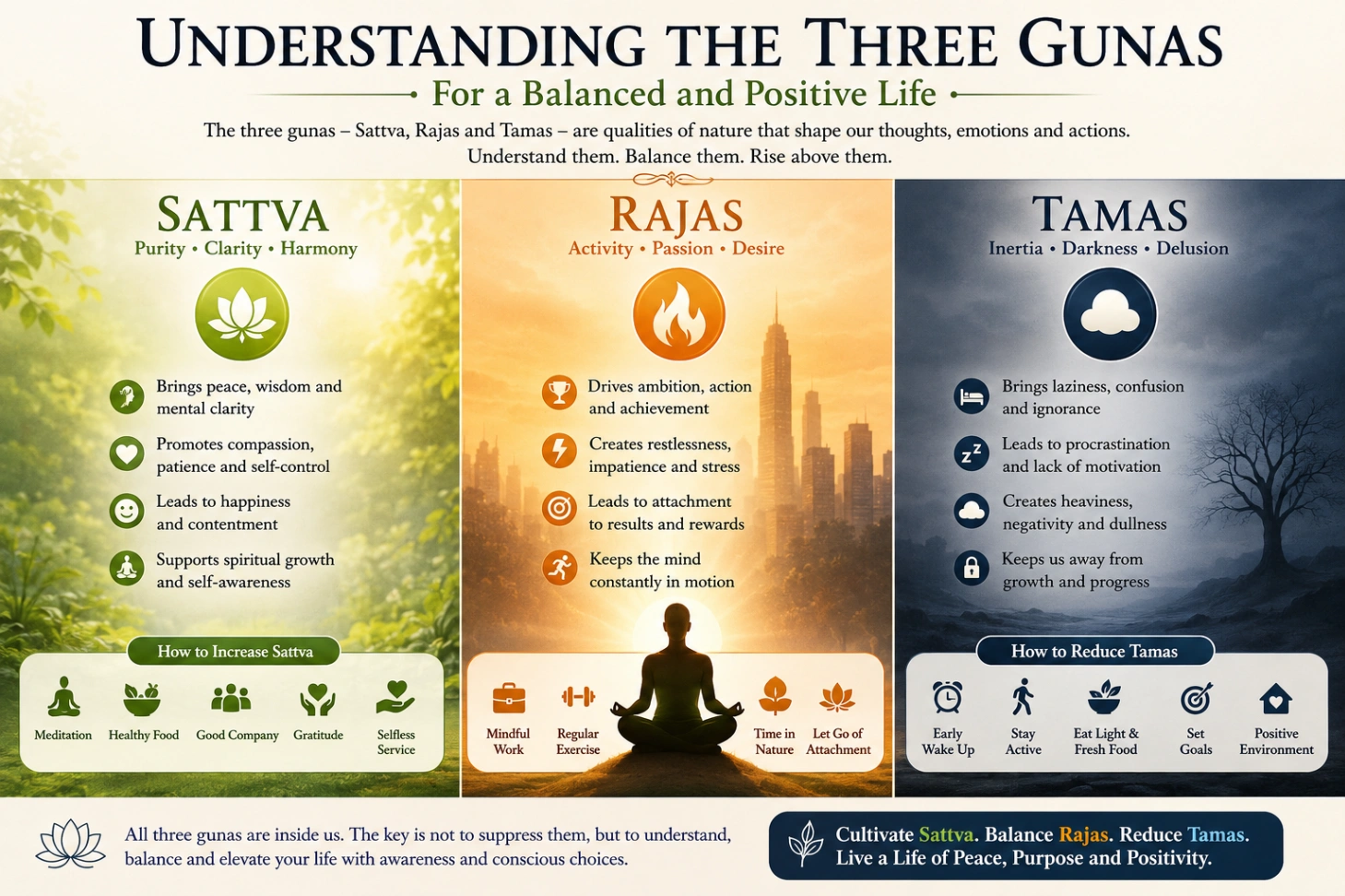
The Sanskrit word guna can be understood as a quality, tendency or characteristic of nature. The three qualities of nature are:
Sattva: clarity, balance, wisdom and harmony
Rajas: movement, desire, passion and activity
Tamas: inactivity, heaviness, confusion and resistance
These three gunas are present in everyone. Their influence changes depending on our thoughts, food, surroundings, habits, relationships and actions.
For example, you may experience Sattva while meditating peacefully in the morning, Rajas while working intensely toward an important goal, and Tamas when you avoid a task because you feel tired or discouraged.
No person remains under the influence of only one guna. The three gunas continuously interact and shape our experiences.
Understanding Sattva Guna
Sattva guna represents clarity, purity, harmony and balance. When Sattva is dominant, the mind feels calm, focused and peaceful. You may find it easier to make thoughtful decisions, practise kindness and understand situations clearly.
A person influenced by Sattva may feel content without needing constant external stimulation. They can remain active and responsible while maintaining inner peace.
Common characteristics associated with Sattva include:
Mental clarity
Compassion and patience
Self-awareness
Emotional balance
Discipline without harshness
Interest in spiritual growth
Desire to help others
Contentment and gratitude
Sattva does not mean avoiding responsibilities or becoming passive. It means acting with awareness, wisdom and a sense of balance.
Activities traditionally associated with increasing Sattva include meditation, mindful living, honest communication, gratitude, selfless service and consuming fresh, nourishing food. A sattvic lifestyle encourages simplicity, moderation and conscious living.
CTA for Design Your Destiny
Create a Life Guided by Awareness, Balance and Purpose Understanding your inner patterns is the first step toward transforming your life. Through the Design Your Destiny program, discover practical spiritual wisdom that can help you develop clarity, overcome limiting habits and make conscious choices aligned with your true purpose. Begin your journey toward a balanced, positive and meaningful life with Design Your Destiny.
Start Your JourneyUnderstanding Rajas Guna
Rajas guna represents movement, ambition, desire and activity. It motivates people to take action, achieve goals and create change.
Rajas is necessary for daily life. Without it, there would be little motivation to work, exercise, learn or improve. However, excessive Rajas can make the mind restless and constantly focused on results.
When Rajas becomes dominant, a person may feel that they must always achieve more, earn more or receive greater recognition. Even after reaching one goal, the mind quickly begins chasing another.
Common characteristics associated with Rajas include:
Strong ambition
Restlessness and impatience
Attachment to results
Constant mental activity
Competition and comparison
Desire for praise or recognition
Difficulty relaxing
Frequent emotional highs and lows
Rajas can support progress when guided by awareness. The problem begins when action is driven entirely by fear, ego, pressure or endless desire.
Balancing Rajas does not mean giving up your ambitions. It means working sincerely while protecting your mental peace and avoiding unhealthy attachment to outcomes.
Understanding Tamas Guna
Tamas guna represents heaviness, inactivity, confusion and resistance. It is often connected with laziness, carelessness and a lack of awareness.
However, Tamas also has a necessary role. The body needs rest and sleep to recover. Stability and stillness can be useful when they support well-being. Tamas becomes harmful when necessary rest turns into prolonged avoidance, neglect or unwillingness to grow.
Common characteristics associated with excessive Tamas include:
Lack of motivation
Procrastination
Confusion and unclear thinking
Resistance to positive change
Excessive sleeping or inactivity
Carelessness
Avoiding responsibilities
Feeling mentally or emotionally stuck
When Tamas is dominant, even simple tasks may feel difficult. A person may know what needs to be done but continue postponing action.
The best way to move beyond excessive Tamas is often through small, manageable actions. Creating a simple routine, getting enough movement, spending time in natural light and completing one important task can gradually restore energy and motivation.
How the Three Gunas Influence Human Behaviour
The three gunas influence how we think, act and respond to circumstances.
Imagine three people facing the same challenging situation. A person influenced by Sattva may pause, understand the situation and respond calmly. A person influenced by Rajas may react quickly, determined to control the outcome. A person influenced by Tamas may avoid the issue or feel unable to act.
The external situation is the same, but the internal response differs.
This is why understanding the three gunas can improve self-awareness. Instead of immediately reacting to your thoughts and emotions, you can pause and ask:
“Which guna is influencing me right now?”
This simple question creates space between awareness and reaction. It allows you to make a more conscious choice.

How to Identify Your Dominant Guna
Your dominant guna may change throughout the day. Observe yourself without criticism and notice recurring patterns.
When Sattva is dominant, you may feel peaceful, focused and connected with your purpose. You act responsibly without feeling overwhelmed by the outcome.
When Rajas is dominant, you may feel busy, impatient or strongly focused on achievement. Your mind may struggle to slow down, even when your body needs rest.
When Tamas is dominant, you may feel dull, unmotivated or unwilling to face responsibilities. You may repeatedly choose temporary comfort over meaningful action.
Recognising these patterns is not meant to create guilt. Awareness itself is the beginning of transformation.
The Three Gunas in the Bhagavad Gita
The Bhagavad Gita explains that Sattva, Rajas and Tamas arise from Prakriti, or material nature. They influence human thoughts, actions and attachments.
Sattva is connected with clarity and knowledge, but a person can still become attached to peace, happiness or the identity of being virtuous. Rajas creates attachment through action, desire and the expectation of rewards. Tamas creates attachment through confusion, carelessness and inactivity.
The deeper teaching of the Bhagavad Gita is not simply to become more sattvic. Cultivating Sattva can support spiritual awareness, but the ultimate goal is to rise above identification with all three gunas.
This means observing different mental states without believing that they define your true self.
How to Balance the Three Gunas
A balanced life does not require eliminating Rajas and Tamas completely. Each guna has a role. The aim is to reduce their harmful expressions, cultivate Sattva and live with greater awareness.
Begin the Day Mindfully
The way you begin your morning can influence your thoughts and energy throughout the day. Instead of immediately checking messages or social media, spend a few quiet minutes breathing, meditating or expressing gratitude.
A peaceful beginning encourages Sattva and helps reduce unnecessary mental restlessness.
Practise Regular Meditation
Meditation supports mindfulness, self-awareness and inner calm. It helps you observe thoughts without automatically reacting to them.
Even ten minutes of daily meditation can create an opportunity to recognise whether your mind is calm, restless or dull.
Choose Nourishing Food
In yogic traditions, fresh and nourishing food is associated with a sattvic lifestyle. Excessively stimulating food may increase restlessness, while stale or overly heavy food may contribute to dullness.
Rather than following strict rules, observe how different foods affect your energy, mood and clarity.

Balance Work With Rest
Continuous activity can increase Rajas, while excessive rest can strengthen Tamas. A balanced routine includes meaningful work, physical movement, relaxation and sufficient sleep.
Rest should restore your energy rather than become a way of avoiding responsibilities.
Reduce Unnecessary Stimulation
Constant notifications, endless scrolling and excessive consumption of negative content can make the mind restless or mentally exhausted.
Creating boundaries around digital consumption can support mental peace and conscious living.
Spend Time in Positive Environments
Your surroundings influence your thoughts and behaviour. Clean spaces, peaceful music, uplifting conversations and time in nature can encourage clarity and positive energy.
Similarly, chaotic environments and negative influences may increase restlessness or heaviness.

Take Conscious Action
When you notice Tamas, avoid waiting for motivation to arrive. Take one small action. Make your bed, go for a short walk, organise your workspace or complete a simple task.
When you notice excessive Rajas, pause before taking further action. Ask whether the activity is truly necessary or driven by anxiety and comparison.
When Sattva is present, use that clarity to make thoughtful decisions and help others.
How the Three Gunas Support Personal Growth
Understanding the three gunas makes personal growth more practical. Instead of describing yourself as lazy, anxious or naturally peaceful, you begin recognising these experiences as changing states.
This perspective can reduce self-judgment. You are not permanently defined by Tamas when you feel unmotivated. You are not permanently controlled by Rajas when your mind becomes restless. Even Sattva is a state that can change.
Through mindfulness and self-awareness, you can observe these qualities and choose how to respond.
Personal growth begins when unconscious patterns become conscious choices.
Living a Positive and Balanced Life
A positive lifestyle is not about feeling happy at every moment. It is about developing the awareness to respond wisely to changing circumstances.
Sattva helps you experience clarity and inner peace. Rajas gives you the energy to take action. Tamas allows the body to rest and become stable. Problems arise when one quality becomes excessive or unconscious.
Balanced living involves using activity without becoming restless, resting without becoming inactive and cultivating peace without becoming attached to comfort.
This balance supports emotional stability, meaningful action and spiritual growth.

Moving Beyond the Three Gunas
The deepest purpose of understanding Sattva, Rajas and Tamas is to realise that you are the observer of these changing qualities.
Your thoughts change. Your emotions change. Your energy changes. Yet the awareness noticing these changes remains present.
As self-awareness grows, you become less controlled by temporary thoughts and reactions. You can act with greater wisdom, compassion and freedom.
The journey begins with observation. Notice the guna influencing you, accept the present moment and choose the next action consciously.
The three gunas offer a valuable framework for understanding human behaviour and creating a balanced life. Sattva brings clarity and harmony, Rajas provides movement and ambition, and Tamas offers rest and stability.
When these qualities become excessive, they can create attachment, restlessness, confusion or inactivity. Through meditation, mindful habits, nourishing choices and conscious action, you can gradually cultivate greater Sattva and reduce the harmful effects of Rajas and Tamas.
Ultimately, the goal is not to label yourself but to understand yourself. By observing the three gunas with awareness, you can make choices that support inner peace, positive living and meaningful spiritual growth.
CTA for Personal Session
Receive Personal Guidance for Your Spiritual Journey Are you struggling with restlessness, lack of motivation, emotional confusion or uncertainty about your path? A personal session can help you understand your inner patterns, gain clarity and take meaningful steps toward greater balance and peace. Book a personal session today and receive guidance tailored to your personal and spiritual growth.
Book Now