
For thousands of years, seekers, philosophers, saints, and scientists have looked for one answer: What is the true nature of life and existence?
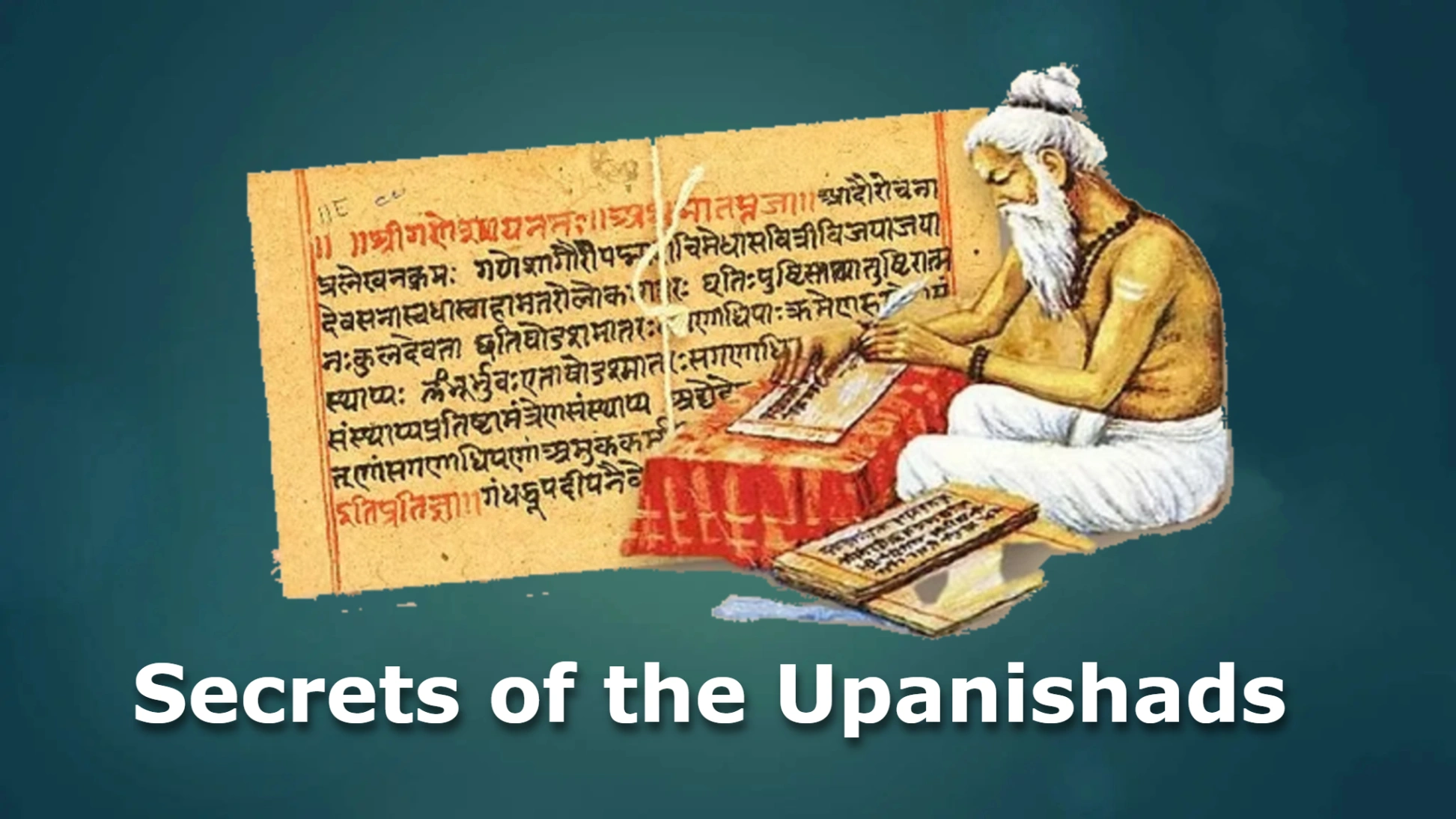
Long before modern science, the ancient rishis of India explored this question with stunning depth. Their discoveries were recorded in the Upanishads, a collection of timeless teachings on consciousness, self-realization, and the laws governing inner life.
Today, as the world struggles with stress, confusion, and a search for meaning, the Upanishads are more relevant than ever. Their message isn’t based on belief—it is based on direct experience, inner observation, and a precise exploration of the human mind and soul.
This is why the Upanishads are often called the ultimate science of life.
This blog explores their wisdom, their relevance in modern times, and how their teachings can transform your inner world.
What Are the Upanishads?
The Upanishads are ancient Indian scriptures that form the philosophical foundation of the Vedas. The word Upanishad comes from three Sanskrit roots:
Upa – near
Ni – down
Shad – sit
Meaning: to sit down near the teacher.
This beautifully captures their purpose—intimate spiritual dialogues between guru and disciple, exploring the deepest truths of existence.
There are over 200 Upanishads, but around 12 of them—such as the Isha, Kena, Katha, Mundaka, and Chandogya Upanishads—are considered the principal texts. These scriptures discuss:
The origin of the universe
The nature of the soul (Atman)
The universal consciousness (Brahman)
Life, death, and rebirth
The path to liberation
The Upanishads do not preach; they guide. They do not demand faith; they invite self-inquiry.
Upanishads as the Science of Life
Unlike dogmatic religious texts, the Upanishads adopt a scientific approach. They ask questions, seek proof through experience, and encourage individuals to observe their own inner world.
This is why many scholars refer to them as the earliest documents of spiritual science.
Here is how the Upanishads represent the science of life:
1. They Explore the Nature of Consciousness
Modern neuroscience still struggles to answer:
What is consciousness?
The Upanishads boldly declare:
“Consciousness is not produced by the brain; it is the essence of existence.”
They distinguish between:
Mind – ever-changing
Intellect – analytical
Ego – identity
Consciousness (Atman) – the eternal observer
This clarity forms the core of all spiritual teachings today.
2. They Explain the Laws of Inner Experience
Just as physics studies matter and biology studies life, the Upanishads study inner experience.
They teach:
How thoughts arise
How desires create suffering
How perception shapes reality
How awareness frees the mind
Modern psychology’s concepts of mindfulness, attachment, and self-awareness directly reflect Upanishadic wisdom.
3. They Present a Practical Path to Self-Realization
The Upanishads are not philosophical puzzles—they present a step-by-step science of self-awareness.
They teach three core methods:
Shravana – deep listening
Manana – contemplation
Nididhyasana – meditation and realization
This structured process can be called the earliest form of inner science, grounded in observation, discipline, and practice.
4. They Reveal the Unity Between Individual and Universe
Perhaps the most profound revelation of the Upanishads is:
“Atman is Brahman.”
The individual soul is the same as the universal consciousness.
This single statement explains:
The oneness of life
The connectedness of all beings
The illusion of separation
The source of inner peace
Modern quantum science increasingly echoes this idea—everything is interconnected and rooted in one fundamental reality.
Upanishads Meaning and Teachings: The Core Messages
Here are the Upanishads’ most powerful teachings, simplified:
1. Know Thyself (Atman)
The primary message is Self-realization—discovering your true nature beyond the body and mind.
You are not the body.
You are not your thoughts.
You are the eternal awareness that witnesses them.
2. The World Is a Play of Energy and Consciousness
The Upanishads teach that the universe is not material at its core—it is conscious energy.
This aligns with modern physics, which reveals that matter is nothing but energy vibrating in patterns.
3. True Happiness Comes from Within
External pleasures are temporary.
The Upanishads say:
“The bliss you seek is already within you.”
This is why meditation is central to their teachings.
4. Detachment Is the Key to Freedom
Detachment does not mean running away—it means freedom from mental dependencies.
You work, you love, you live—but without clinging.
5. Fear Vanishes When You Know Your Real Self
The fear of loss, death, and uncertainty disappears when you realize your true nature is eternal.
Upanishads and Modern Life: Why They Matter Today
In the fast-paced, stressful modern world, the ancient wisdom of the Upanishads is more crucial than ever. Here’s how:
1. Stress Relief and Mental Clarity
The Upanishads emphasize mindfulness, breathing, and awareness.
These practices reduce:
Stress
Anxiety
Overthinking
Emotional turbulence
Even therapists recommend techniques rooted in Upanishadic wisdom.
2. Enhancing Decision-Making and Intelligence
The scriptures teach you to use:
Intellect (buddhi) wisely
Mind (manas) consciously
Ego (aham) responsibly
This brings clarity and sharp judgment.
3. Building Emotional Strength
The Upanishads help you detach from emotional chaos and understand the root of feelings, making you emotionally resilient.
4. Creating a Life of Purpose
They guide you to discover:
Your true purpose
Your values
Your direction
Your inner calling
This brings meaning to life beyond material success.
5. Transforming Relationships
When you understand the oneness of life, relationships become more compassionate, understanding, and joyful.
Why the Upanishads Are the Ultimate Science of Life
Here’s the final conclusion:
✔ They analyze consciousness with scientific precision
✔ They explain the laws of inner experience
✔ They guide step-by-step towards self-realization
✔ They offer practical, timeless tools for life
✔ They unify science, spirituality, psychology, and philosophy
✔ They help you understand who you truly are
No other text offers such universal, experiential, and practical wisdom.
This is why the Upanishads remain the ultimate science of life—not only for seekers in ancient India but for every human being searching for truth today.
FAQs
1. Are the Upanishads religious texts?
They are spiritual—not religious. They focus on consciousness, truth, and self-realization rather than ritual or worship.
2. How many Upanishads are there?
There are more than 200 Upanishads, but about 12 are considered the principal and most authoritative.
3. What is the main teaching of the Upanishads?
The central teaching is: Atman (the self) is Brahman (the universal consciousness).
4. Are the Upanishads relevant in modern life?
Absolutely. Their wisdom aligns with psychology, mindfulness, meditation science, and stress management.
5. Do I need a guru to understand the Upanishads?
While guidance helps, the Upanishads encourage self-inquiry. Anyone can begin reading with sincerity.
Begin Your Journey of Self-Realization Today
If the timeless wisdom of the Upanishads resonates with you, then this is the moment to deepen your journey.
👉 Join a transformative meditation session with Guru Sakshi Shree
Experience the essence of Vedanta, self-awareness, and inner peace directly from a realized master.
✔ Learn how to apply Upanishadic teachings in daily life
✔ Discover your true self beyond stress and confusion
✔ Awaken higher consciousness through guided meditation
✔ Experience inner clarity, peace, and purpose
📌 Book your session now and take the first step toward true self-realization.
Your inner awakening begins today—don’t delay your transformation.!