

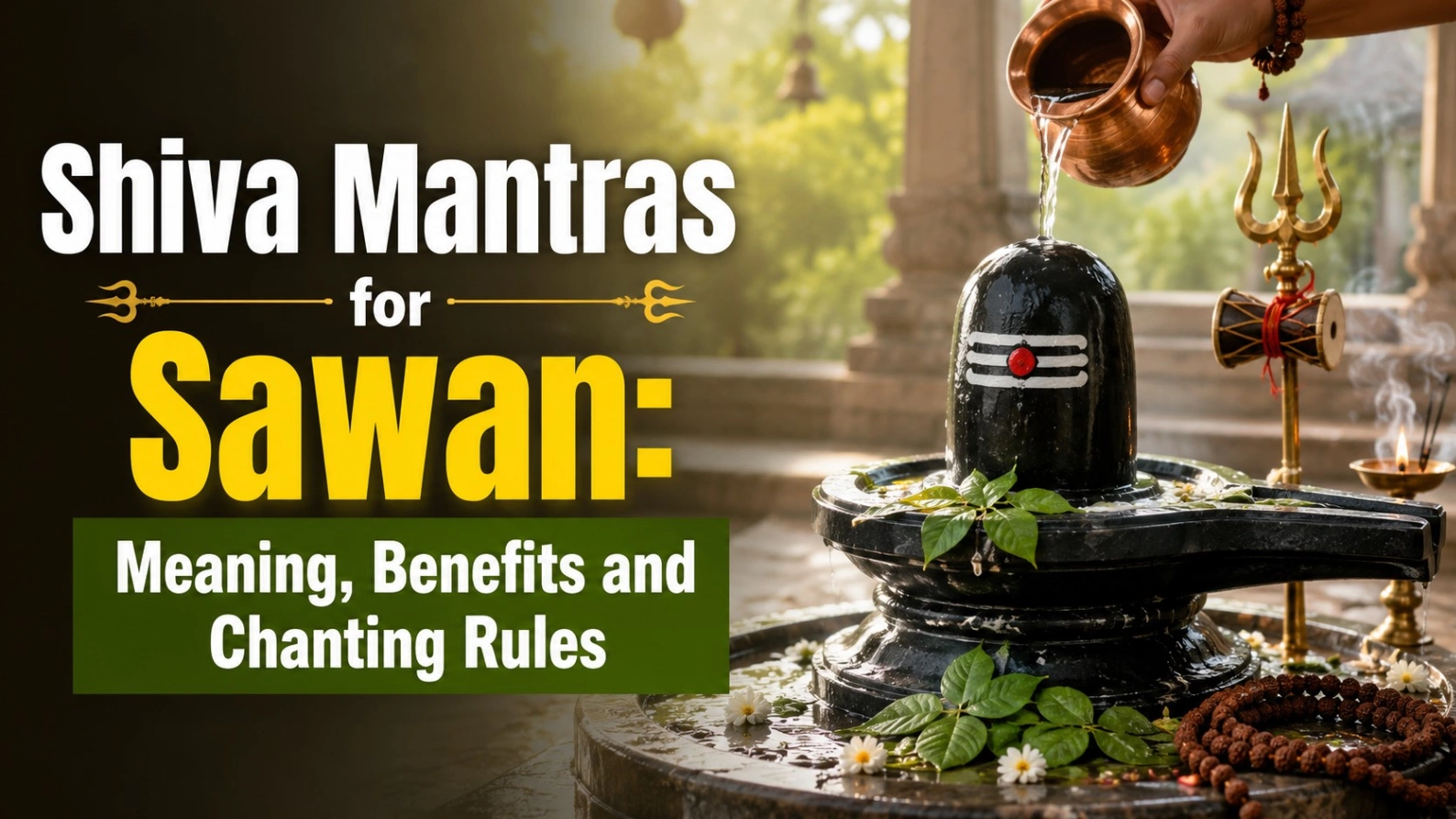
Sawan, also called Shravan, is one of the most sacred months for devotees of Lord Shiva. During this period, many devotees observe Sawan Somwar fasts, perform Jalabhishek, visit Shiva temples and chant sacred mantras. Among all Sawan prayers, Om Namah Shivaya remains the most widely recognised and beginner-friendly Lord Shiva mantra.
A mantra is a sacred sound used to focus the mind, deepen devotion and support inner reflection. This guide explains the most powerful Shiva mantras for Sawan, their meanings, traditional benefits and practical chanting rules.
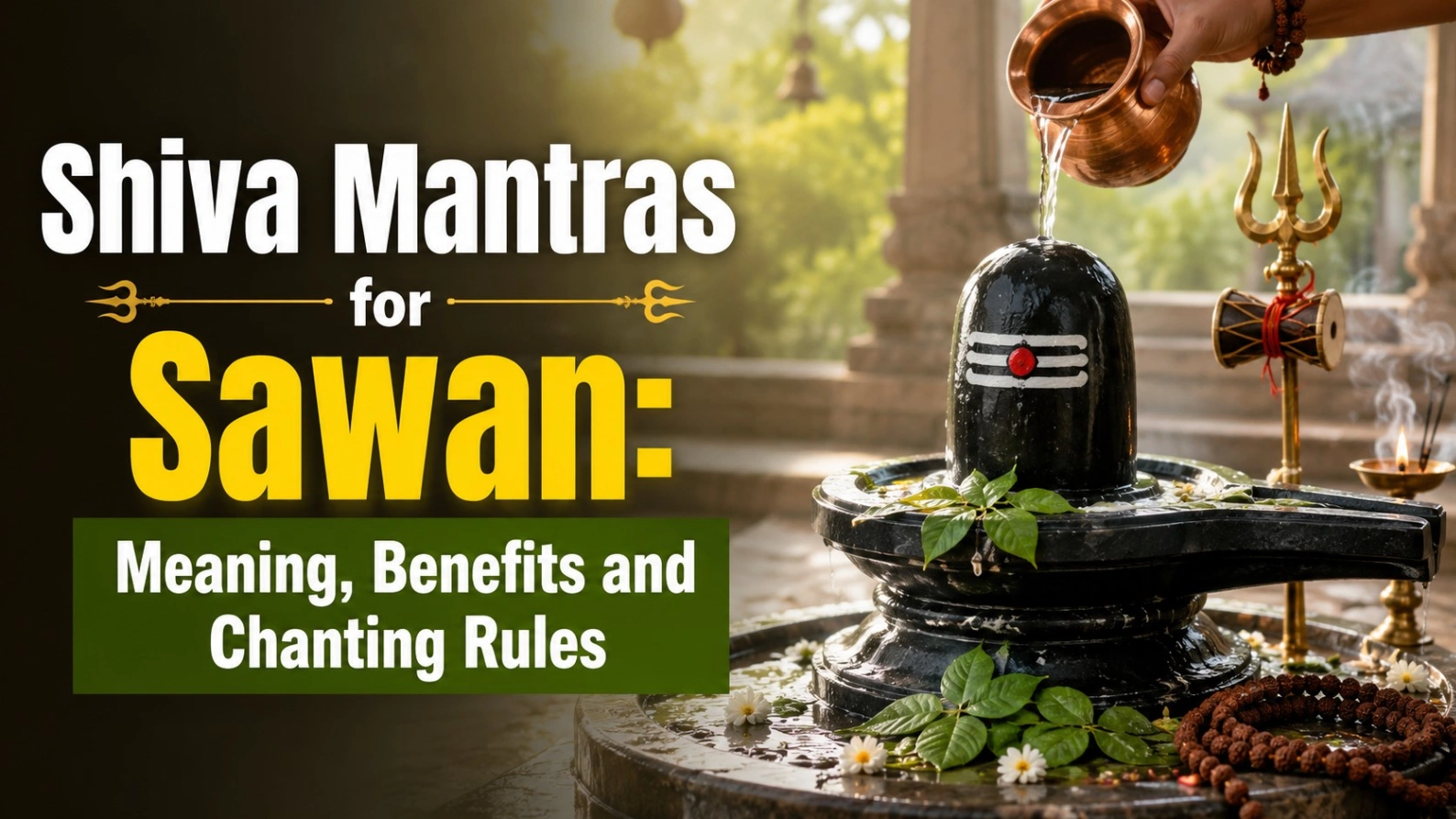
Why Chant Shiva Mantras During Sawan?
Shravan is traditionally dedicated to Lord Shiva, and the Mondays falling within the month are observed as Sawan Somwar. Devotees commonly fast, offer water to the Shivling and perform Shiva worship on these days. Exact dates can vary according to region and the lunar-calendar tradition followed, so readers should consult a reliable local Panchang for the applicable dates.
Chanting a Sawan Shiva mantra gives structure to daily worship. Devotees may chant during Jalabhishek or use a rudraksha mala during personal prayer.
The purpose is not to compete over the number of repetitions. It is to bring sincerity, concentration and remembrance of Lord Shiva into everyday life.
Design Your Destiny
Your destiny is shaped not only by circumstances but also by your thoughts, choices and level of awareness. Join Design Your Destiny and discover practical spiritual principles that can help you overcome limiting patterns, gain clarity and live with greater purpose. Begin your journey towards a more conscious and fulfilling life.
Start Your Journey Today!1. Om Namah Shivaya Mantra
Mantra:
ॐ नमः शिवाय
Om Namah Shivaya
Om Namah Shivaya is the best-known Shiv mantra and an ideal practice for beginners. “Namah Shivaya” is commonly understood as “salutations to Shiva” or “I bow to Shiva.” Britannica translates the mantra as an expression of obeisance to Shiva.
The expression is also described as a five-syllable mantra Na-Ma-Shi-Va-Ya and is therefore known as the Panchakshara Mantra.
Om Namah Shivaya Meaning
At the devotional level, the Om Namah Shivaya mantra is an expression of surrender and reverence towards Lord Shiva.
At a contemplative level, it reminds the seeker to bow before the deeper consciousness beyond ego, fear and restlessness. Isha Foundation describes the mantra as one that supports purification and a meditative state.
Traditional interpretations connect its five syllables with the five elements:
Na: Earth
Ma: Water
Shi: Fire
Va: Air
Ya: Space
Explanations can vary across spiritual traditions, but the central spirit of the mantra remains surrender, purification and awareness.
Om Namah Shivaya Benefits
Devotees traditionally chant Om Namah Shivaya to cultivate calmness, concentration and devotion. Repeating a sacred sound at a steady pace gives the mind a single point of attention during prayer.
The practice may help a person pause, observe thoughts and return to a more balanced inner state. It can also encourage:
Greater concentration during prayer
A peaceful and devotional state of mind
Emotional steadiness
Regularity in spiritual practice
Deeper remembrance of Lord Shiva
Greater self-awareness
Relief from distracting mental activity during meditation
These benefits should not be exaggerated as guaranteed cures or miraculous outcomes. Mantra chanting is a devotional and contemplative practice. It should not replace medical, psychological, financial or other professional advice.
Om Namah Shivaya Chanting Rules
Sit in a clean and quiet place with your spine comfortably upright. Take a few slow breaths before starting.
Pronounce the mantra clearly:
Om Na-mah Shi-va-ya
Do not chant too rapidly simply to complete a certain number of repetitions. Listen carefully to every syllable.
The mantra may be:
Chanted aloud
Whispered softly
Repeated mentally
Chanted during Jalabhishek
Repeated with a rudraksha mala
Included in morning or evening meditation
Many devotees prefer facing east or north while chanting. However, sincere prayer remains possible even without a mala, special direction or elaborate puja arrangement.
Keep your phone aside and avoid chanting while talking, watching television or multitasking. A smaller number of attentive repetitions is better than a large number completed mechanically.

Om Namah Shivaya 108 Times
Chanting Om Namah Shivaya 108 times is a popular Sawan practice. A mala containing 108 beads helps maintain the count without repeatedly checking numbers.
Move one bead after every repetition. Avoid crossing the larger meru or guru bead. When beginning another round, turn the mala around and continue in the opposite direction.
Beginners may start with:
11 repetitions
21 repetitions
51 repetitions
One complete round of 108 repetitions
Completing 108 repetitions is not compulsory. Regularity, pronunciation and awareness matter more than speed or quantity.
2. Mahamrityunjaya Mantra
Mantra:
ॐ त्र्यम्बकं यजामहे सुगन्धिं पुष्टिवर्धनम्।
उर्वारुकमिव बन्धनान्मृत्योर्मुक्षीय मामृतात्॥
Om Tryambakam Yajamahe Sugandhim Pushtivardhanam,
Urvarukamiva Bandhanan Mrityor Mukshiya Maamritat.
The Mahamrityunjaya Mantra is a sacred Vedic prayer addressed to the three-eyed Lord. Its meaning invokes nourishment and liberation from bondage and mortality.
It is traditionally recited as a prayer for:
Inner strength
Courage during difficult periods
Protection
Healing
Freedom from fear
Spiritual liberation
The Sanskrit pronunciation is more complex than Om Namah Shivaya. Beginners should learn it slowly from a reliable teacher or accurate audio source.
During Sawan, devotees may chant it 3, 9, 11, 21 or 108 times according to their capacity. Correct and attentive chanting is more valuable than completing a high count hurriedly.
3. Shiva Gayatri Mantra
Mantra:
ॐ तत्पुरुषाय विद्महे महादेवाय धीमहि।
तन्नो रुद्रः प्रचोदयात्॥
Om Tatpurushaya Vidmahe Mahadevaya Dhimahi,
Tanno Rudrah Prachodayat.
The Shiva Gayatri Mantra is a prayer for illumination and right understanding. It contemplates Mahadeva and asks Rudra to guide and inspire the intellect. It is recognised as a Gayatri mantra dedicated specifically to Lord Shiva.
Devotees may chant it:
During morning worship
Before meditation
After offering water to the Shivling
After offering bilva leaves
Before beginning an important responsibility
When seeking clarity and wisdom
This powerful Shiva mantra is especially meaningful for seekers who want their Sawan worship to include self-reflection, understanding and conscious decision-making.
4. Om Namo Bhagavate Rudraya
Mantra:
ॐ नमो भगवते रुद्राय
Om Namo Bhagavate Rudraya
This short Rudra mantra offers salutations to Lord Rudra, a powerful form of Shiva. It can be understood as, “I offer my salutations to the divine Lord Rudra.”
Devotees traditionally chant it for courage, purification and freedom from negative tendencies.
Repeat the mantra calmly and respectfully. The power associated with Lord Shiva should not be understood only as external strength. It also represents the inner capacity to transform fear, anger, attachment and ego into awareness.

5. Karpur Gauram Mantra
Mantra:
कर्पूरगौरं करुणावतारं संसारसारं भुजगेन्द्रहारम्।
सदा वसन्तं हृदयारविन्दे भवं भवानीसहितं नमामि॥
The Karpur Gauram prayer describes Shiva as radiant and compassionate and remembers him together with Goddess Bhavani.
It is commonly recited during aarti and can be used to conclude Sawan puja. Its gentle devotional mood balances the powerful imagery associated with Rudra and Mahadev.
Benefits of Chanting Shiva Mantras During Sawan
Regular mantra practice creates discipline in daily worship and supports concentration during prayer. It can encourage self-observation by helping devotees pause before reacting impulsively.
Shared chanting can also bring families together in prayer.
Spiritually, Shiva mantras are associated with surrender, transformation and freedom from ego-driven patterns. They can inspire qualities such as:
Patience
Truthfulness
Simplicity
Compassion
Courage
Detachment
Self-control
The deepest benefit appears when chanting begins to influence conduct. Repeating Om Namah Shivaya while continuing harmful, dishonest or disrespectful behaviour misses the purpose of the practice.
Sawan worship becomes meaningful when sacred sound is supported by conscious action.
Correct Method to Chant Shiva Mantras
Choose one principal mantra rather than changing prayers every day. Om Namah Shivaya is generally the easiest place to begin.
Wash or bathe, wear clean clothes and sit in a peaceful space. A Shiva image or Shivling may be placed before you, although elaborate arrangements are not essential.
Take three slow breaths and set a simple intention, such as seeking devotion, clarity or inner strength.
Chant at an even rhythm and listen to every syllable. When using a mala, follow the respectful method taught in your family or spiritual tradition.
After chanting, remain silent for one or two minutes instead of immediately checking your phone. Allow the sound and devotional feeling of the mantra to settle.

Best Time to Chant a Sawan Mantra
Early morning is traditionally preferred because the surroundings are usually quieter and the mind is less occupied.
Evening prayer around sunset is another practical option. On Sawan Somwar, chanting may be performed:
After bathing
During Shiva puja
Before beginning a fast
During Jalabhishek
Before evening aarti
Before meditation
A sustainable daily time is more useful than an ideal schedule that cannot be maintained. Choose a peaceful period that fits your responsibilities and follow it consistently.
Mantra for Jalabhishek During Sawan
Om Namah Shivaya is the simplest mantra to repeat while offering clean water to the Shivling.
Pour the water slowly and respectfully while chanting. Bilva leaves may also be offered according to temple and family traditions.
Use only the amount of water required and follow the temple’s instructions, particularly in crowded places. A small and mindful offering carries greater devotional meaning than a wasteful display.
Common Shiva Mantra Chanting Mistakes
Do not treat a powerful Shiva mantra as a shortcut to guaranteed wealth, marriage, success or miraculous healing.
Avoid fear-based claims that a minor pronunciation mistake will automatically bring misfortune. Correct pronunciation is important, but devotion should not be converted into fear.
Other mistakes include:
Chanting hurriedly to finish 108 repetitions
Using several advanced mantras without understanding them
Constantly checking the repetition count
Comparing your practice with another devotee
Chanting while using the phone or watching television
Concentrating only on material wishes
Ignoring ethical behaviour outside worship
Most importantly, do not allow ritual to replace kindness, honesty and responsibility.

Simple 10-Minute Sawan Mantra Routine
Begin with three slow breaths.
Chant Om Namah Shivaya 11 times to settle the mind. Continue with one mala of 108 repetitions when time permits.
Recite the Mahamrityunjaya Mantra three times and then sit silently for two minutes. Conclude by expressing gratitude to Lord Shiva.
Choose one quality of Shiva like calmness, courage, compassion or detachment to practise throughout the day. This helps turn mantra chanting into conscious living.
Shiva mantras for Sawan offer a simple path to devotion and inner discipline. Om Namah Shivaya is suitable for beginners, while the Mahamrityunjaya Mantra, Shiva Gayatri Mantra and Rudra mantra can deepen an established spiritual practice.
Select a mantra, understand its meaning, learn its pronunciation and chant consistently.
When prayer is supported by awareness, responsibility and compassionate conduct, a Sawan mantra becomes more than a ritual. It becomes a way of remembering Shiva in everyday life.
Personal Session
Every life journey brings different questions, emotional challenges and inner obstacles. A personal session can help you understand your situation from a deeper spiritual perspective and identify the next conscious step. Book a personal session for individual guidance aligned with your personal journey.
Book Now