
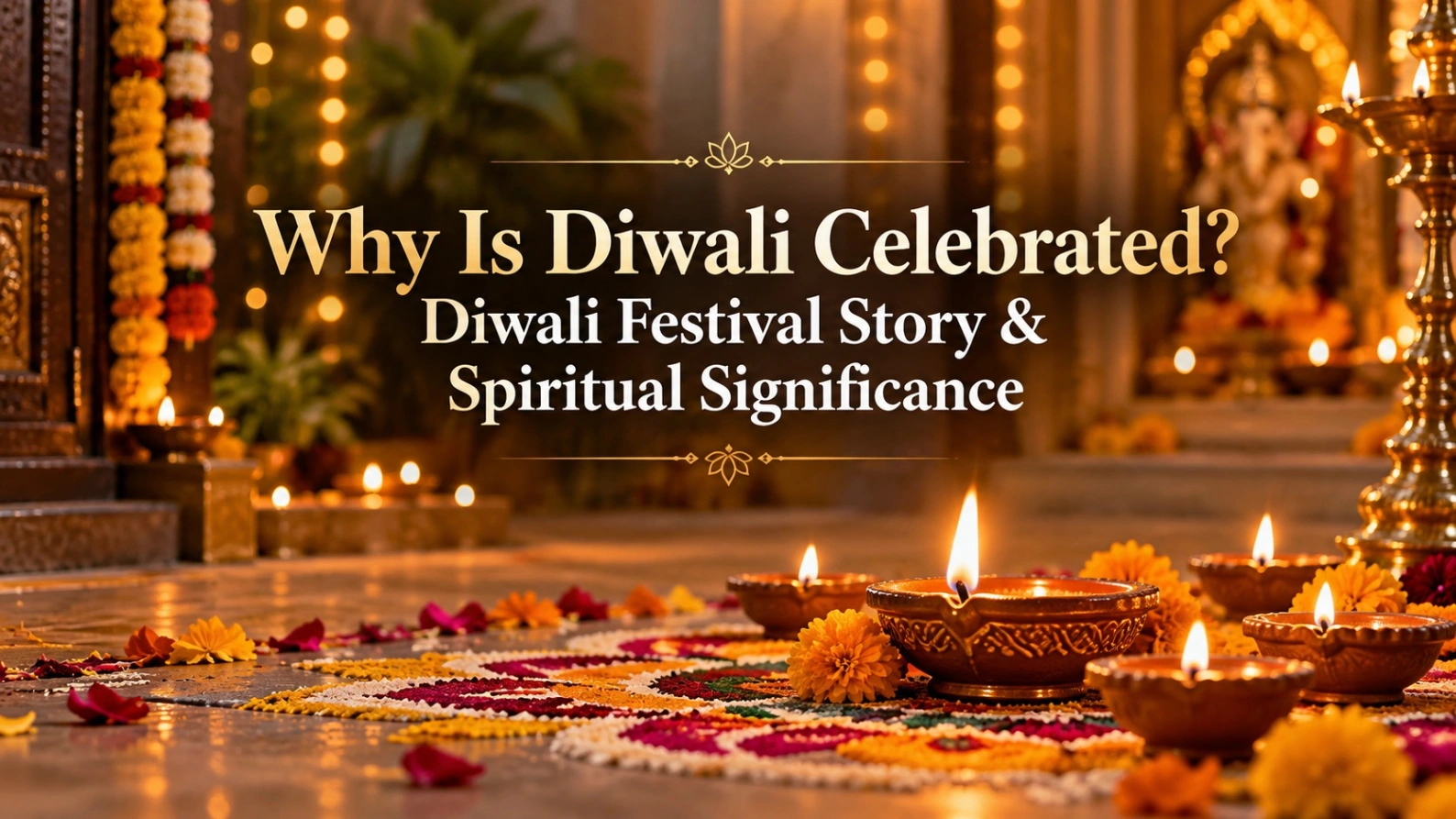
Rows of glowing diyas, colourful rangolis, beautifully decorated homes, prayers, sweets and joyful family gatherings make Diwali one of the most widely celebrated festivals in India. But beyond the lights and festivities lies a profound question: why do we celebrate Diwali?
Known as Deepavali, or the Festival of Lights, Diwali carries layers of religious, cultural and spiritual meaning. Different parts of India associate the festival with different sacred stories, yet one central idea remains constant—the triumph of light over darkness, knowledge over ignorance and good over evil. This symbolism is also reflected in official descriptions of the festival by Incredible India.
Understanding the Diwali festival story helps us see that Diwali is not simply about decorating our surroundings. At a deeper level, it invites us to illuminate our inner world as well.
Let's explore the Diwali story, history, meaning and spiritual significance in detail.
What Is Diwali?
Diwali, also known as Deepavali, is traditionally called the Festival of Lights. The name Deepavali comes from Sanskrit roots commonly understood as a "row of lights" or lamps.
Families illuminate their homes with earthen lamps or diyas, create rangoli designs, perform prayers, exchange sweets and gifts, and spend time with loved ones.
For many Hindu families, Goddess Lakshmi—the deity associated with prosperity and abundance—is worshipped during Diwali. Lord Ganesha is also commonly worshipped alongside her.
However, the meaning of the Diwali festival goes beyond material prosperity.
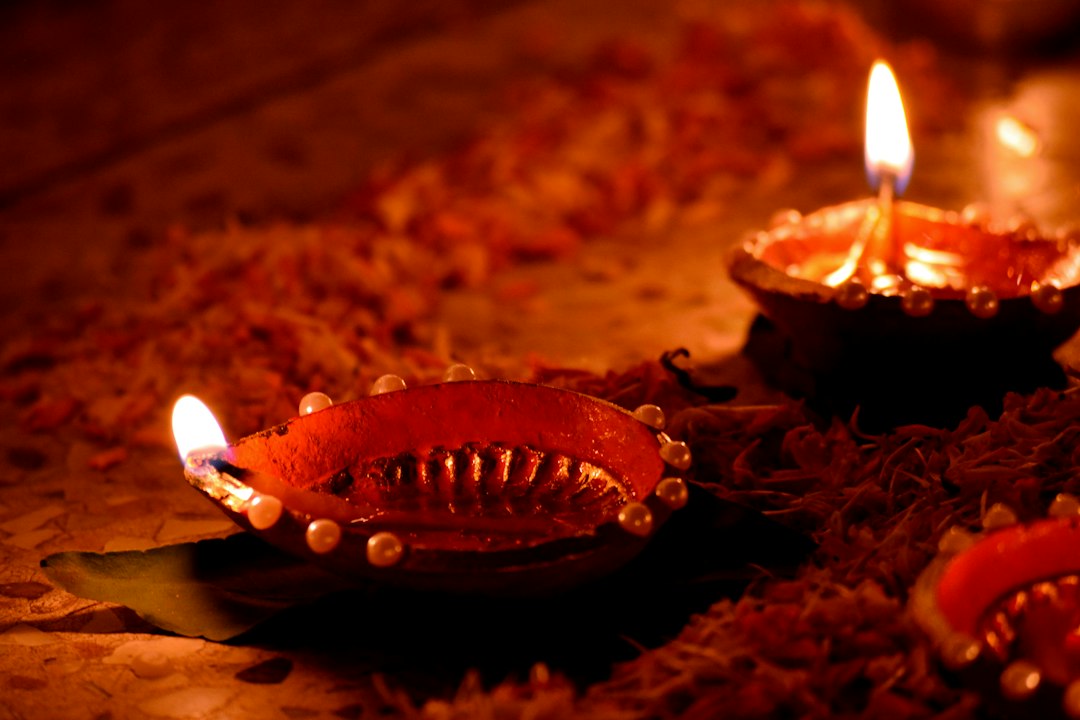
A glowing diya can be understood symbolically as the light of wisdom that removes the darkness of ignorance.
This is one reason the spiritual message of Diwali continues to remain relevant generation after generation.
Design Your Destiny
Diwali reminds us that lasting transformation begins not outside, but within. If you want to move beyond limiting patterns, understand yourself more deeply and consciously create the life you wish to live, explore Design Your Destiny. Discover practical spiritual wisdom that can help you bring greater awareness, clarity and purpose into everyday life.
Start Your Journey TodayWhy Do We Celebrate Diwali?
The answer to why Diwali is celebrated depends partly on region and religious tradition.
The best-known North Indian tradition connects Diwali with the return of Lord Rama to Ayodhya after fourteen years of exile and his victory over Ravana.
According to this tradition, the people of Ayodhya welcomed Rama by illuminating the city with lamps. Today, Ayodhya's Deepotsav continues to commemorate Lord Rama's return through large-scale illumination and devotional celebrations.
But this is not the only story of Diwali.
Different regions and traditions associate the festival with Lord Krishna, Goddess Lakshmi, King Bali, Mahavira and Sikh history.
These diverse traditions make Diwali one of India's richest religious and cultural celebrations.
Diwali Festival Story: Lord Rama Returns to Ayodhya
Perhaps the most widely known Diwali story is connected with the Ramayana.
Lord Rama, the prince of Ayodhya, spent fourteen years in exile along with his wife Sita and brother Lakshmana.
During this period, Sita was abducted by Ravana, the king of Lanka. After a great struggle, Rama defeated Ravana and eventually returned to Ayodhya.
Tradition holds that the people celebrated his homecoming by illuminating the kingdom with lamps.
This story became deeply associated with the symbolic message of Diwali:
Dharma ultimately triumphs over adharma. Light overcomes darkness. Good prevails over evil.
The story also gives Diwali a personal spiritual interpretation.
Ravana can symbolically represent qualities such as ego, anger, greed and uncontrolled desire. Rama represents righteousness, discipline, wisdom and dharma.
In that sense, Diwali asks an important question:
Which qualities are we allowing to rule our own lives?
Good ness Diwali lakshmi
Another major aspect of Diwali festival significance is the worship of Goddess Lakshmi.
Lakshmi represents prosperity, abundance, fortune and auspiciousness. On Diwali, devotees traditionally clean and decorate their homes and perform Lakshmi Puja with devotion.
The festival's central day is widely associated with Lakshmi worship, while Ganesha is also worshipped in many households.
However, the deeper spiritual significance of Diwali suggests that prosperity does not have to mean money alone.
True abundance may also include:
peace within the mind
harmonious relationships
wisdom
gratitude
physical and emotional well-being
meaningful work
contentment
spiritual growth
Thus, Lakshmi Puja can also become an opportunity to reflect on what genuine prosperity means in our lives.
Lord Krishna and Narakasura: Another Story of Diwali
In parts of India, particularly in southern traditions, Diwali is associated with the defeat of Narakasura.
The story relates to Lord Krishna's victory over the powerful asura Narakasura. Naraka Chaturdashi is observed in connection with this tradition, and the narrative again reflects the victory of good over destructive forces. Incredible India's description of regional Diwali traditions also highlights this association.
Spiritually, Narakasura may be interpreted as representing the darkness created by ego, arrogance and ignorance.
The lesson remains similar:
Outer darkness disappears when light is introduced.
Inner darkness disappears when awareness arises.
What Is the Spiritual Significance of Diwali?
The spiritual significance of Diwali is perhaps the most timeless dimension of the festival.
Lighting thousands of lamps can create a magnificent celebration—but the deeper teaching is to light the lamp within ourselves.
1. Light Over Darkness
The most recognisable Diwali symbol is the diya.
Darkness represents ignorance, confusion and unconscious living.
Light represents wisdom, clarity and awareness.
The diya therefore becomes more than decoration. It can remind us to develop awareness within ourselves.
2. Good Over Evil
Stories associated with Rama, Krishna and other Diwali traditions repeatedly contain the theme of righteousness triumphing over destructive forces.
Spiritually, this battle is not only external.
Every person experiences an internal conflict between qualities such as:
anger and patience,
greed and contentment,
ego and humility,
resentment and forgiveness,
fear and awareness.
Diwali becomes an opportunity to consciously choose what we wish to strengthen.
3. Knowledge Over Ignorance
Another important Diwali meaning is the victory of knowledge over ignorance.
Spiritual ignorance is not simply a lack of information.
It can also mean living mechanically without understanding our thoughts, emotions and actions.
The Festival of Lights therefore encourages introspection.
Before lighting the lamps outside, we can ask:
What within me needs illumination?
Why Do We Light Diyas on Diwali?
Lighting diyas is perhaps the most recognisable Diwali tradition.
Traditionally, lamps are associated with welcoming auspiciousness and illuminating homes during the Festival of Lights. The Rama-Ayodhya tradition also connects lamps with the joyful celebration of Rama's return.
Spiritually, the flame can represent consciousness.
Even a small lamp can illuminate a dark room.
Similarly, a small moment of awareness can transform the way we respond to anger, fear or confusion.
That is why the diya is such a powerful symbol.
Its message is simple:
Do not fight darkness endlessly. Bring in light.
Why Do People Clean Their Homes Before Diwali?
Cleaning homes before Diwali is another deeply established tradition.
At the practical level, people prepare their homes for festivities and Lakshmi Puja.
But spiritually, cleaning can also become a symbol of inner purification.
We accumulate more than physical clutter.
We may also carry:
old grudges
resentment
emotional baggage
limiting beliefs
unnecessary attachments
repetitive negative thoughts
Diwali offers an opportunity to ask what we are ready to release.
Just as we create space in our homes, spiritual practice encourages us to create space within ourselves.
Diwali History and Different Traditions
The history of Diwali cannot be reduced to only one narrative.
Diwali has developed through diverse religious and regional traditions across India.
For many Hindus, the festival is associated with Rama's return to Ayodhya, Lakshmi worship, Krishna's victory over Narakasura or traditions connected with King Bali.
Diwali also holds significance outside Hindu traditions.
For Jains, it is associated with Mahavira's attainment of liberation.
Sikhs observe Bandi Chhor Divas, connected with the release of Guru Hargobind Sahib and other prisoners.
These differences are important because they demonstrate that the importance of Diwali extends across communities while retaining distinctive religious meanings.
What Does Diwali Teach Us?
Beyond mythology and tradition, Diwali contains lessons that can be applied to everyday life.
Choose awareness over reaction
Before reacting in anger or fear, become conscious of what is happening within you.
Release what no longer serves you
Just as homes are cleaned before Diwali, periodically examine the beliefs, habits and emotions you continue to carry.
Cultivate gratitude
Prosperity becomes meaningful when accompanied by gratitude.
Strengthen relationships
Diwali traditionally brings families and communities together. Forgiveness, generosity and connection can become part of our celebration.
Become the light you seek
Rather than waiting for circumstances or other people to change, spiritual transformation begins within.
This may be one of the most powerful interpretations of the spiritual significance of Diwali.
The Deeper Meaning of the Festival of Lights
Why is Diwali called the Festival of Lights?
The obvious answer is the countless lamps illuminating homes, temples and streets.
But its deeper meaning lies in what those lamps represent.
Human beings often search externally for happiness, peace and fulfilment.
Spiritual wisdom turns that search inward.
The diya reminds us that awareness already exists within us.
When awareness increases, ignorance gradually loses its hold.
When compassion increases, anger weakens.
When gratitude increases, dissatisfaction loses its power.
When understanding increases, fear begins to dissolve.
Therefore, celebrating Diwali can become more than observing a tradition.
It can become an invitation to live consciously.
Importance of Diwali in Modern Life
In today's fast-moving world, the importance of Diwali may be even more relevant.
Modern life brings convenience and opportunity, but it can also create distraction, comparison, stress and constant mental activity.
Diwali creates a symbolic pause.
It reminds us to reconnect with family, express gratitude, reflect on our choices and begin again with greater awareness.
The true celebration does not have to end when the diyas stop burning.
If greater patience, awareness, kindness and clarity remain afterward, we have carried the message of Diwali into our lives.
So, why do we celebrate Diwali?
There is no single story that captures the complete richness of the festival. Diwali is connected with the return of Lord Rama, the worship of Goddess Lakshmi, Krishna's victory over Narakasura and important traditions within Jainism and Sikhism.
Yet across many traditions, a powerful theme remains:
Light can overcome darkness. Wisdom can overcome ignorance. Goodness can overcome destructive tendencies.
The real Diwali festival significance therefore extends beyond lamps, sweets and decorations.
Diwali invites us to illuminate our inner world.
Light the diya outside.
But also light awareness within.
Because the deepest meaning of the Festival of Lights is not simply to see the light it is to become it.
Personal Session
Every inner journey is different. If you are seeking clarity about recurring patterns, relationships, purpose or your spiritual path, a one-to-one session can give you space for deeper understanding and personalised guidance.
Book NowRead Latest Articles