

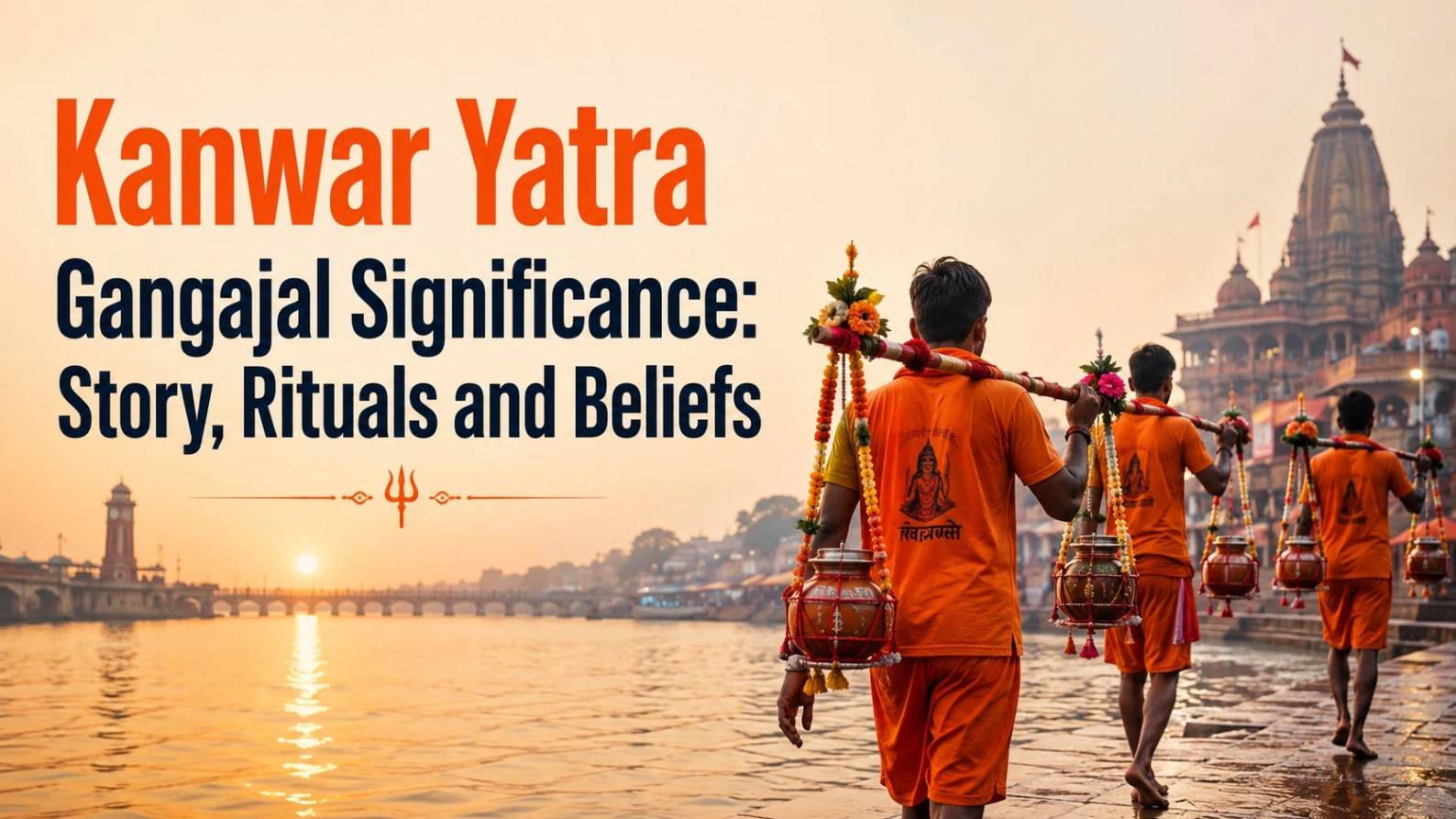
Every year during the sacred month of Sawan, roads across northern India become filled with devotees dressed in saffron, chanting “Bol Bam” and carrying beautifully decorated Kanwars on their shoulders. These devotees, known as Kanwariyas, travel to sacred places along the River Ganga, collect Gangajal and carry it back to offer to Lord Shiva.
The Kanwar Yatra Gangajal significance lies in much more than transporting water from one place to another. For devotees, the journey represents faith, surrender, discipline, purification and devotion to Shiva. The Gangajal carried in the Kanwar is treated as sacred and is ultimately used for Jalabhishek, the ritual offering of water over a Shivling.
Kanwariyas commonly collect sacred water from pilgrimage centres such as Haridwar, Gangotri, Gaumukh and Sultanganj. They then carry it to local Shiva temples or major shrines, often completing the offering around Sawan Shivratri.
What Is Kanwar Yatra?
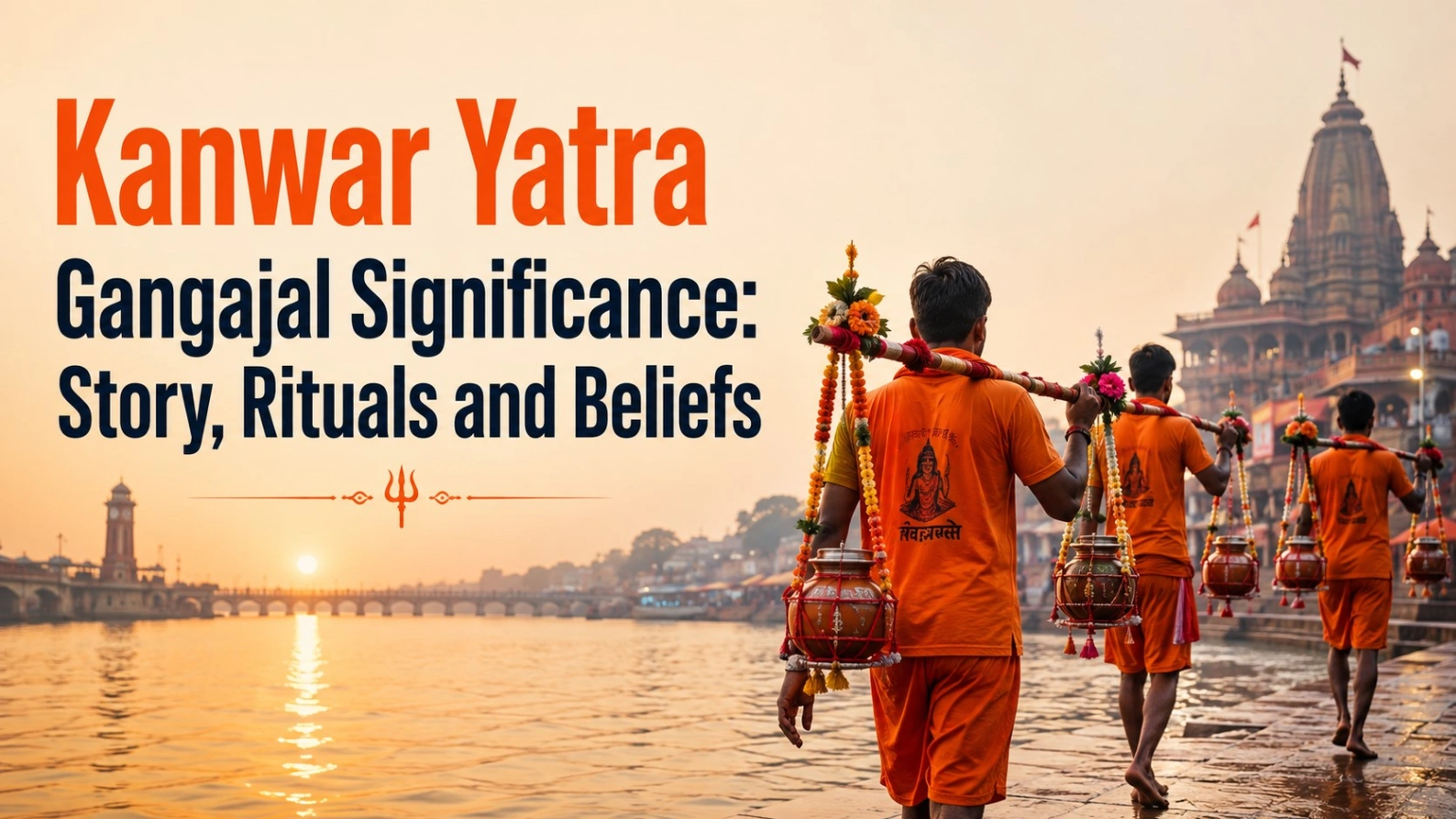
Kanwar Yatra is an annual pilgrimage primarily undertaken by devotees of Lord Shiva during Shravan, commonly called Sawan. The devotees carry containers filled with sacred water, usually suspended on the two ends of a decorated bamboo pole known as a Kanwar.
The Kanwar is balanced across the pilgrim’s shoulders. Depending on regional customs, the devotee may walk from the Ganga to a Shiva temple in their hometown or travel along a recognised pilgrimage route to an important shrine.
The journey is both an outward pilgrimage and an inward spiritual practice. The physical effort involved in walking long distances is viewed as an expression of devotion. The devotee voluntarily accepts discomfort, discipline and simplicity while keeping the mind focused on Shiva.
Design Your Destiny
Just as the Kanwar Yatra represents discipline, purification and conscious effort, your life can also become a journey towards clarity and inner transformation. Join Design Your Destiny and learn how to understand your mind, overcome limiting patterns, develop inner awareness and consciously create a more peaceful and meaningful life. Begin your journey towards the life you are meant to live. Explore Design Your Destiny today.
Start Your Journey Today!Why Do Kanwariyas Carry Gangajal?
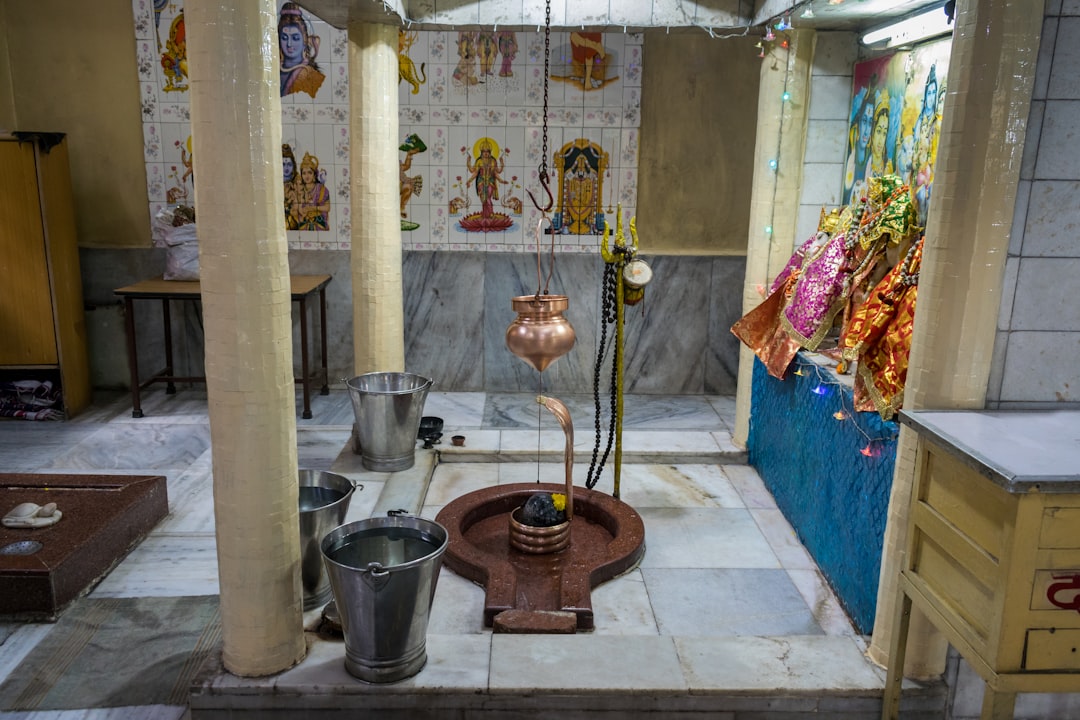
Kanwariyas carry Gangajal so that it can be offered to Lord Shiva through Jalabhishek. In the ritual, sacred water is poured over a Shivling as an act of worship, gratitude and surrender.
For devotees, Ganga is not regarded as ordinary river water. The river is revered as Maa Ganga and is associated with purity, spiritual cleansing and divine grace. Carrying Gangajal therefore transforms the Kanwar into a sacred responsibility.
The journey also allows the devotee to offer something acquired through personal effort. Instead of simply visiting a temple, the Kanwariya walks for kilometres, protects the sacred water and completes the pilgrimage with the final offering.
This explains why Kanwariyas carry Gangajal rather than ordinary water. The water’s connection with the Ganga, combined with the devotee’s effort and intention, gives the ritual its spiritual meaning.
Significance of Gangajal in Kanwar Yatra
The significance of Gangajal in Kanwar Yatra can be understood through three connected ideas: purification, devotion and surrender.
Gangajal as a Symbol of Purity
In Hindu tradition, Ganga is revered as a sacred river with the power to purify. During Kanwar Yatra, Gangajal symbolises the devotee’s aspiration to become free from negative tendencies, attachments and inner impurities.
The physical water is carried from a sacred place, but its deeper purpose is spiritual. It reminds the Kanwariya that the mind must also become clear, calm and pure.
Gangajal as an Offering of Devotion
The devotee offers Gangajal to Shiva after personally carrying it over a considerable distance. The value of the offering therefore comes not from its material price but from the faith, discipline and effort behind it.
Every step becomes part of the worship. The pilgrimage begins at the Ganga, but the act of devotion continues throughout the journey.
Gangajal as an Act of Surrender
When the water is finally poured over the Shivling, the offering can represent surrendering one’s ego, worries and desires at the feet of Shiva. The devotee symbolically offers the inner burden carried through life and asks for strength, wisdom and peace.
Kanwar Yatra Gangajal Story and Mythology
There is no single universally accepted account explaining the origin of Kanwar Yatra. Different regions and devotional traditions preserve different stories. These narratives should be understood as sacred traditions rather than as one conclusively documented historical origin.
Rudrabhishek at Home: Vidhi, Samagri, Mantras and Benefits
Samudra Manthan and Lord Shiva
One widely told story connects the ritual with Samudra Manthan, the churning of the cosmic ocean. According to the tradition, a dangerous poison called Halahala emerged during the churning. To protect creation, Lord Shiva consumed it.
Goddess Parvati is believed to have stopped the poison in Shiva’s throat, causing his neck to turn blue and giving him the name Neelkanth. The poison created intense heat, and water was offered to Shiva to cool and relieve its effect.
This story is often used to explain why devotees perform Jalabhishek and offer water to Shiva during Sawan. The sacred act is interpreted as an expression of gratitude to the deity who accepted suffering for the welfare of creation.
Lord Parashuram and the First Kanwar
Another popular tradition associates the origin of Kanwar Yatra with Lord Parashuram, a devoted worshipper of Shiva.
According to this account, Parashuram wished to worship Shiva at Pura, in present-day Uttar Pradesh. He is believed to have brought Gangajal and offered it to a Shivling during Shravan. Because of this tradition, some devotees regard Parashuram as the first Kanwariya.
This story highlights the importance of personal effort in devotion. Parashuram did not merely offer water available near the shrine; he brought sacred water from the Ganga as a dedicated act of worship.
Other Regional Traditions
Some traditions also connect the journey with Ravana, describing him as a great devotee of Shiva who carried sacred water for worship. Other regional accounts emphasise different saints, rulers and sacred routes.
These variations reveal that Kanwar Yatra has developed through many devotional communities. Instead of weakening its meaning, the different narratives demonstrate how widely the practice has been embraced.
Kanwar Yatra History and Development
The spiritual ideas connected with Shiva worship, pilgrimage, sacred rivers and water offerings are ancient. However, historians distinguish these long-standing religious practices from the enormous organised Kanwar procession visible today.
Historical discussions suggest that pilgrims had long carried Ganga water home or to Shiva shrines, while the modern mass form of Kanwar Yatra expanded considerably during the twentieth century. Improved roads, transport networks, urban participation and organised service camps helped the pilgrimage grow in scale.
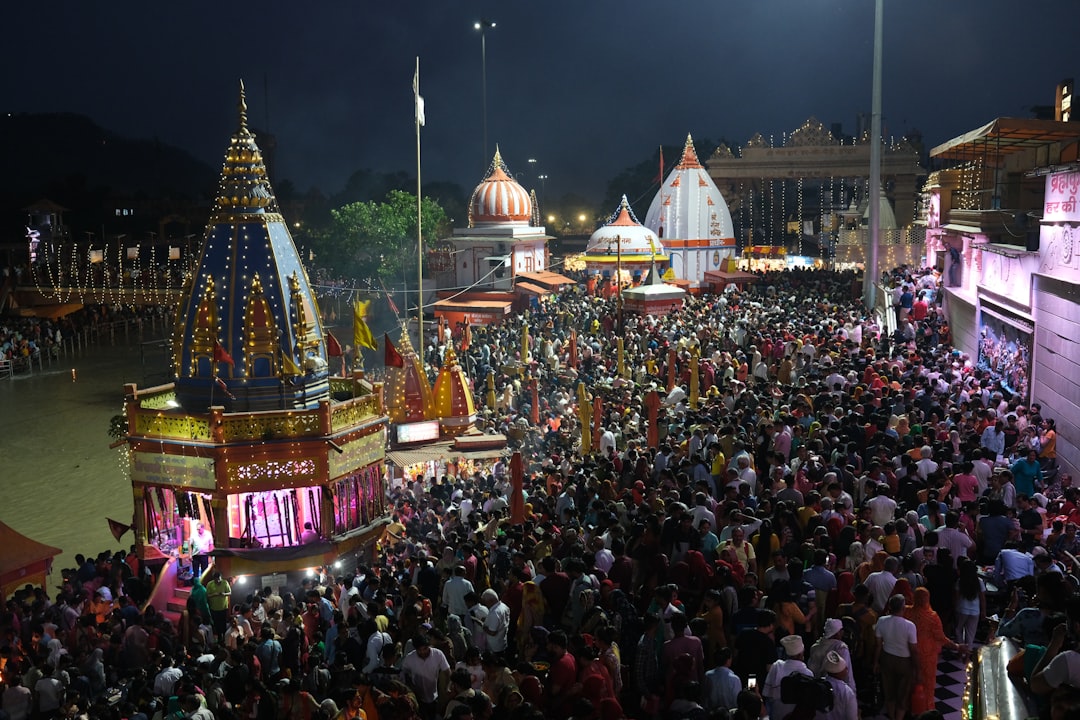
Today, the Yatra includes multiple routes and regional traditions. Devotees from Delhi, Haryana, Punjab and western Uttar Pradesh often collect water from Haridwar, Gangotri or Gaumukh. In eastern India, many pilgrims carry water from Sultanganj to Baba Baidyanath Dham in Deoghar.
Important Gangajal Rituals in Kanwar Yatra
Customs may vary by region, group and personal vow, but the following practices are commonly associated with the pilgrimage.
1. Taking a Sankalp
Before beginning the journey, many devotees take a Sankalp, or sacred resolution. They mentally dedicate the pilgrimage to Shiva and may connect it with gratitude, prayer, spiritual growth or the welfare of their family.
2. Collecting Gangajal
The devotee visits a sacred ghat and fills clean containers with Ganga water. The containers are carefully attached to the Kanwar, usually with one placed on each side to maintain balance.
3. Carrying the Kanwar Respectfully
Many Kanwariyas treat the Kanwar as sacred throughout the journey. Stands are commonly provided at rest camps so the Kanwar can be placed carefully without disrespecting the containers.
4. Observing Discipline
Many devotees follow a simple vegetarian diet, avoid intoxicants, maintain cleanliness and refrain from harmful behaviour during the pilgrimage. Some walk barefoot, while others follow different forms of Kanwar Yatra according to their health, vow and regional tradition.
Sawan Shivratri 2026: Date, Time, Puja Vidhi & Vrat Rules
5. Chanting Shiva’s Name
Chants such as “Bol Bam,” “Har Har Mahadev” and “Om Namah Shivaya” help devotees remain focused during the physically demanding journey. Group chanting also creates a shared atmosphere of devotion.
6. Performing Jalabhishek
The pilgrimage reaches its spiritual completion when the Gangajal is poured over a Shivling. Devotees may also offer bilva leaves, flowers, fruits or other traditional items according to temple customs.
Why Is the Kanwar Carried on the Shoulders?
The Kanwar is designed to distribute the weight of the water across the shoulders. On a spiritual level, devotees often see this burden as a form of tapasya, or disciplined effort.
The two containers must remain balanced, which may also be interpreted as a reminder to maintain balance in life between action and devotion, effort and surrender, and the material and spiritual dimensions of existence.
The journey teaches that devotion is not limited to words. It requires patience, responsibility and the willingness to continue even when the path becomes difficult.
Spiritual Meaning of Kanwar Yatra
The deeper Kanwar Yatra Gangajal meaning lies in inner transformation.
The Ganga represents purity. The Kanwar represents responsibility. The road represents life’s journey. The physical weight represents personal burdens, desires and attachments. The final Jalabhishek represents surrender.
Seen in this way, Kanwar Yatra becomes a moving meditation. The devotee is invited to observe thoughts, control reactions, remain disciplined and keep the mind connected with Shiva.
The pilgrimage also creates a spirit of community. Service camps offer food, water, rest and medical support to travellers. Such service reflects the idea that worship is not only performed inside a temple; it is also expressed through compassion and assistance to others.
What Does the Gangajal Offering Represent?
The final offering of Gangajal may represent:
Gratitude towards Lord Shiva
Purification of the mind and heart
Surrender of ego and negativity
Completion of a sacred vow
Prayer for strength and wisdom
Devotion expressed through effort
A new beginning based on spiritual discipline
The true importance of Gangajal in Kanwar Yatra therefore lies not only in the water but in the consciousness with which it is collected, carried and offered.
Kanwar Yatra is one of the most visible expressions of Shiva devotion during Sawan. Its sacred stories connect it with Samudra Manthan, Neelkanth and Lord Parashuram, while its rituals centre on carrying Gangajal and performing Jalabhishek.
The Kanwar Yatra Gangajal significance is ultimately spiritual. Gangajal represents purity, the journey represents discipline and the offering represents surrender. A Kanwariya does not simply carry Ganga water; the devotee carries a prayer, a promise and a longing to move closer to the divine.
Personal Session
Every individual carries different questions, emotional patterns and life challenges. A personal session can help you understand what is holding you back and identify the right direction for your inner journey. Book a personal session for focused guidance, deeper clarity and practical spiritual insight suited to your present situation. Take the next step towards inner peace, self-understanding and conscious living. Book your personal session today.
Book Now