

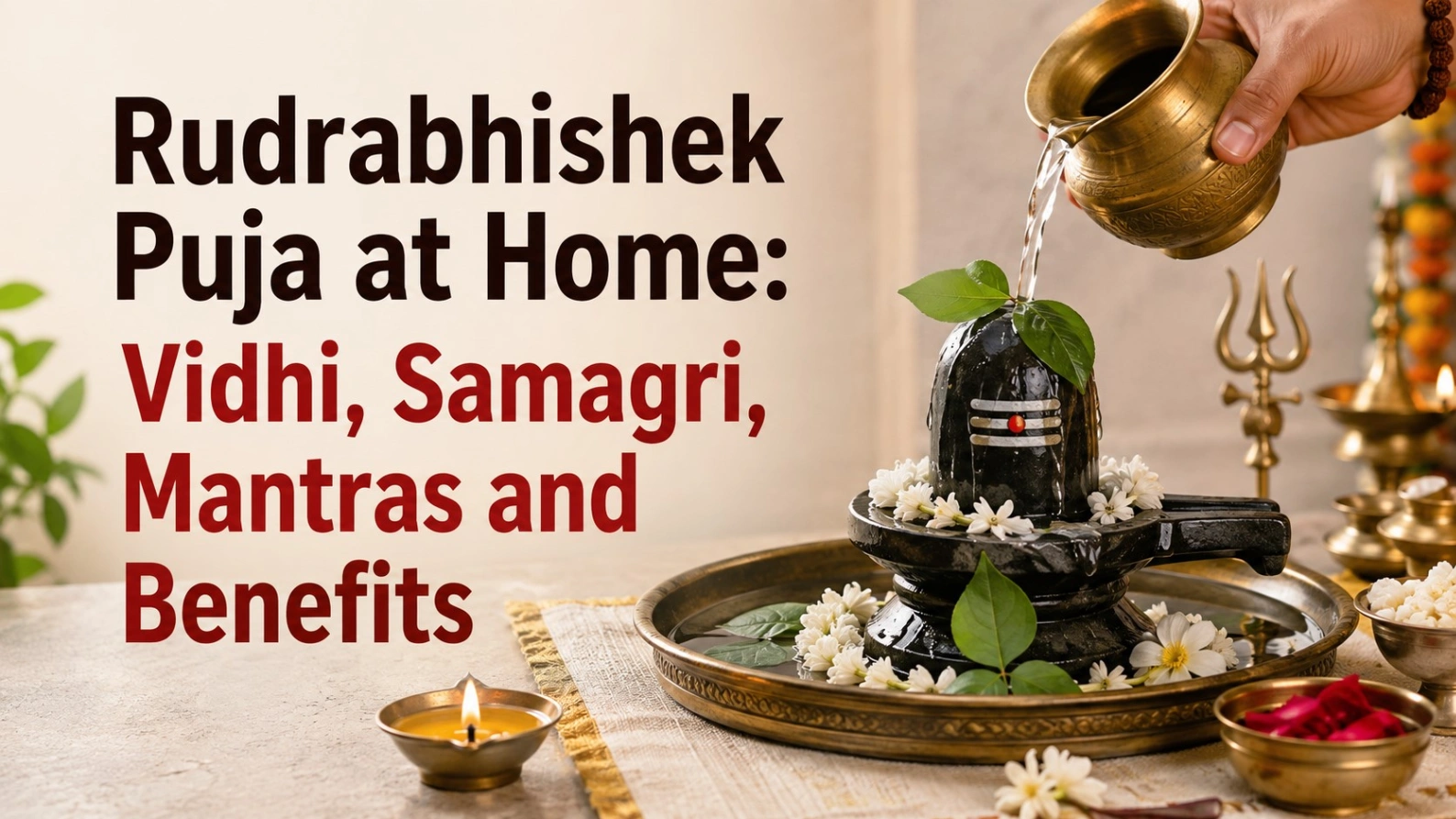
Rudrabhishek is a sacred form of worship dedicated to Lord Shiva in which the Shivling is bathed with water, milk, Panchamrit or other traditional offerings while Shiva mantras are chanted. The word “Rudra” refers to a Vedic form of Shiva, while “Abhishek” means ceremonial bathing or anointing.
Traditional descriptions of Rudrabhishek commonly include offerings such as water, milk, curd, honey, ghee, Panchamrit, flowers and bilva leaves, accompanied by prayers and Vedic chants.
Many devotees want to perform Rudrabhishek puja at home but are unsure about the correct method, samagri or mantras. A simple home vidhi can be performed with cleanliness and devotion. Elaborate worship involving Sri Rudram, Laghu Rudra or havan is best conducted with trained guidance.
This guide explains the process step by step and provides the samagri, simple mantras and traditional benefits for beginners.
What Is Rudrabhishek Puja?
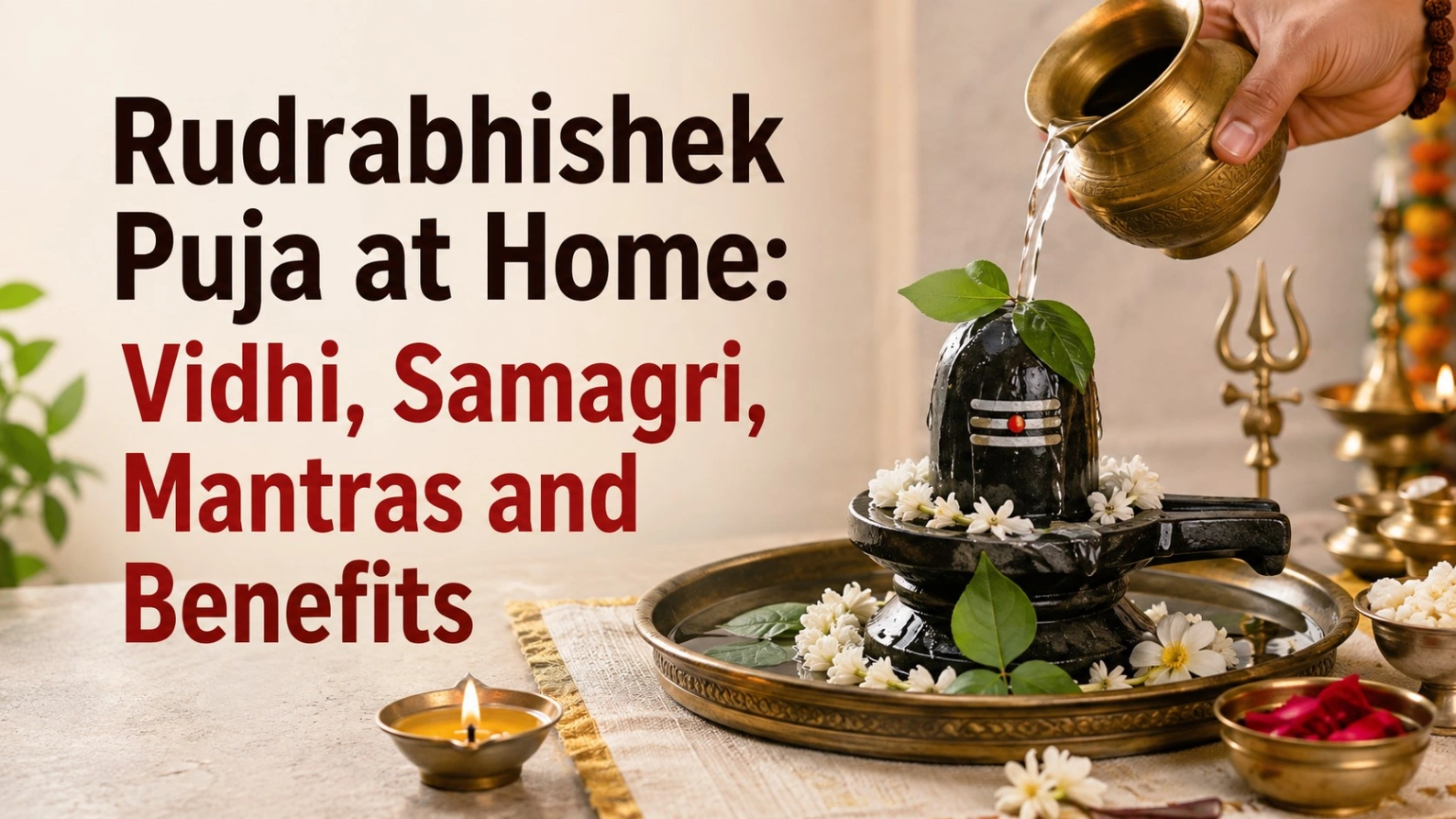
Rudrabhishek puja is the ritual worship of Lord Shiva through abhishek, mantra, prayer and sacred offerings. During the puja, a Shivling is placed in a clean vessel or tray so that the liquids offered during abhishek can be collected respectfully.
Water, milk or Panchamrit is then poured slowly over the Shivling while the devotee chants Shiva mantras.
Sri Rudram is a Vedic hymn addressed to Rudra and is traditionally associated with formal Rudrabhishek. It is found in the Krishna Yajurveda and consists of sections commonly known as Namakam and Chamakam.
For a simple home puja, devotees commonly chant:
Om Namah Shivaya
Om Namo Bhagavate Rudraya
Mahamrityunjaya Mantra
The purpose of Rudrabhishek is not merely to pour offerings over the Shivling. It is an opportunity to calm the mind, express gratitude, surrender the ego and direct one’s awareness towards Lord Shiva.
Design Your Destiny
Your outer life begins to change when your inner awareness, choices and actions become aligned. Join Design Your Destiny to understand the deeper patterns shaping your life and learn practical spiritual tools for clarity, purpose, emotional balance and conscious transformation. Begin your journey towards a more aware, balanced and purposeful life.
Start Your Journey Today!Can Rudrabhishek Be Performed at Home?
Yes, a simple Rudrabhishek at home can be performed by an individual devotee or family.
Home worship usually follows a shorter and easier sequence than an elaborate temple ceremony. Faith, cleanliness, respectful handling of the Shivling and focused chanting are more important than making the ritual unnecessarily complicated.
However, customs can differ according to family, region and spiritual tradition. Those following a particular sampradaya should observe the instructions given by their guru, family priest or temple.
Anyone wishing to perform a complete Vedic Rudrabhishek with precise Sanskrit pronunciation, Vedic swaras, Nyasa, Sri Rudram, Namakam, Chamakam or havan should seek qualified guidance.
Best Day and Time for Rudrabhishek
Rudrabhishek may be performed on any day with sincerity and devotion. However, devotees particularly associate Lord Shiva’s worship with:
Monday
Pradosh
Maha Shivratri
Sawan or Shravan month
Sawan Mondays
Monthly Shivratri
Birthdays and anniversaries
Important family or spiritual occasions
Monday is traditionally associated with Lord Shiva, while Pradosh is also considered an important period for Shiva worship.
Morning after bathing is generally a convenient time for home puja because the environment is peaceful and the mind is fresh. Some families also perform Shiva worship during the evening Pradosh period.
Choose a time when you can complete the puja peacefully without rushing.
Rudrabhishek Samagri List for Home Puja
The following complete Rudrabhishek samagri list is suitable for a simple home puja:
A clean Shivling with jaladhari or a deep plate
Clean water
A small quantity of Gangajal, if available
Raw milk
Curd
Honey
Ghee
Sugar or mishri
Panchamrit
Lota, kalash or small vessel
Bilva or bel leaves
Fresh flowers
Sandalwood paste
Akshat or unbroken rice
Sacred thread, when followed in your tradition
Incense or dhoop
Ghee or oil lamp
Camphor
Fruits
Sweets or another sattvic offering
Clean puja cloth
Puja plate and spoon
Picture or murti of Ganesha
Picture of Goddess Parvati and Nandi, if available
Panchamrit Ingredients
Panchamrit is commonly prepared using:
Milk
Curd
Honey
Ghee
Sugar or mishri
You do not need every item for a simple Rudrabhishek. Water, bilva leaves, flowers, a lamp and sincere chanting are enough for basic worship.
Use modest quantities and avoid wasting milk, honey or other food products. The collected liquid should be handled respectfully according to your family or local tradition.
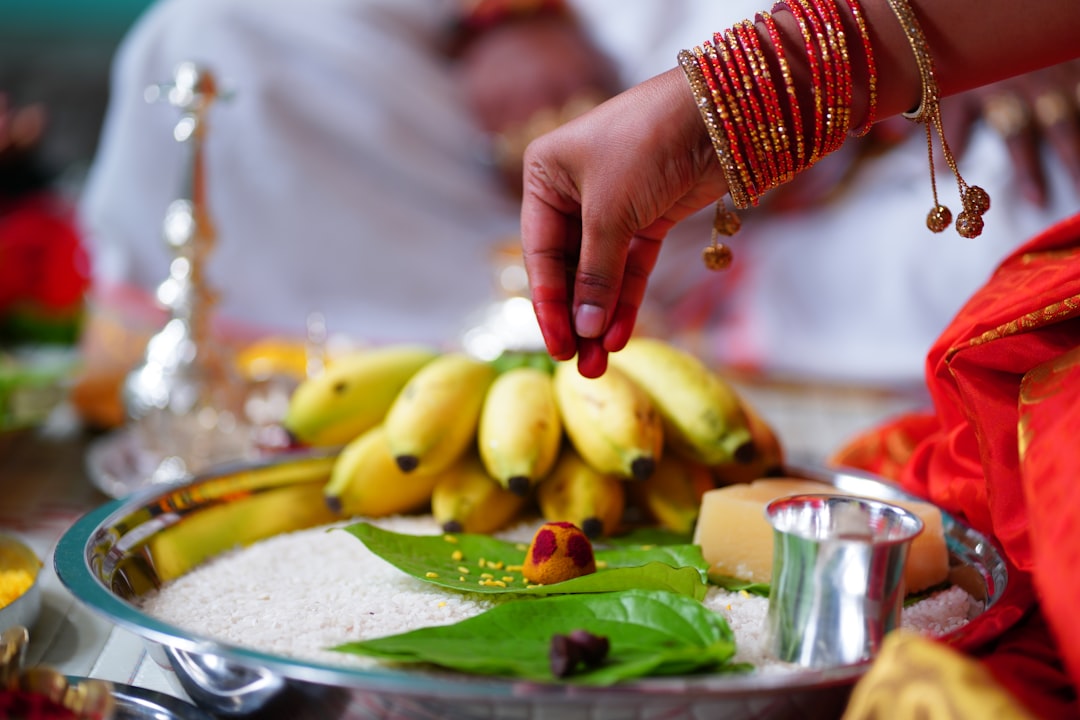
Complete Rudrabhishek Puja Vidhi at Home
Here is a simple Rudrabhishek puja at home step-by-step procedure suitable for beginners.
1. Clean Yourself and the Puja Space
Take a bath and wear clean, comfortable clothes.
Clean the place where the puja will be performed. Place the Shivling in a deep plate, tray or jaladhari so that the water and other liquids do not spill.
Arrange the complete Rudrabhishek samagri list nearby so that you do not have to interrupt the puja repeatedly.
Sit quietly for a few moments and take slow breaths. Begin the worship with a calm and settled mind.
2. Light the Lamp and Remember Lord Ganesha
Light a lamp and incense.
Begin by remembering Lord Ganesha and asking for the removal of obstacles. You may chant:
Om Gan Ganapataye Namah
Chant it three, eleven or twenty-one times.
Offer a brief prayer to your guru, family deities, Goddess Parvati, Nandi and Lord Shiva.
3. Take a Sankalp
Sankalp means making a sincere statement of intention before beginning the puja.
Take a little water in your right palm and mentally state:
Your name
Your family name
Your location
The date or occasion
Your purpose for performing the puja
Your intention may be gratitude, family harmony, spiritual growth, inner peace or prayer for the welfare of all.
After completing the sankalp, release the water into a small bowl.
Sawan Somwar Vrat Katha 2026: Complete Story and Puja Vidhi
4. Begin with Jalabhishek
Slowly pour clean water over the Shivling.
Chant:
Om Namah Shivaya
If Gangajal is available, add a few drops to the clean water.
This initial jalabhishek symbolically purifies the Shivling before the other offerings are made.

5. Perform Panchamrit Abhishek
Offer Panchamrit slowly over the Shivling.
The ingredients may also be offered separately. A commonly followed household sequence is:
Milk
Curd
Ghee
Honey
Sugar or Panchamrit
The precise sequence can differ between traditions. Follow your family custom when one is available.
Continue chanting Om Namah Shivaya while making each offering. Maintain a slow and gentle stream instead of pouring everything quickly.
6. Rinse the Shivling with Water
After the Panchamrit abhishek, bathe the Shivling again with clean water.
The final water offering cleans the Shivling before sandalwood paste, flowers and bilva leaves are offered.
Clean the surrounding tray when necessary and always handle the Shivling respectfully.
7. Offer Sandalwood, Flowers and Bilva Leaves
Apply a small quantity of sandalwood paste.
Offer:
Akshat
Fresh flowers
Bilva leaves
Fruits
Sweets or another sattvic naivedya
Devotees traditionally prefer fresh and clean bilva leaves. Local rules regarding their direction and placement can vary, so follow your family or temple tradition.
Rudrabhishek Mantras
Beginners may chant one or more of the following mantras during the abhishek.
Panchakshari Mantra
Om Namah Shivaya
This can be chanted 11, 21, 51 or 108 times according to your time and capacity.
Rudra Mantra
Om Namo Bhagavate Rudraya
This mantra is offered as a salutation to Lord Rudra.
Mahamrityunjaya Mantra
ॐ त्र्यम्बकं यजामहे सुगन्धिं पुष्टिवर्धनम्।
उर्वारुकमिव बन्धनान्मृत्योर्मुक्षीय माऽमृतात्॥
Om Tryambakam Yajamahe
Sugandhim Pushtivardhanam
Urvarukamiva Bandhanan
Mrityor Mukshiya Maamritat
The Mahamrityunjaya Mantra appears in Vedic tradition and is addressed to Tryambaka, the three-eyed form of Rudra or Shiva.
Chant slowly and respectfully. Devotion should not become fear about minor pronunciation mistakes. However, anyone wishing to learn formal Vedic chanting should study under a qualified teacher.
Complete Sri Rudram recitation requires knowledge of Vedic pronunciation and tonal accents. Beginners should not feel pressured to attempt its advanced form without guidance.

8. Offer Prayer and Perform Aarti
After completing the mantra chanting, sit silently for a few moments.
Pray for:
Wisdom
Compassion
Inner peace
Family well-being
Strength to act correctly
Spiritual awareness
Welfare of all beings
Perform Shiva aarti with a lamp or camphor. Offer flowers and bow respectfully.
What to Eat During Sawan Somwar Fast: Complete Food Guide
9. Distribute Prasad
Offer fruits or sweets to Lord Shiva and distribute them as prasad among family members.
Clean the puja area after completing the worship. Treat all puja materials respectfully.
How to Perform Rudrabhishek at Home Without a Pandit
A simple Rudrabhishek at home without a pandit is possible when the worship remains uncomplicated.
You can:
Take a simple sankalp
Offer clean water
Perform Panchamrit abhishek
Chant Om Namah Shivaya
Offer bilva leaves and flowers
Perform Shiva aarti
Sit silently in prayer
Do not attempt complex Nyasa, elaborate havan or long Vedic recitations by relying on fragmented online instructions. These practices require proper training.
For beginners, a shorter puja performed with attention is better than an elaborate ceremony performed with anxiety or confusion.
A priest is helpful for formal Vedic observances, Laghu Rudra, Maha Rudra, havan or worship connected with a significant life event.
Traditional Rudrabhishek Benefits
Within Hindu devotional tradition, devotees perform Rudrabhishek for:
Mental peace and emotional steadiness
A deeper connection with Lord Shiva
Purification of thoughts and intentions
Family harmony
Collective prayer
Courage during difficult situations
Gratitude and surrender
Spiritual discipline
A peaceful home environment
Greater focus during meditation
Self-reflection and inner awareness
Temple and devotional traditions commonly associate Rudrabhishek with prayers for peace, prosperity, spiritual growth and the removal of negativity. These should be understood as matters of religious belief rather than guaranteed material outcomes.
The practice is not a substitute for professional medical, psychological, legal or financial help.
Its deeper value lies in the sincerity, discipline, awareness and devotion it encourages.

Important Dos and Don’ts
Dos
Bathe before beginning the puja.
Wear clean clothes.
Clean the puja space.
Use fresh and suitable offerings.
Use modest quantities of milk and Panchamrit.
Chant at a comfortable pace.
Maintain a peaceful state of mind.
Follow your family or guru tradition.
Dispose of puja materials respectfully.
Complete the worship with gratitude.
Don’ts
Do not rush through the abhishek.
Do not waste milk, honey or food.
Do not pour offerings carelessly.
Do not treat one particular offering as a guarantee of results.
Do not become frightened by small, unintentional mistakes.
Do not combine conflicting rules from several traditions.
Do not attempt advanced Vedic chanting without proper guidance.
Do not leave the puja area dirty or unhygienic.
Rules concerning items such as turmeric, kumkum, tulsi, coconut water or the direction of the Shivling differ across traditions. Follow the established practice of your family, guru or temple.
Simple Rudrabhishek Vidhi at Home for Beginners
For your first Rudrabhishek, follow this short procedure:
Clean the worship space.
Place the Shivling in a deep tray.
Light a lamp.
Remember Lord Ganesha.
Take a sincere sankalp.
Pour clean water over the Shivling.
Chant Om Namah Shivaya 108 times.
Offer bilva leaves and flowers.
Offer fruit or sweets.
Perform Shiva aarti.
Sit silently for a few minutes.
Distribute prasad.
Panchamrit or guided mantra practice can be added gradually after the basic procedure feels natural.

Rudrabhishek puja at home is a meaningful way to worship Lord Shiva through sacred offerings, mantra, prayer and inner surrender.
The puja does not need to be complicated. A clean space, a Shivling, water, bilva leaves and sincere chanting are enough for a simple beginning.
By following this complete Rudrabhishek puja vidhi at home, devotees can develop a peaceful spiritual practice without becoming overwhelmed by ritual details.
Where family customs or advanced Vedic procedures are involved, guidance from a knowledgeable priest or teacher remains valuable.
Personal Session
Every spiritual journey is different. A personal session can help you examine your present challenges, understand recurring patterns and receive guidance suited to your individual path. Book a personal session for focused, one-to-one spiritual guidance and a clear practical direction for your next step.
Book Now