
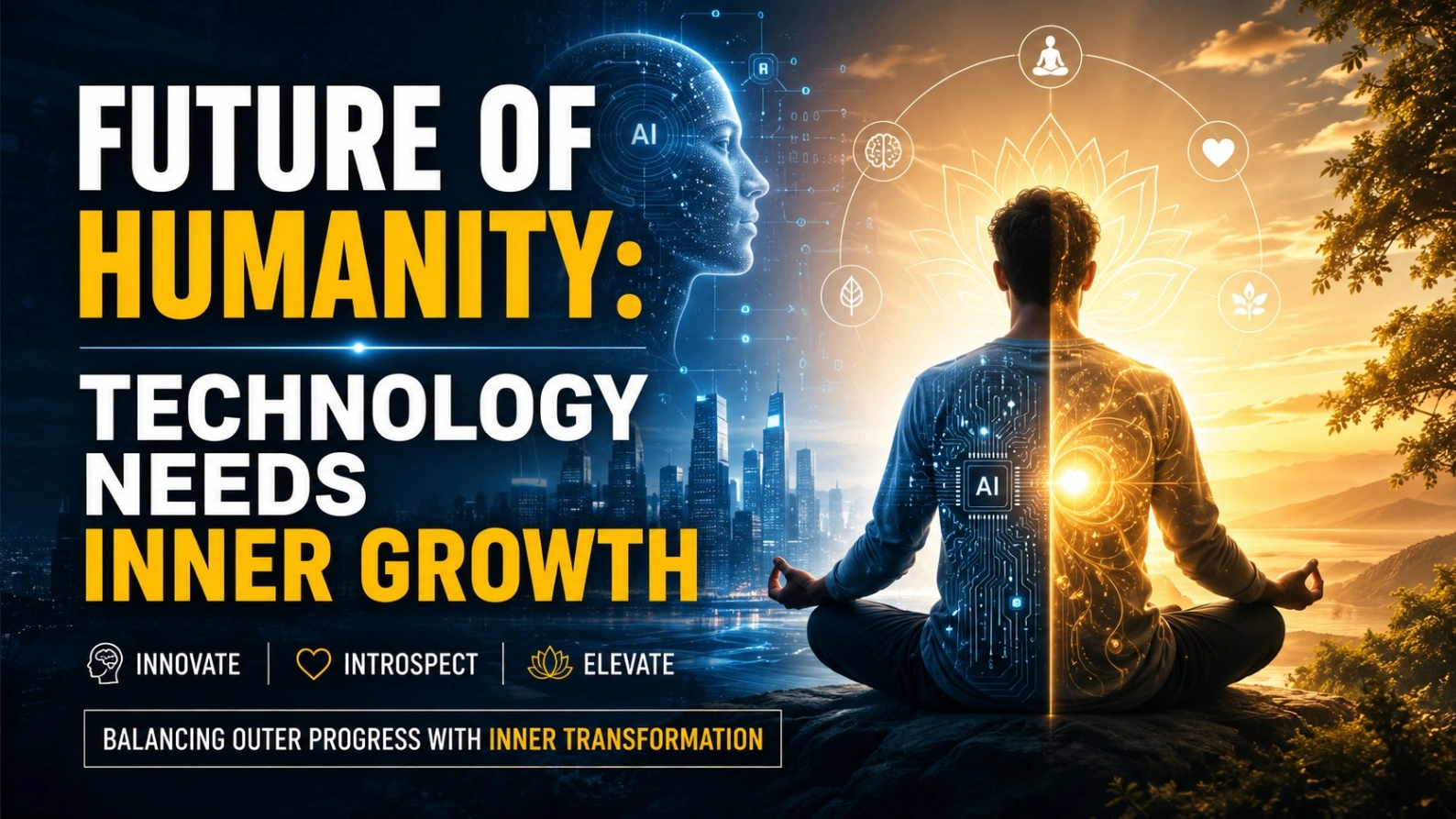
The future of humanity will not be shaped by technology alone. Artificial intelligence, digital transformation, automation, and connected devices are changing how people work, learn, communicate, and make decisions. Yet the real question is not simply what technology can do. It is whether human beings can develop the awareness, emotional intelligence, and values needed to use it wisely.
Technology can increase speed, convenience, reach, and capability. Inner growth helps us decide what deserves our attention, what kind of progress matters, and how to remain human in a fast-moving world. The future of technology and humanity depends on more than smarter tools. It depends on wiser people.
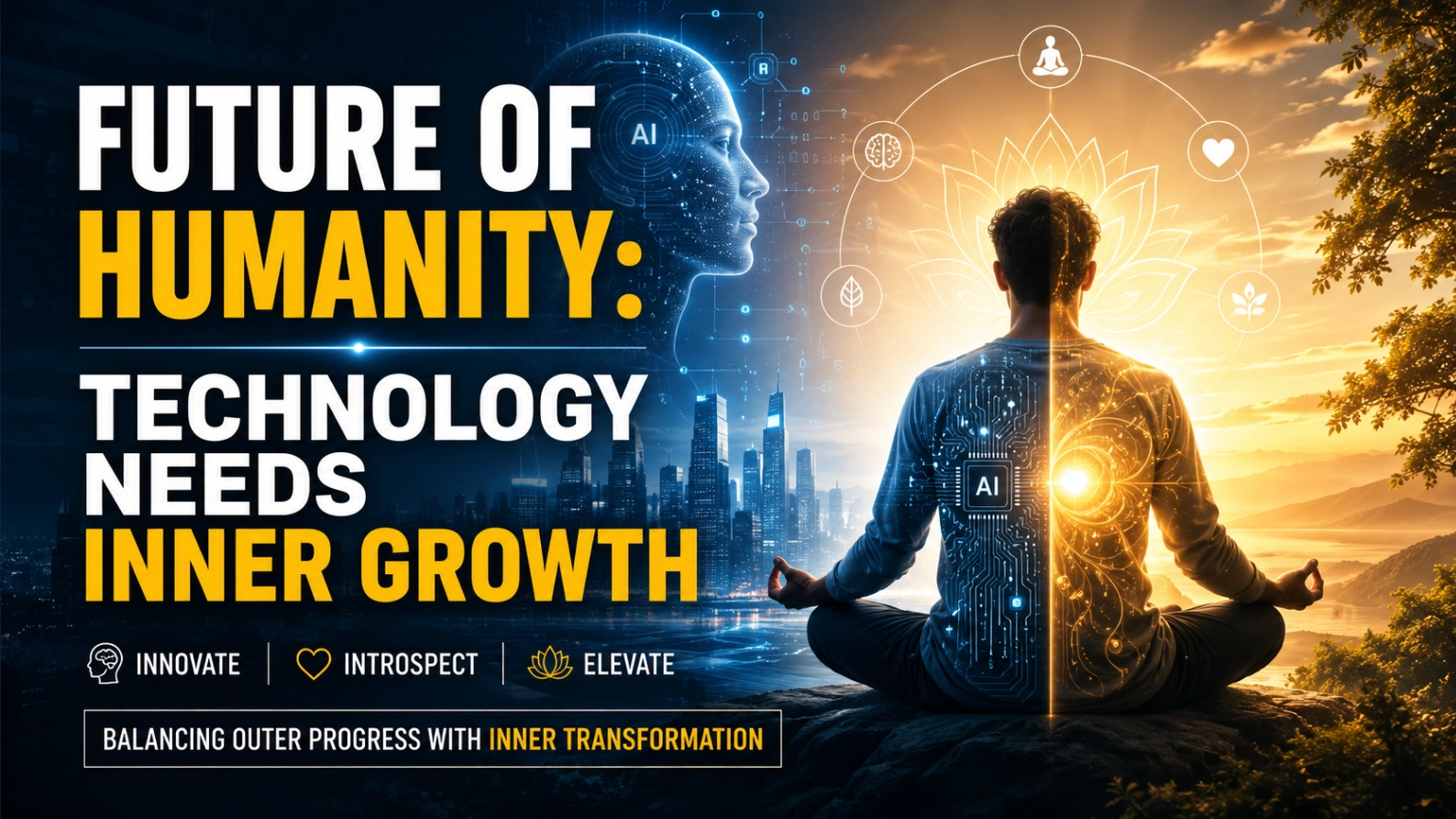
Technology Is Powerful, but It Cannot Define a Good Life
Every major invention changes the conditions of human life. A smartphone can connect families across continents, support learning, help a doctor access information, or make a small business visible to the world. The same device can also encourage distraction, comparison, isolation, and constant pressure to respond.
Technology is not good or bad by itself. Its impact depends on design, access, rules, culture, and the intentions of the people using it. The challenge is that technological progress can move faster than our willingness to reflect on its consequences. We often celebrate what is new before asking whether it is healthy, fair, or meaningful.
That is why technology without inner growth can become unbalanced. We may gain more options but lose clarity. We may be more connected online while feeling less present with the people beside us. We may have powerful systems to predict behaviour but struggle to understand our own fears, desires, and habits.
The future of human life cannot be measured only by efficiency. It must also be measured by dignity, trust, compassion, mental peace, and the ability to live with purpose.
Design Your Destiny
Your future is shaped not only by the tools around you, but by the awareness within you. Explore Design Your Destiny to build clarity, purpose, and conscious direction in everyday life.
Start Your JourneyAI and Humanity: The Need for Human Values
Artificial intelligence is central to conversations about the future of humanity. AI can support research, analyse information, automate repetitive tasks, personalise learning, and improve everyday services. These possibilities are valuable. However, AI and humanity should not be discussed only in terms of what machines can achieve.
The deeper question is: what values will guide the people and institutions building and using these systems?
Ethical AI is not only about preventing technical errors. It is about recognising that important decisions affect real people. A system can be efficient and still be unfair. It can be accurate in a narrow task and still be used in a way that reduces human choice, privacy, or accountability.
Responsible technology asks leaders, creators, businesses, and users to consider essential questions:
Does this technology strengthen human agency or weaken it?
Does it protect dignity and privacy?
Who benefits, and who may be left behind?
Are we using automation to create more meaningful human work, or only to chase speed and profit?
Can people understand, question, and challenge important decisions made with AI?
These are not just policy questions. They are questions of consciousness, empathy, and moral courage. Technology can process patterns, but it cannot remove the human responsibility to choose what is right.
Inner Transformation Is Not Escaping the Modern World
Spiritual growth, conscious living, and inner transformation do not require people to reject ambition, innovation, or modern life. Inner transformation is about bringing greater awareness to the way we participate in progress.
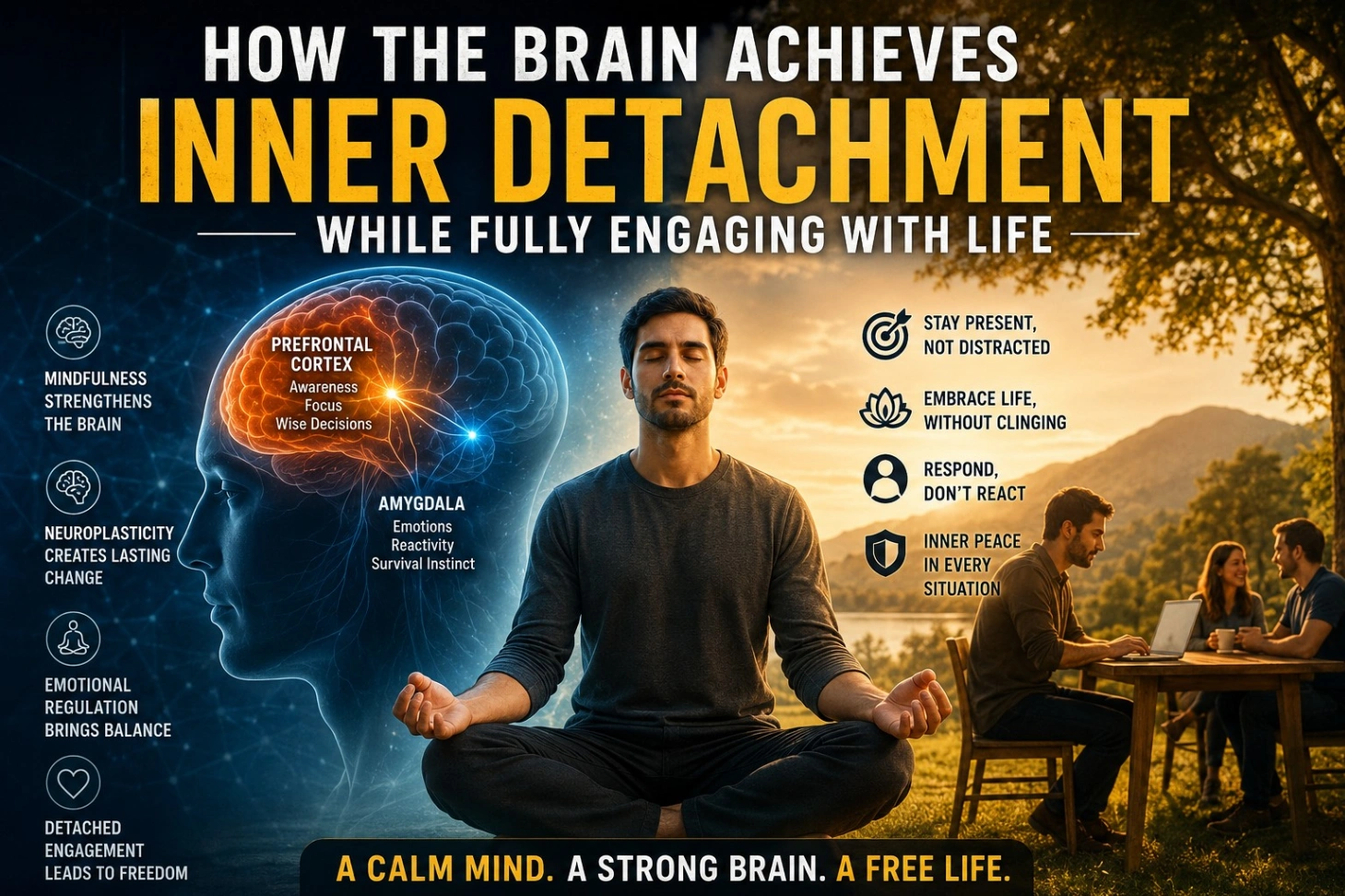
Inner growth means noticing thoughts instead of being controlled by every thought. It means recognising when fear is driving a decision, when ego is seeking approval, or when comparison is stealing joy. It also means becoming more capable of listening, pausing, and responding with maturity.
In a world full of notifications, feeds, opinions, and algorithmic recommendations, self-awareness becomes a practical strength. It helps people choose attention instead of scattering it. It helps families protect time together. It helps professionals separate meaningful goals from endless digital urgency.
This is where technology and spirituality can meet. Spirituality, at its healthiest, invites a person to ask: Who am I beneath my roles, achievements, and anxieties? What truly matters? How can I act with integrity? These questions are highly relevant in the age of AI.
The Digital Age Has Made Attention a Human Responsibility
One of the biggest impacts of technology on society is its effect on attention. Digital platforms compete for time and engagement. When every spare moment is filled with scrolling, reacting, or consuming, the mind has little space for reflection.
Mindfulness in the digital age is not about becoming perfect or refusing all screens. It is about using technology intentionally. A person might switch off non-essential notifications, avoid using the phone during meals, set boundaries around work messages, or create a quiet period before sleep. Small choices such as these protect mental space.
Technology and mental health are also connected through the quality of our habits. Online spaces can offer community, education, and support. They can also intensify anxiety, comparison, misinformation, and loneliness for some people. Experiences vary, but emotional intelligence remains important.
Emotional intelligence helps us notice what a digital experience is doing to us. Are we inspired, informed, exhausted, angry, or insecure? Are we using a platform to connect, or to avoid being alone with ourselves? Honest answers can guide healthier boundaries.
Human Connection Must Remain at the Centre
A future built only around automation risks forgetting that human beings need more than convenience. We need belonging, trust, conversation, care, and the feeling that our lives matter to others. Human connection in a digital world is not outdated. It is a basic need that technology should support rather than replace.
Video calls, online communities, and digital tools can help people stay close across distance. But presence has a depth that cannot always be replicated through a screen. Listening without multitasking, sharing a meal, helping a neighbour, and sitting with someone in grief are all forms of connection that develop empathy.
As technology becomes more capable, human qualities may become even more valuable. Kindness, creativity, discernment, courage, patience, and the ability to build trust are the foundations of a healthy society. A successful life is not one in which every minute is optimised. It is one in which people have attention for what they love.

The Dangers of Technology Are Often Human Problems in a New Form
When people discuss the dangers of technology, they often focus on machines becoming too powerful. That concern deserves thought. Yet many risks begin earlier: with human greed, prejudice, insecurity, or the desire for control.
Technology can magnify the values already present in the people who create and use it. A tool designed without care can spread bias at scale. A business model focused only on attention can reward outrage. A culture obsessed with status can turn innovation into another way to compare, exclude, or dominate.
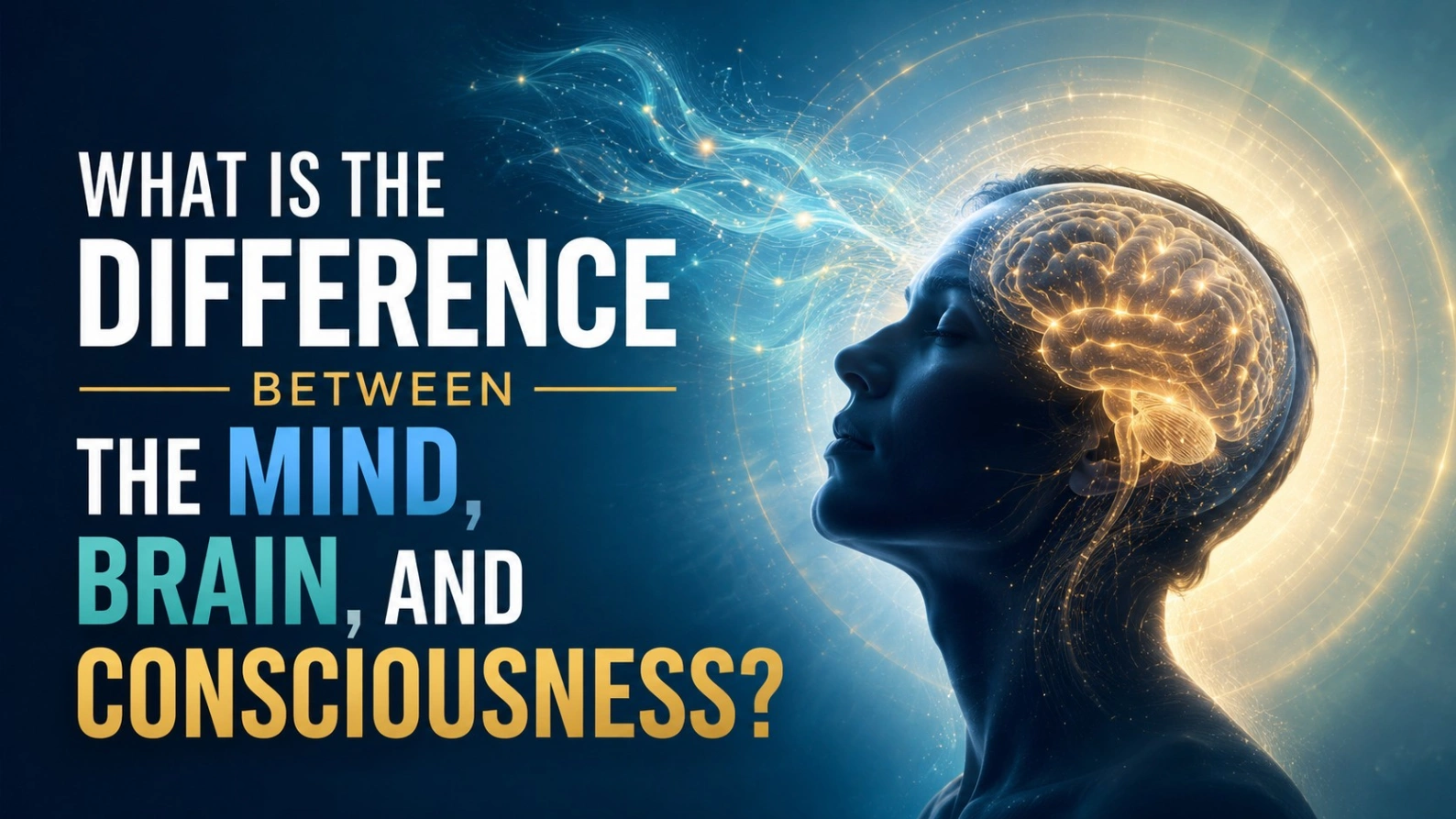
This is why the future of human consciousness matters. The goal is not to become passive or idealistic. It is to develop enough self-awareness to recognise the forces shaping our choices and ask whether we are acting from fear, compassion, wisdom, or habit.
How Technology Can Support Inner Growth
Technology does not have to be the enemy of spiritual awakening or personal development. Used with intention, it can make meditation guidance, online counselling, learning platforms, digital journals, and supportive communities easier to access.
But a tool is not the transformation itself. Watching a video about mindfulness is not the same as practising mindfulness. Saving a self-help post is not the same as changing a daily habit. Technology can open a door, but people still need to walk through it.
Real human development requires practice: pausing before reacting, taking responsibility for mistakes, treating others with respect, and making choices that align with one’s values. In this sense, technology and inner peace can work together. The tool can make support available; inner work helps a person use it well.
Building a More Conscious Future
The future of humans and AI does not need to be a battle between machines and people. It can be an opportunity to decide what kind of civilisation we want to create. But this requires conscious choices at every level.
Individuals can build healthier digital habits, practise self-awareness, and protect time for real relationships. Parents and educators can teach children critical thinking, emotional literacy, and responsible technology use. Businesses can design products that respect people rather than exploit attention. Leaders can treat ethics as a core responsibility, not a public-relations exercise.
Society can also expand its definition of success. Innovation should not be judged only by revenue, speed, or scale. We should ask whether it improves well-being, strengthens communities, protects human rights, and creates space for people to grow.
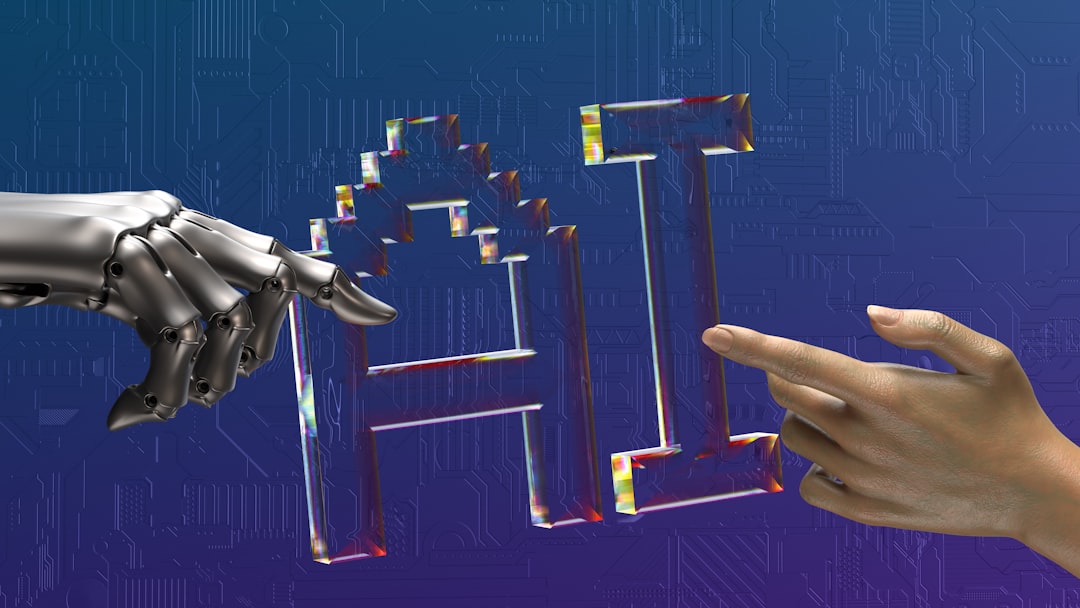
Without self-awareness, people can use advanced tools to repeat old patterns. With self-awareness, we have a better chance of using them to reduce suffering, widen opportunity, and create meaningful progress.
The future of humanity will be shaped by technology, but it should not be controlled by technology. Artificial intelligence, digital transformation, and scientific innovation can help solve important problems. But they cannot tell us what kind of world is worth building.
For that, we need human consciousness. We need compassion alongside capability, self-awareness alongside ambition, and wisdom alongside intelligence. The more powerful our tools become, the more deeply we must understand ourselves.
Personal Session
Looking for deeper guidance on inner growth, emotional balance, or life direction? Book a personal session to reflect, reconnect with your values, and move forward with greater clarity.
Book Now