

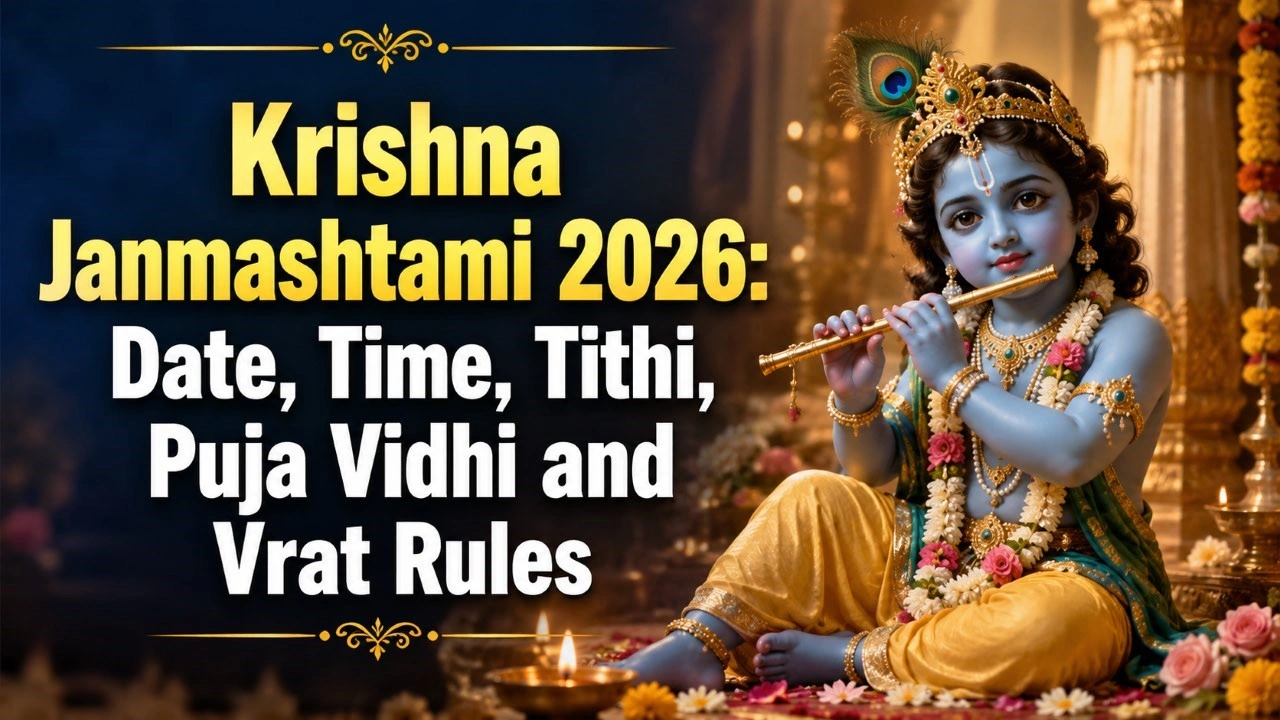
Krishna Janmashtami 2026 is one of the most important devotional festivals dedicated to Lord Krishna. Celebrated with fasting, prayer, bhajans, temple decorations, midnight worship and joyful festivities, Janmashtami commemorates the divine appearance of Shri Krishna.
For everyone searching Janmashtami kab hai 2026, Krishna Janmashtami will be observed in New Delhi on Friday, September 4, 2026. According to Drik Panchang's calculations for New Delhi, the Ashtami Tithi begins at 2:25 AM on September 4 and ends at 12:13 AM on September 5. The recommended Nishita Puja period is 11:57 PM on September 4 to 12:43 AM on September 5.
This guide covers the Krishna Janmashtami 2026 date and time, Tithi, puja Muhurat, fasting rules and a simple Janmashtami puja procedure step by step that devotees can follow at home.
Important: Puja and Panchang timings change according to location. The timings in this article are based on New Delhi, India. Devotees living elsewhere should verify their local Panchang before beginning time-specific rituals. Drik Panchang itself provides different Nishita timings for cities including Mumbai, Pune, Chennai, Bengaluru, Kolkata, Jaipur and Hyderabad.
When Is Krishna Janmashtami 2026?
Krishna Janmashtami 2026 falls on Friday, September 4, 2026, in New Delhi.
Janmashtami celebrates the birth of Lord Krishna and is traditionally associated with Krishna Paksha Ashtami and midnight worship. It is also known by names such as Krishnashtami, Gokulashtami, Srikrishna Jayanti and Ashtami Rohini in different regions and traditions.
ISKCON Bangalore has also announced Janmashtami celebrations across September 3 and 4, 2026, with its major abhisheka and midnight arati taking place on September 4.
Design Your Destiny
Krishna's wisdom was never meant to remain limited to scriptures. It is a practical guide for dealing with fear, confusion, relationships, decisions and the challenges of everyday life. Join Design Your Destiny and discover how timeless spiritual wisdom can help you understand your mind, transform your inner patterns and create a more conscious direction for your life.
Start Your Journey Today!Krishna Janmashtami 2026 Date and Time
For New Delhi, the main Janmashtami 2026 date and time details are:
Janmashtami Event | Date & Time |
|---|---|
Krishna Janmashtami | Friday, September 4, 2026 |
Ashtami Tithi Begins | 2:25 AM, September 4 |
Ashtami Tithi Ends | 12:13 AM, September 5 |
Rohini Nakshatra Begins | 12:29 AM, September 4 |
Rohini Nakshatra Ends | 11:04 PM, September 4 |
Nishita Puja Time | 11:57 PM – 12:43 AM |
Midnight Moment | 12:20 AM, September 5 |
Traditional Parana | After 6:01 AM, September 5 |
Dahi Handi | Saturday, September 5, 2026 |
These timings are specifically calculated for New Delhi.
Why Is Krishna Janmashtami Celebrated at Midnight?
Midnight occupies a central place in Janmashtami worship because devotees commemorate Krishna's divine birth during the night. Traditional Janmashtami observance therefore reaches its devotional peak around Nishita Kaal, the Vedic midnight period.
Temples remain filled with bhajans, kirtan and prayers until the symbolic moment of Krishna's appearance. At midnight, devotees may perform abhisheka of Bal Krishna, offer flowers and bhog, sing aarti and celebrate Krishna Janma.
Drik Panchang specifically recommends Krishna Puja during Nishita Kaal and describes a ritual form based on Shodashopachara worship.
Janmashtami 2026 Date and Time: Puja Muhurat and Tithi
Spiritual Significance of Krishna Janmashtami
Janmashtami is more than the celebration of a historical or religious event. For devotees, Krishna's appearance represents the victory of Dharma over Adharma and light over darkness.
Krishna's life and teachings remind us that spiritual wisdom does not require withdrawing from life. Through the Bhagavad Gita, Krishna teaches disciplined action, devotion, self-knowledge and freedom from attachment to results.
Janmashtami can therefore become a day of inner reflection. While decorating a temple or observing a fast are meaningful acts of devotion, the deeper question is: How much of Krishna's wisdom are we bringing into our everyday decisions, relationships and actions?
The festival invites us not only to celebrate Krishna's birth, but also to allow wisdom, awareness and Dharma to become alive within us.
Janmashtami Puja Samagri
Before beginning Janmashtami puja at home 2026, devotees can keep commonly used items ready:
Idol or image of Bal Krishna/Laddu Gopal
Clean cloth or yellow clothes for Krishna
Flowers and garlands
Tulsi leaves where traditionally used
Chandan
Incense
Ghee diya
Water
Panchamrit ingredients
Fruits
Makhan and mishri
Sweets or other permitted bhog
Puja thali
Bell
Aarti diya
Ritual practices vary by family and spiritual tradition, so devotees may adapt the samagri according to their customary method.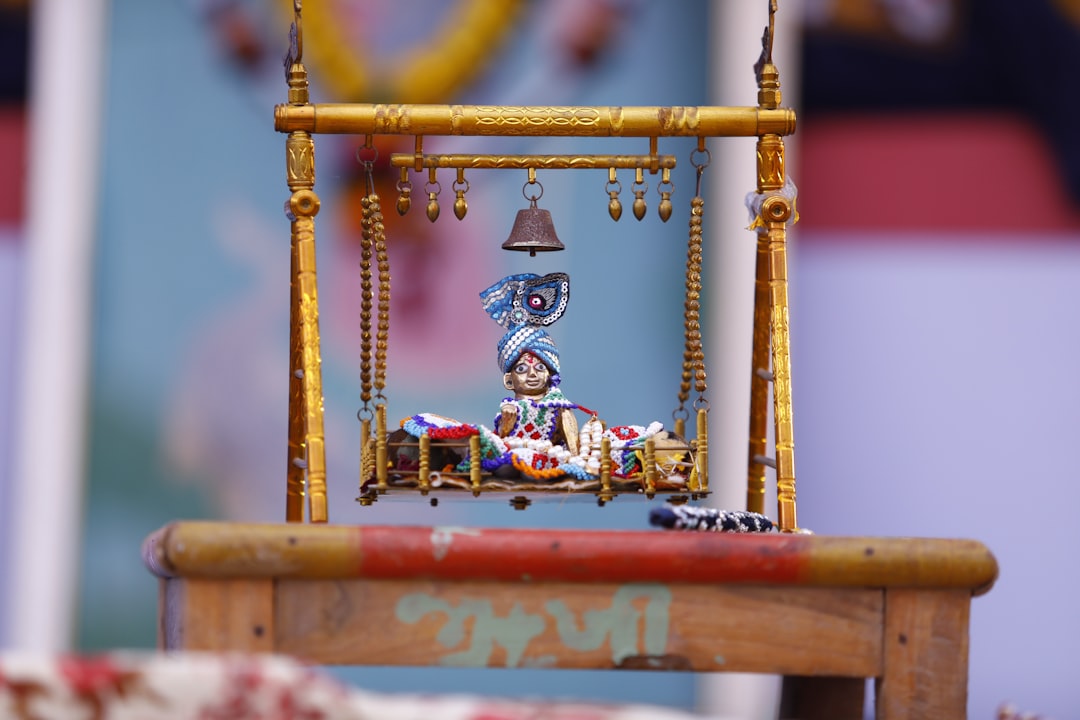
Janmashtami Puja Vidhi 2026: Step-by-Step Puja at Home
If you are searching how to do Janmashtami puja at home, the following simplified sequence can help.
Traditional Shodashopachara worship contains a detailed sequence beginning with meditation and invocation, followed by offerings such as Asana, Padya, Arghya, Snana, Vastra, Gandha, Pushpa, Dhupa, Deepa and Naivedya.
Step 1: Clean the Puja Area
Clean your home and especially the place where the Krishna idol or image will be installed. Arrange the altar neatly and place Bal Krishna on a clean cloth or decorated platform.
Step 2: Take a Sankalpa
After completing your morning routine, sit peacefully before Lord Krishna and make a sincere resolve or Sankalpa for your Janmashtami worship and fast.
Traditional fasting guidance describes taking the Sankalpa after morning rituals before beginning the day-long observance.
Why Krishna Born at Midnight? Spiritual Meaning of Janmashtami
Step 3: Meditate on Lord Krishna
Begin with Dhyanam, or meditation on Krishna. Focus your attention on the divine form of Shri Krishna and bring the mind into a devotional state.
Traditional Janmashtami Puja Vidhi begins with Dhyana, followed by Avahana or invocation.
Step 4: Invoke Lord Krishna
Offer flowers and prayer while mentally inviting Lord Krishna into your place of worship.
Step 5: Perform Abhisheka
At the appropriate time, devotees may ceremonially bathe the Bal Krishna idol. Traditional worship includes Snana as part of the puja sequence.
After the ceremonial bath, gently clean the idol and dress Krishna in fresh clothes.
Step 6: Decorate Bal Krishna
Offer chandan, flowers, ornaments and other traditional decorations.
Flowers, fragrance and ornaments are among the offerings described in traditional Krishna Janmashtami worship.
Step 7: Offer Dhup and Deep
Light incense and a ghee diya before Lord Krishna. Traditional Puja Vidhi includes both Dhupa and Deepa offerings.
Step 8: Offer Bhog
Offer suitable food to Krishna as Naivedya. Depending on family tradition, devotees commonly prepare fruits, sweets, milk-based preparations or other fasting-friendly offerings.
Naivedya forms a formal part of the traditional Janmashtami worship sequence.
Step 9: Chant Krishna's Name
Spend time chanting Krishna mantras or divine names. A simple mantra for personal devotion is:
Om Namo Bhagavate Vasudevaya
You may also chant the Hare Krishna Mahamantra or recite prayers traditionally followed in your family.
Step 10: Perform Midnight Aarti
During Nishita Kaal, celebrate Krishna Janma with prayer, aarti, devotional singing and bhog.
For New Delhi in 2026, Nishita Puja is calculated from 11:57 PM on September 4 to 12:43 AM on September 5.
Traditional Puja Vidhi concludes its major offerings with Naivedya, Aarti or Mahanirajana, Pradakshina and Namaskara.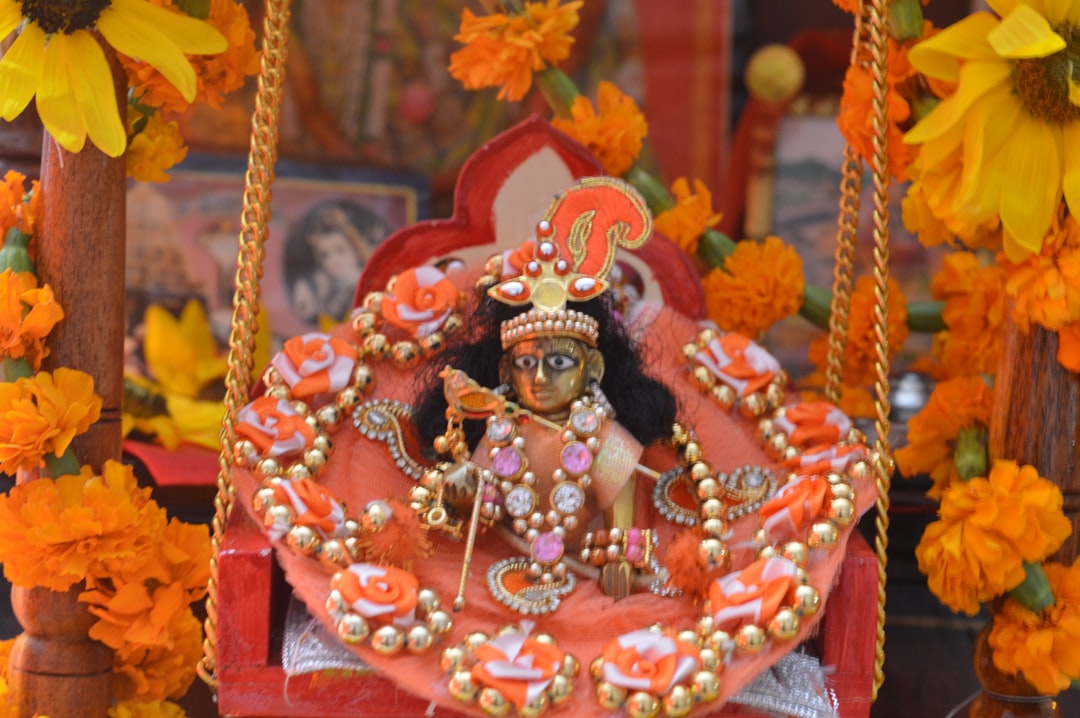
Krishna Janmashtami 2026 Vrat Rules
Fasting is an important part of Janmashtami for many devotees, although the form of fasting may depend on health, age and family tradition.
1. Begin the Day with Sankalpa
Take a clear devotional resolve to observe the Janmashtami vrat.
2. Avoid Grains During the Traditional Fast
Traditional Janmashtami fasting guidance advises avoiding grains until the vrat is broken. Drik Panchang notes that fasting rules similar to those followed on Ekadashi are traditionally observed.
3. Choose the Form of Fast According to Your Capacity
Some devotees follow a strict fast, while others take fruits, milk or permitted vrat foods according to their tradition.
The spiritual purpose is devotion and inner discipline rather than physically harming oneself. Anyone with medical conditions, pregnancy, medication requirements or other dietary needs should prioritize health and seek appropriate medical guidance.
4. Maintain a Sattvic Routine
Apart from controlling food, devotees can use the day for prayer, bhajan, meditation, reading the Bhagavad Gita and remembering Krishna.
Try to reduce anger, gossip, unnecessary conflict and distractions. A spiritual fast becomes more meaningful when restraint is practiced at the level of both food and mind.
5. Participate in Krishna Janma at Midnight
If possible, remain engaged in devotional activities until the midnight celebration.
6. Break the Fast at the Appropriate Parana Time
Traditional rules generally connect Janmashtami Parana with the completion of Ashtami Tithi and Rohini Nakshatra. For New Delhi in 2026, Drik Panchang lists traditional Parana after 6:01 AM on September 5. It also notes that a modern practice followed in many places permits Parana after the Nishita Puja period, after 12:43 AM.
Because fasting customs differ among traditions, follow the practice of your family, temple or spiritual lineage.
What Can You Do on Janmashtami Besides Puja?
Janmashtami can become a complete day of spiritual reflection rather than only a midnight ritual.
You can read selected chapters of the Bhagavad Gita, chant Krishna's name, participate in bhajan and kirtan, visit a Krishna temple, offer food in charity, teach children stories from Krishna's life or spend time reflecting on how Krishna's teachings can be applied to everyday challenges.
ISKCON Bangalore's announced 2026 celebrations, for example, include kirtans, abhisheka, prasadam, verse recitation and midnight arati, illustrating how Janmashtami observance combines worship with collective devotional activities.
Dahi Handi 2026
Dahi Handi is closely associated with the playful childhood stories of Krishna and the tradition of Makhan Chori. According to the New Delhi Panchang calendar, Dahi Handi falls on Saturday, September 5, 2026, the day after Krishna Janmashtami.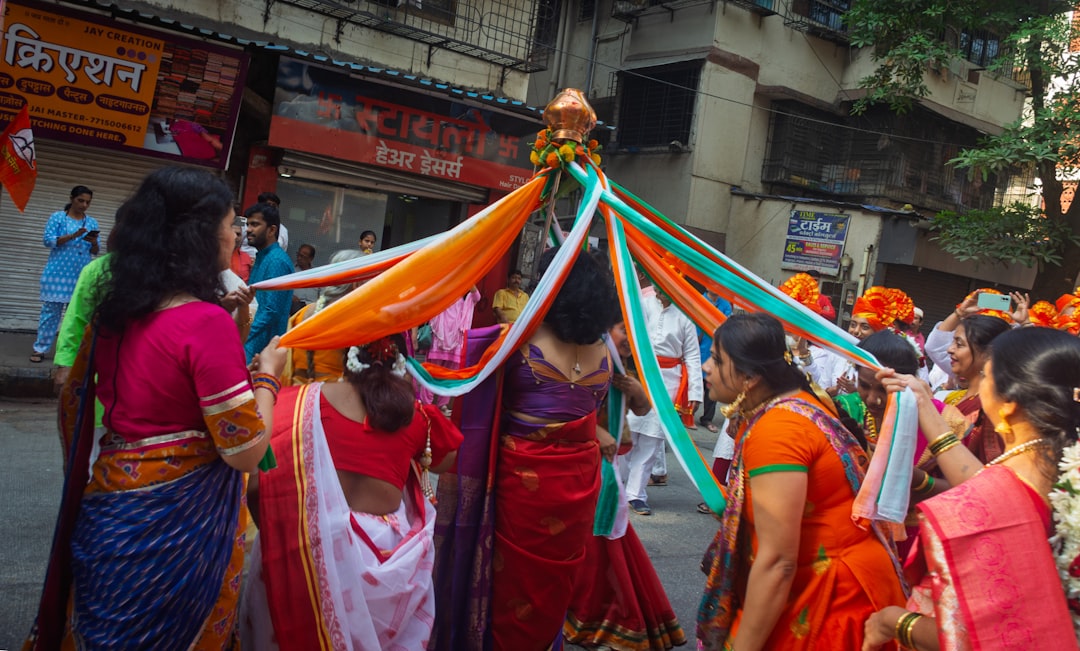
The Deeper Message of Krishna Janmashtami
Krishna Janmashtami ultimately asks us to move from celebration to transformation.
Krishna's teachings encourage us to act fully while becoming less bound by anxiety over results. They invite us to understand our deeper Self, develop equanimity, perform our responsibilities consciously and bring awareness into action.
A beautifully decorated Krishna altar has value, but the deeper worship begins when Krishna's wisdom enters our behaviour.
Can we act without being consumed by the outcome? Can we remain aware before reacting in anger? Can we fulfill our responsibilities without losing inner balance?
When these teachings become part of ordinary life, Janmashtami becomes more than a festival observed once a year, it becomes a reminder to live the wisdom of the Gita every day.
Personal Session
Sometimes understanding the right path requires more than general advice. If you are facing confusion, emotional struggles, recurring patterns or questions about your spiritual journey, a personalised conversation can help bring greater clarity. Book a Personal Session and receive focused guidance for your individual situation, inner growth and journey towards a more conscious life.
Book Now